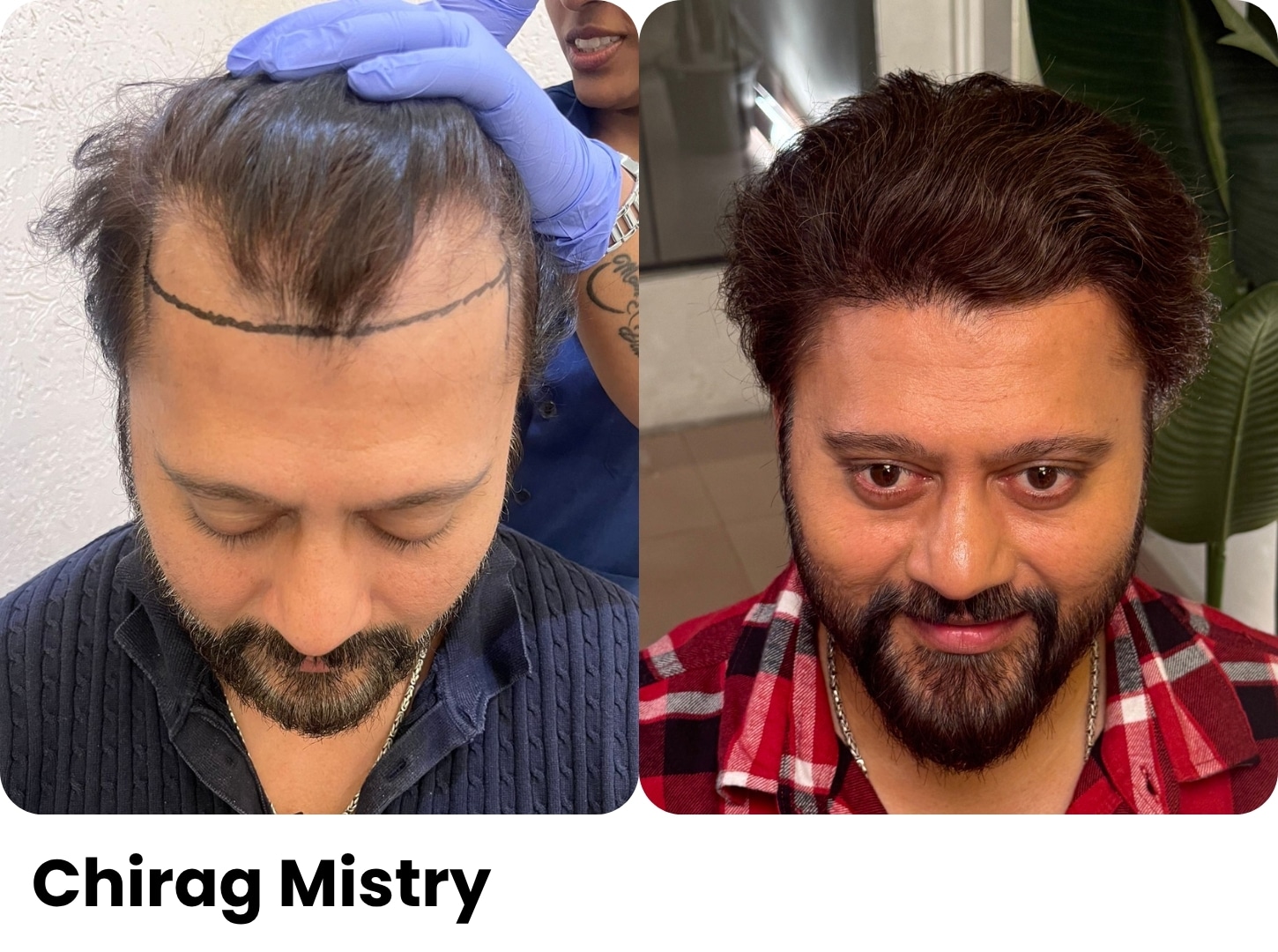
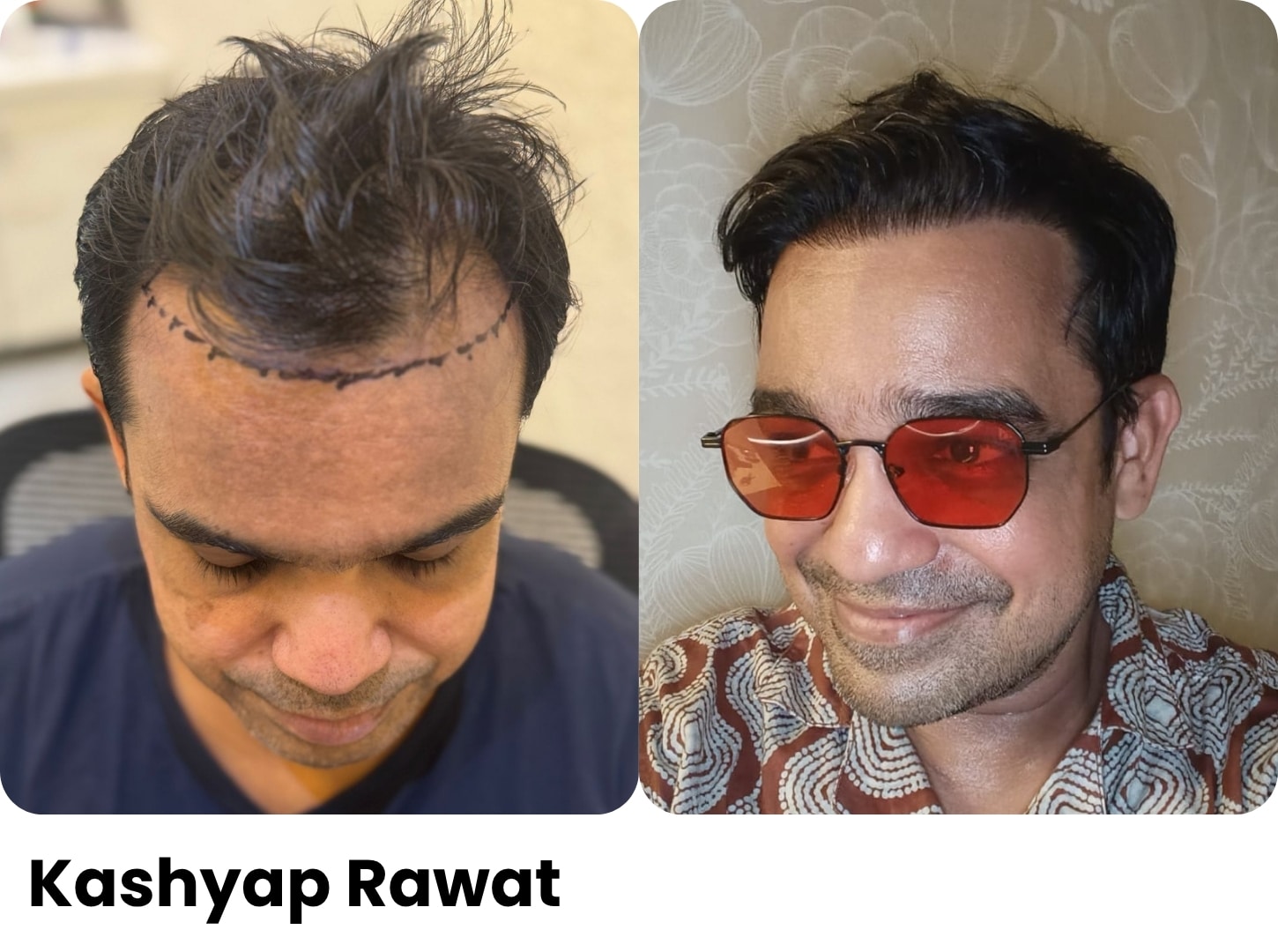
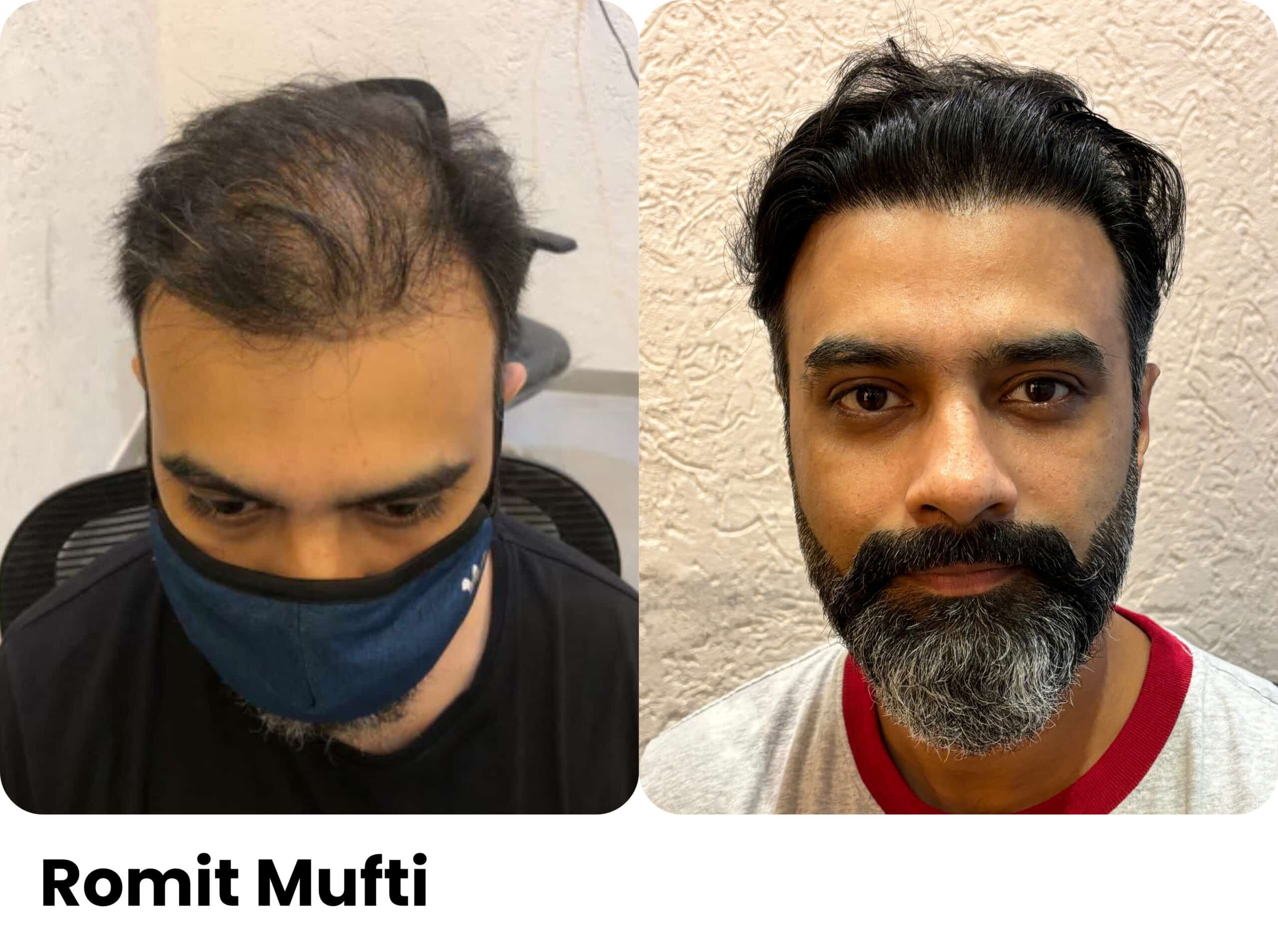
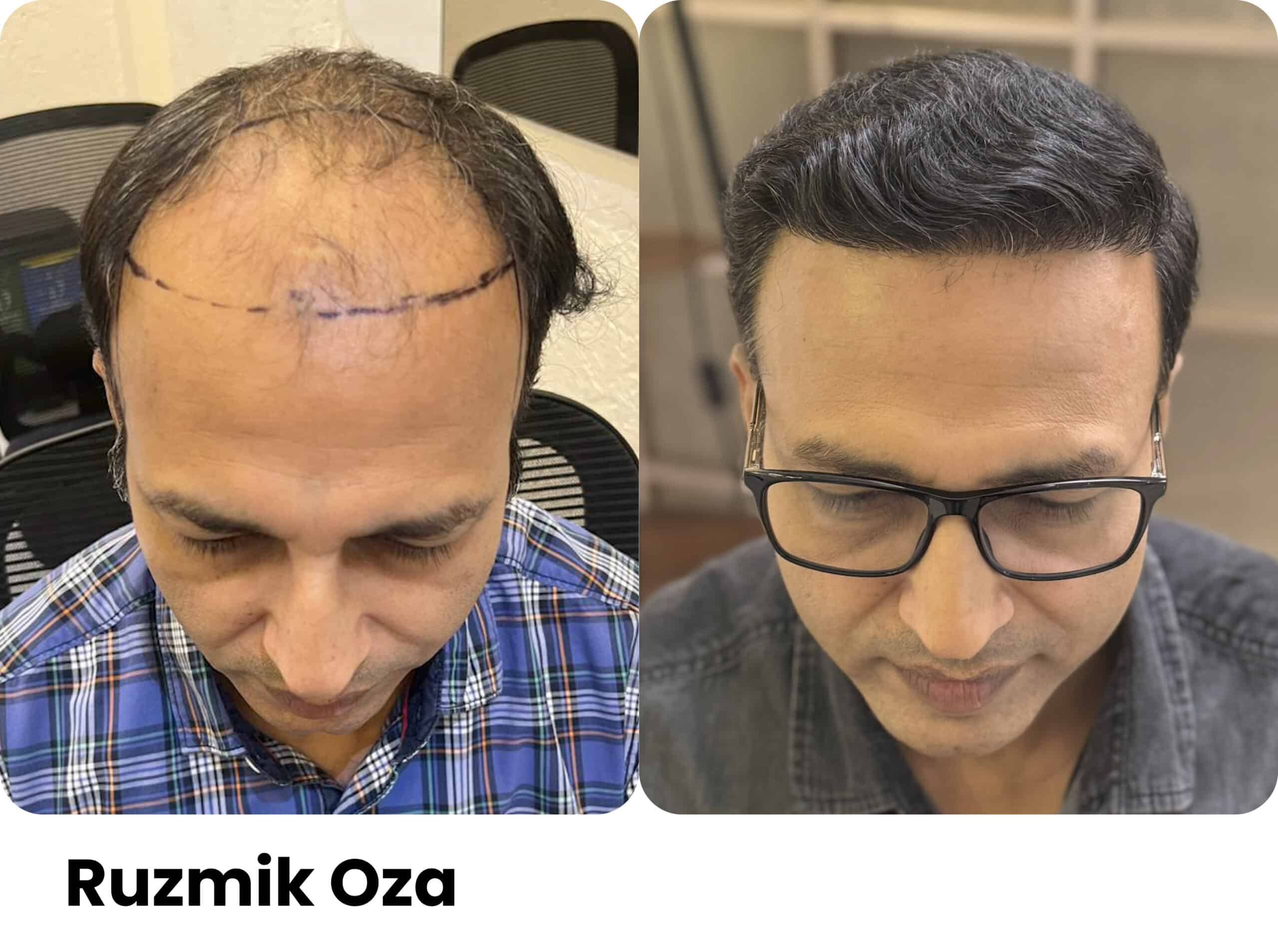
Hair loss doesn't happen overnight. For Rusmik Oza, a corporate finance professional in Mumbai, it was a slow progression over decades of high-pressure work, long commutes, and relentless deadlines. When the thinning became impossible to ignore, he tried the quickest fix available: a hair patch. It worked, until it didn't.
| Name | Rusmik Oza |
| Age | 51 |
| Gender | Male |
| Location | Mumbai |
| Profession | Corporate Finance (27+ years) |
| Hair Loss Type | Androgenetic Alopecia (Male Pattern Baldness) |
| Norwood Grade | 7 |
| Previous Treatment | Hair patch (adhesive-based) |
| Complications | Contact dermatitis, scalp folliculitis |
Rusmik spent over 27 years in corporate finance across Mumbai. The lifestyle took a toll: long hours, constant deadlines, and daily commutes that stretched well past midnight. Stress, combined with a genetic predisposition to androgenetic alopecia (the most common form of male hair loss), accelerated his hair loss pattern.
By the time the thinning became visibly noticeable, it had already started affecting his confidence in client meetings, presentations, and social settings.
Androgenetic alopecia affects roughly 58% of Indian men by age 50. It\’s driven by DHT (dihydrotestosterone), a hormone that shrinks hair follicles over time until they stop producing visible hair.
Like many men experiencing visible hair loss, Rusmik opted for a hair patch — a non-surgical system that uses adhesive glue to attach artificial hair to the scalp. The results were immediate: fuller hair, renewed confidence, and no downtime.
But hair patches come with a trade-off that\’s rarely discussed upfront.
After months of regular use, the adhesive glue began irritating Rusmik\’s scalp. What started as mild redness escalated into:
At this point, continuing with the hair patch was no longer an option. The cosmetic solution had become a medical problem.
| Factor | Hair Patch | Hair Transplant |
|---|---|---|
| Duration | 3-6 months per patch | Long-term |
| Scalp Health | Risk of dermatitis, folliculitis | No adhesives, natural healing |
| Maintenance | Monthly visits, reapplication | Zero maintenance after recovery |
| Appearance | Can look unnatural over time | Natural growth pattern |
| Root Cause | Covers the problem | Treats the problem |
| Long-Term Cost | Recurring (adds up over years) | One-time investment |
Rusmik needed a solution that was medically safe, long-lasting, and addressed the root cause — not just the appearance. He consulted Assure Clinic Mumbai.
The evaluation included:
The team confirmed that despite the previous scalp complications, Rusmik\’s donor area had sufficient density for a successful transplant. A personalized treatment plan was designed around his specific hair loss pattern, scalp condition, and desired outcome.
| Treatment Detail | Value |
|---|---|
| Technique | UHDHT method — UFME (Ultra Fine Micro Extraction) for graft harvesting + DSHI (Direct Simultaneous Hair Implantation) for placement |
| Graft Count | 6,000 |
| Sessions | 7 |
| Density Achieved | High-density coverage |
| Performing Doctor | Dr. Roshni, trained under protocols established by Dr. Abhishek Pilani (MBBS, MD Dermatology, Gold Medalist, ISHRS Member) |
| Clinic | Assure Clinic, Mumbai |
Rusmik\’s transplant used Assure\’s UHDHT method, where individual follicular units (each containing 1-4 hairs) are extracted using UFME (Ultra Fine Micro Extraction) from the donor area and implanted using DSHI (Direct Simultaneous Hair Implantation) into the thinning zones. The key advantages that made this the right choice for Rusmik:
Hair transplant recovery follows a predictable biological timeline. Here\’s what Rusmik experienced:
| Timeline | What Happened |
|---|---|
| Week 1-2 | Initial healing. Tiny scabs at extraction and implant sites. Mild redness. |
| Week 2-4 | Shock loss phase: transplanted hairs shed. This is normal and expected. The follicles remain alive beneath the scalp. |
| Month 2-3 | Dormant phase. Minimal visible change. The follicles are resetting their growth cycle. |
| Month 3-4 | Early new growth begins. Fine, thin hairs start emerging. |
| Month 6 | Noticeable improvement. Hair thickening and gaining density. |
| Month 9-10 | Significant results visible. Rusmik\’s hair grew in naturally, with improved density and a well-defined hairline. |
| Month 12 | Final results. Full density, natural appearance, continuing growth. |
“Shock loss” in the first few weeks is not hair loss — it\’s the transplanted follicles shedding their initial shaft before entering a new growth cycle. The follicle root remains intact and starts producing new hair within 3-4 months.
For a detailed breakdown of what to expect, see our complete recovery timeline.
After 9-10 months, Rusmik\’s results spoke for themselves:
For Rusmik, the impact went beyond aesthetics:
See more transformations in our before and after results gallery.
“Rusmik\’s case is one we see frequently at Assure Clinic. Patients come to us after years of non-surgical solutions that have either stopped working or caused secondary complications. The key challenge here was the scalp damage from prolonged adhesive use, which required careful assessment before proceeding. Once we confirmed the donor area was healthy and the scalp had recovered sufficiently, we designed a treatment plan focused on natural density restoration. The results at 9-10 months confirm what we see consistently: when the procedure is performed by qualified doctors using the right technique, the outcomes are long-lasting and natural.”
— Dr. Roshni, Assure Clinic Mumbai
Rusmik\’s journey highlights three critical lessons for anyone considering hair restoration:
If you\’re currently using a hair patch and experiencing scalp irritation, or if you\’re weighing your options between temporary and long-term solutions, a consultation can give you clarity. You can also check your Norwood grade to understand your current hair loss stage.
20,000+ procedures. High graft survival. 60+ qualified doctors. Book a free consultation today.
Expert guide by Dr. Abhishek Pilani covering causes, treatments, and when to consider a hair transplant. Trusted by 10,000+ readers.