Durjoy Datta has inspired millions through his bestselling novels. His words have shaped how an entire generation thinks about love, relationships, and life. But for years, the man behind those words was fighting a battle he rarely spoke about -- one that had nothing to do with storytelling and everything to do with the face looking back at him in the mirror.
| Name | Durjoy Datta |
| Age | |
| Gender | Male |
| Location | Dubai |
| Profession | Bestselling Author / Novelist |
| Hair Loss Type | Androgenetic Alopecia (Genetic + environmental factors) |
| Norwood Grade | Stage 4 |
| Previous Treatment | Minoxidil (used for 2-3 years) |
| Graft Count | |
| Sessions | |
| Technique | UHDHT (UFME extraction + DSHI implantation) |
| Performing Doctor | Dr. Abhishek Pilani (MBBS, MD Dermatology, Gold Medalist, ISHRS Member) |
| Results Timeline |
Durjoy Datta is one of India’s most recognized bestselling authors, with a body of work that has resonated with millions of readers. His public presence — book tours, media appearances, social media — means that his face is as much a part of his brand as his writing.
For someone who lives in the public eye, personal insecurities carry an amplified weight. Every photograph, every video, every public appearance becomes an opportunity for self-consciousness to take hold.
And for Durjoy, that is exactly what happened.
For years, Durjoy did not consider himself someone with serious hair loss. He had noticed a receding hairline, but it felt manageable — the kind of thing that happens to men gradually and does not demand immediate attention.
That perception shattered in 2018, when his wife recorded a casual video.
“She showed me the video and I saw a full bald patch. That’s when it hit me.”
What he had been dismissing as minor recession was, in reality, significantly more advanced than he had realized. Seeing himself on camera — from an angle he could not control or prepare for — made the truth undeniable.
Hair loss rarely announces itself as a major life disruption. It creeps in gradually, introducing small restrictions that accumulate over time until they become a constant mental burden.
For Durjoy, the impact manifested in ways he did not fully recognize until after the problem was resolved:
Harsh lighting was a particular source of anxiety. Under certain lights, bald patches that were invisible in normal conditions became glaringly obvious. For someone who regularly appears in media, this created a perpetual background worry at every public event.
Durjoy found himself repeatedly checking his appearance in mirrors and video previews. It was not vanity — it was vigilance. A constant awareness that his appearance might betray him at any moment.
“It restricts you in ways you don’t even realize at that time.”
Like millions of men facing hair loss, Durjoy turned to Minoxidil as his first line of defense. He used it consistently for two to three years.
The initial results were encouraging. There was some visible improvement, enough to justify continuing the regimen. But over time, the limitations became clear:
The realization that this was a holding pattern, not a solution, planted the seed for what would come next.
Despite understanding that a hair transplant was likely the permanent answer, Durjoy delayed the decision for years. His hesitations were deeply human and entirely relatable:
The idea of someone performing a procedure on his scalp required a level of trust he had not yet established with any practitioner.
“Can I trust someone with this?”
The possibility of needing to shave his head — a common requirement for some transplant methods — was a significant deterrent. For someone in the public eye, a dramatic visible change during recovery was not a trivial concern.
He did not personally know anyone who had undergone the procedure and could speak candidly about the experience. Without that firsthand reference point, the unknowns loomed large.
His hesitation was so strong that he told his brother-in-law:
“You do it first, then I’ll do it.”
The decision to move forward finally came when Durjoy underwent a proper scalp analysis. The results were sobering.
“I was way balder than I thought.”
The analysis revealed that his hair loss was significantly more advanced than what was visible to the casual observer. The thinning patterns, the miniaturization of follicles, the projected progression — all pointed to a situation that would only worsen with time.
But the consultation also provided something he had been missing: clarity. He was given a realistic assessment of what was achievable, a clear explanation of the process, and — crucially — assurance that the procedure could be done without a complete head shave.
His conditions for proceeding were specific:
All three were met.
| Technique | UHDHT method — UFME extraction + DSHI implantation |
| Duration | 4-5 days (divided sessions) |
| Performing Doctor | Dr. Abhishek Pilani (MBBS, MD Dermatology, Gold Medalist, ISHRS Member) |
| Clinic | Assure Clinic, Dubai |
The procedure was conducted over four to five days using divided sessions. The focus was on precision rather than speed — each session was kept manageable, with rest periods that allowed both the patient and the medical team to maintain peak performance.
The reality of the procedure was dramatically different from what Durjoy had imagined during his years of hesitation. The discomfort was minimal and manageable. No major pain was reported during or after the procedure.
“If I knew it was this easy, I would have done it earlier.”
This single statement, echoed by countless Assure Clinic patients, captures the gap between perception and reality that keeps so many men from taking action.
Durjoy’s recovery timeline was remarkably smooth:
For a public figure who could not afford weeks of visible recovery, this was a critical factor. The UHDHT technique, combined with the multi-day approach, ensured that the transition from procedure to normal appearance was as seamless as possible.
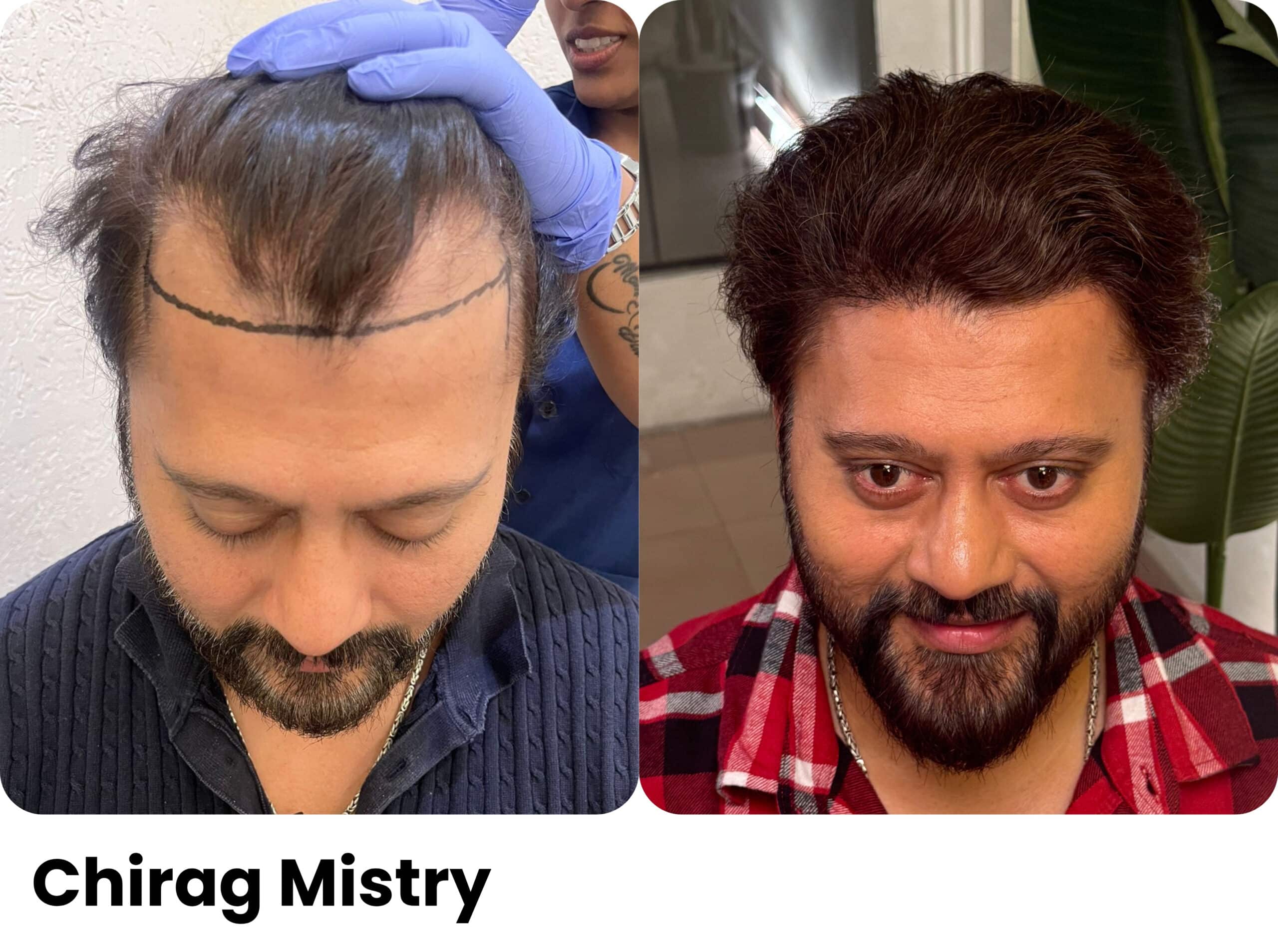
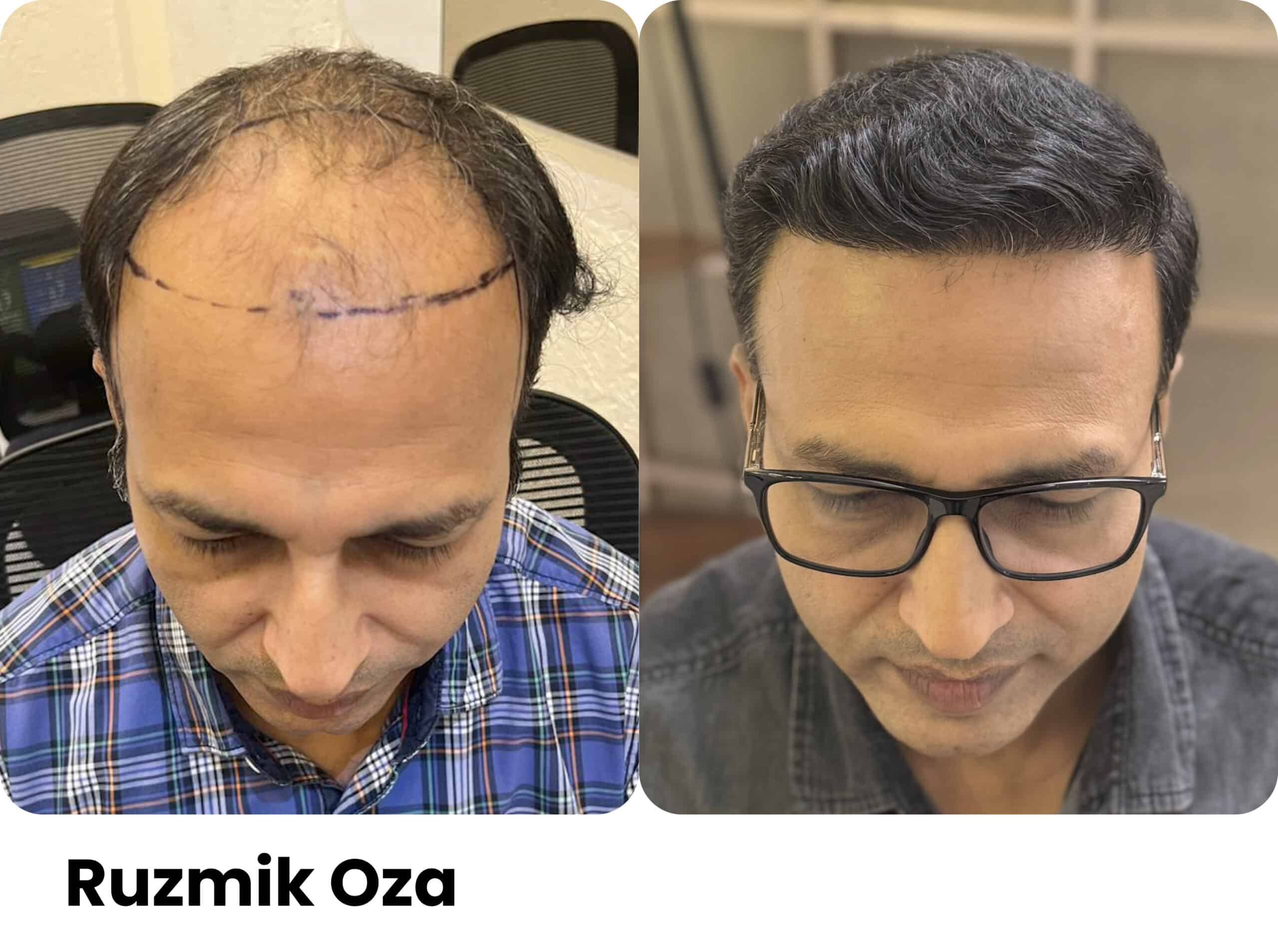
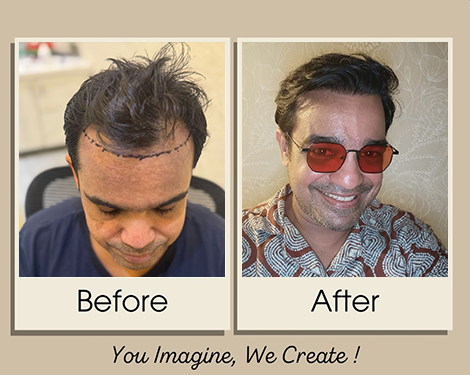
The physical results spoke for themselves:
But for Durjoy, the most significant change was not visible in the mirror. It was visible in his behavior.
“I don’t even think about my hair anymore.”
For someone who had spent years monitoring lighting, checking angles, avoiding certain activities, and carrying a background worry at every public appearance — the simple act of not thinking about hair was transformative.
Activities that had been quietly abandoned returned to his life:
The change was subtle but profound. Not a dramatic personality transformation, but a quiet removal of friction. The mental energy that had been allocated to managing hair loss was suddenly available for everything else.
“It gives you an innate confidence.”
His wife, who had originally shown him the video that started the journey, noticed the change clearly. The concern that had been a shared background worry for the couple simply disappeared.
One of the most insightful aspects of Durjoy’s journey is how his perspective on hair restoration evolved.
Initially, he viewed the procedure as cosmetic — something that could be dismissed as vanity.
Now, he compares it to LASIK surgery:
“It’s one battle you don’t have to fight every day.”
This reframing is important because it addresses the stigma that prevents many men from seeking help. Hair restoration is not about vanity any more than corrective vision surgery is about vanity. It is about removing a source of daily discomfort and reclaiming mental bandwidth for the things that actually matter.
Even when the hair loss is not severe enough for others to comment on, the person experiencing it carries a constant awareness that subtly influences daily behavior, social interactions, and self-perception.
Minoxidil and similar treatments can slow the process, but they rarely reverse it. After two to three years of consistent use, Durjoy still faced progressive loss. These treatments address symptoms, not the root cause.
Most of Durjoy’s hesitation was psychological — fear of the unknown, fear of the process, fear of trusting someone with the procedure. Once he experienced the reality, his immediate reaction was regret at not acting sooner.
The gap between what people imagine a hair transplant involves and what it actually involves is enormous. Minimal pain, multi-day phased approach, invisible recovery within two weeks — the reality is far easier than the assumptions.
The transformation was not about gaining something — it was about losing the burden of constant self-consciousness. The absence of worry was more impactful than the presence of new hair.
“There are already so many struggles in life. Why add another one?”
“If you can fix it, go ahead and fix it.”
“It’s a luxury to wake up, look in the mirror, and feel fine.”
At Assure Clinic:
View our before and after results or learn more about hair transplant cost.
20,000+ procedures. 95% graft survival. 60+ qualified doctors. Book a free consultation today.
Expert guide by Dr. Abhishek Pilani covering causes, treatments, and when to consider a hair transplant. Trusted by 10,000+ readers.