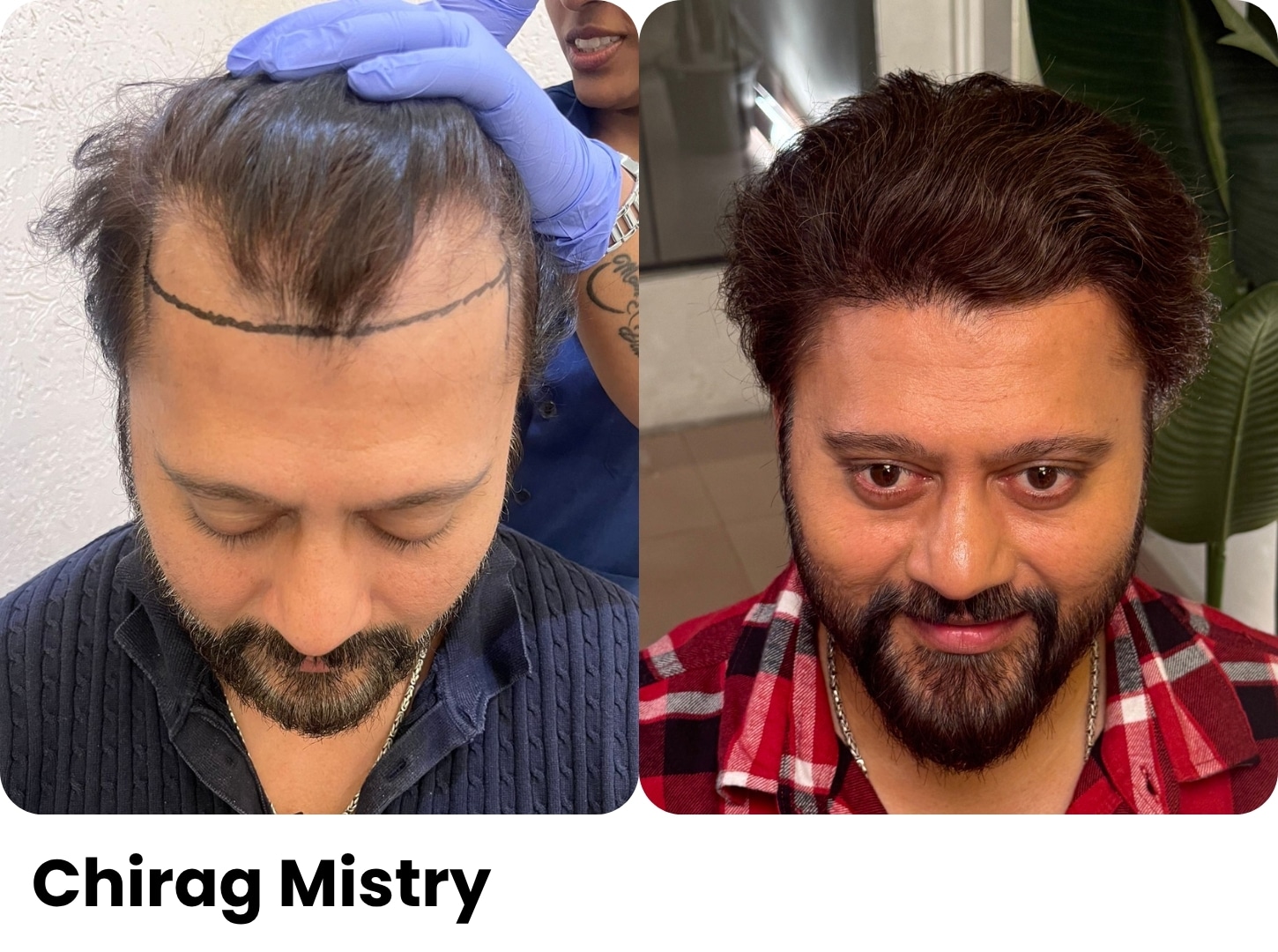
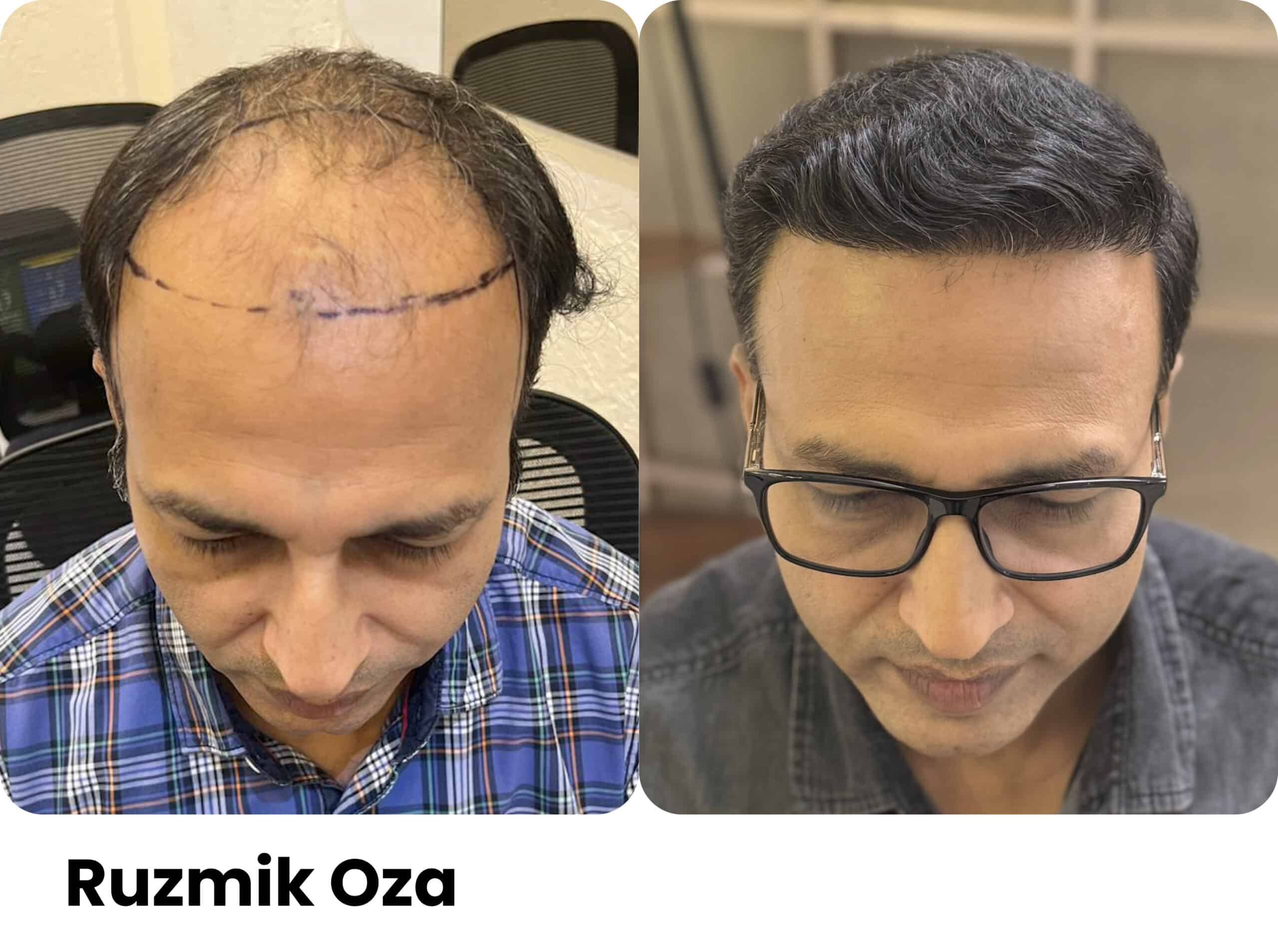
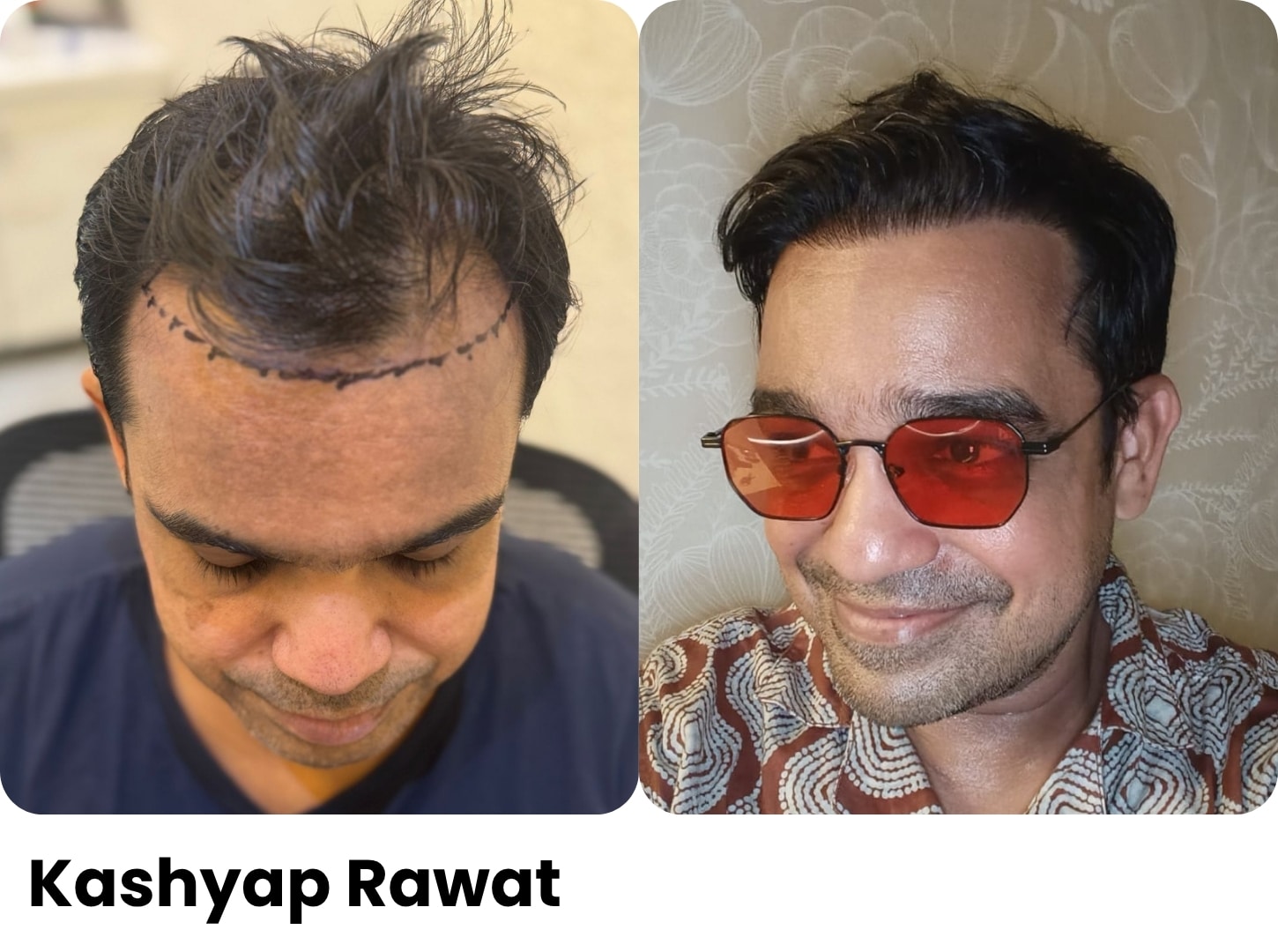
Most men visit one or two clinics before making a decision about hair restoration. Parag Kundalwal visited approximately thirty. An engineer turned real estate consultant in Dubai, he spent years researching, consulting, and hesitating -- watching his hair loss worsen while searching for a solution he could trust.
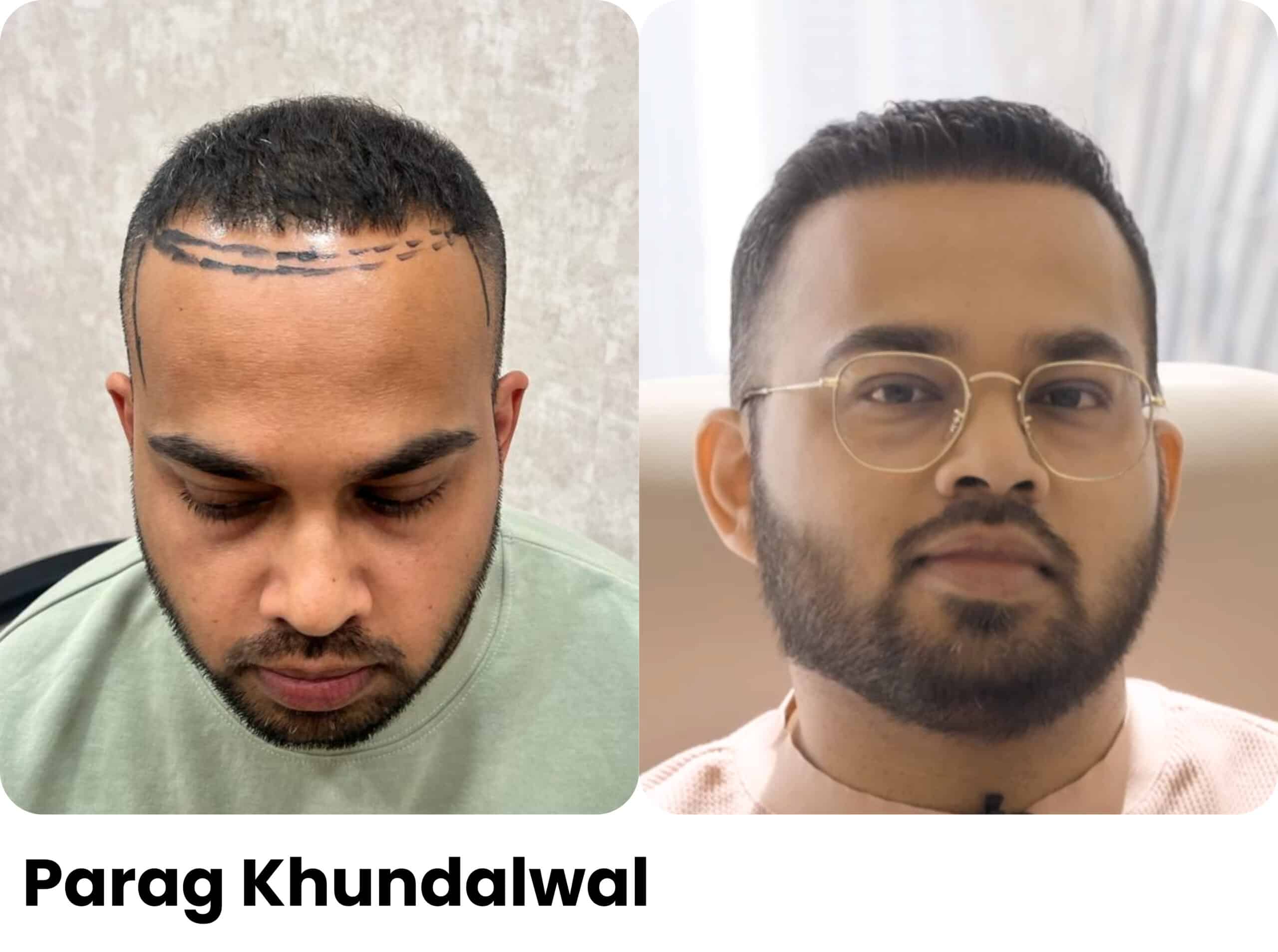
| Name | Parag Kundalwal |
| Age | |
| Gender | Male |
| Location | Dubai (moved in 2017) |
| Profession | Real Estate Consultant & Business Owner |
| Hair Loss Type | Environmental factors (pollution, water quality) + early onset thinning |
| Norwood Grade | |
| Previous Treatment | Home remedies, oiling, shampoo routines, ~30 clinic consultations |
| Graft Count | |
| Sessions | |
| Technique | UHDHT (UFME extraction + DSHI implantation) |
| Performing Doctor | |
| Results Timeline | 10-12 months |
Parag Kundalwal is a real estate consultant and business owner based in Dubai. With a background in engineering — he previously worked in construction before transitioning into the real estate sector — he brings an analytical, detail-oriented mindset to everything he does.
That same analytical nature would eventually lead him to visit around thirty clinics before choosing where to have his hair transplant. But before that journey of research, there was the journey of loss.
At 32, Parag looked significantly older than his age. The progressive hair thinning and crown baldness had aged his appearance by nearly a decade. In his own assessment, he looked like a man in his forties — not ideal for someone in a client-facing profession where first impressions carry enormous weight.
Parag first noticed hair thinning around age 19-20, during his university years. The contributing factors were multiple and overlapping:
Notably, Parag did not have a strong genetic history of hair loss. This made the situation more confusing. Without a clear family pattern to explain the thinning, he spent years searching for external causes — and external solutions.
The hair loss was gradual through his twenties, progressing from mild thinning to visible crown baldness by his late twenties. The psychological impact was significant from early on.
Hair loss affected Parag across every dimension of his life:
In real estate, the ability to connect with clients, project confidence, and command trust is directly tied to success. Parag felt that his appearance was undermining his professional capabilities. The person clients saw did not match the energy, expertise, and drive he brought to every interaction.
At 32, being told he looked like he was in his forties was not just an appearance issue — it was an identity issue. The gap between how old he felt internally and how old he appeared externally created a persistent disconnect that affected his self-image.
Every interaction carried a layer of consciousness about his appearance. Social settings, professional meetings, casual encounters — all were filtered through the awareness that his hair loss was visible and potentially being noticed by others.
Parag noticed that his communication style was affected. The self-consciousness created hesitation where there should have been confidence. In a profession that rewards assertive, clear communication, this was a tangible professional cost.
Before considering a transplant, Parag exhausted traditional and non-medical approaches:
The consultations were perhaps the most frustrating part. Thirty clinics, thirty opinions, thirty different promises — and no visible or lasting improvement from any of the treatments attempted.
The cumulative outcome was clear: no amount of topical treatment or lifestyle adjustment was going to reverse what had already been lost.
Parag first learned about hair transplants during university. His initial reaction was skepticism — he assumed the procedures were either prohibitively expensive or ineffective. The idea was filed away and not seriously revisited for years.
The serious consideration phase began after he moved to Dubai in 2017. The trigger was twofold:
The decisive moment came with a stark internal realization:
“Either accept baldness or take action.”
After approximately thirty consultations with various clinics, Parag had developed a sophisticated understanding of what to look for. His final selection criteria were:
The most important factor. He wanted assurance that a qualified doctor would perform the actual procedure — not technicians operating under loose supervision. Many clinics he visited could not offer this guarantee.
He required a detailed, honest explanation of the specific technique being used, the step-by-step process, realistic risks and expected outcomes, and why certain approaches are superior to others.
No hard selling. No pressure to commit immediately. No unrealistic promises. The consultation needed to be informative, not transactional.
He wanted the clinic to demonstrate a thorough understanding of how grafts are handled between extraction and implantation, why implantation timing matters for graft survival, and the science behind the technique — not just marketing claims.
Having researched extensively, Parag understood that quality trumps speed. A multi-day approach means shorter daily sessions maintain surgeon precision, grafts spend less time outside the body, the patient is not subjected to marathon sittings, and overall graft survival rates are higher.
| Technique | UHDHT method — UFME extraction + DSHI implantation |
| Duration | 5-day split sessions |
| Clinic | Assure Clinic, Dubai |
The five-day split-session approach was specifically chosen for this case because:
The procedure involved minimal pain, managed effectively through anaesthesia. Post-procedure discomfort was comparable to a minor injury — nothing that disrupted daily life.
The recovery protocol was straightforward:
Parag’s recovery and growth followed a clear trajectory:
For a real estate professional in Dubai, the change was directly relevant to performance:
“It plays a big role mentally. When you have your hair back, you can confidently talk to people. That’s something everyone wants.”
Parag did not have a strong family history of hair loss. His thinning was largely driven by environmental factors — pollution, water quality, stress, and lifestyle. This is an increasingly common pattern among Indian professionals, particularly those who grew up in high-pollution urban environments or moved to regions with significantly different water chemistry.
Thirty clinic consultations over several years produced no improvement. Research is valuable — it helped Parag develop sharp criteria for choosing the right clinic. But at some point, research without action becomes its own form of avoidance.
The five-day split-session approach used in Parag’s case demonstrates why rushed, single-day procedures often produce inferior outcomes. Quality and precision require time and rest periods for both the patient and the medical team.
Parag’s extensive clinic visits gave him an unusual ability to compare communication styles. The clinic he ultimately chose stood out because it answered his technical questions directly, explained the science behind the FUE technique, and did not rely on pressure tactics.
At Assure Clinic:
View our before and after results or learn about hair transplant cost.
20,000+ procedures. High graft survival. 60+ qualified doctors. Book a free consultation today.
Expert guide by Dr. Abhishek Pilani covering causes, treatments, and when to consider a hair transplant. Trusted by 10,000+ readers.