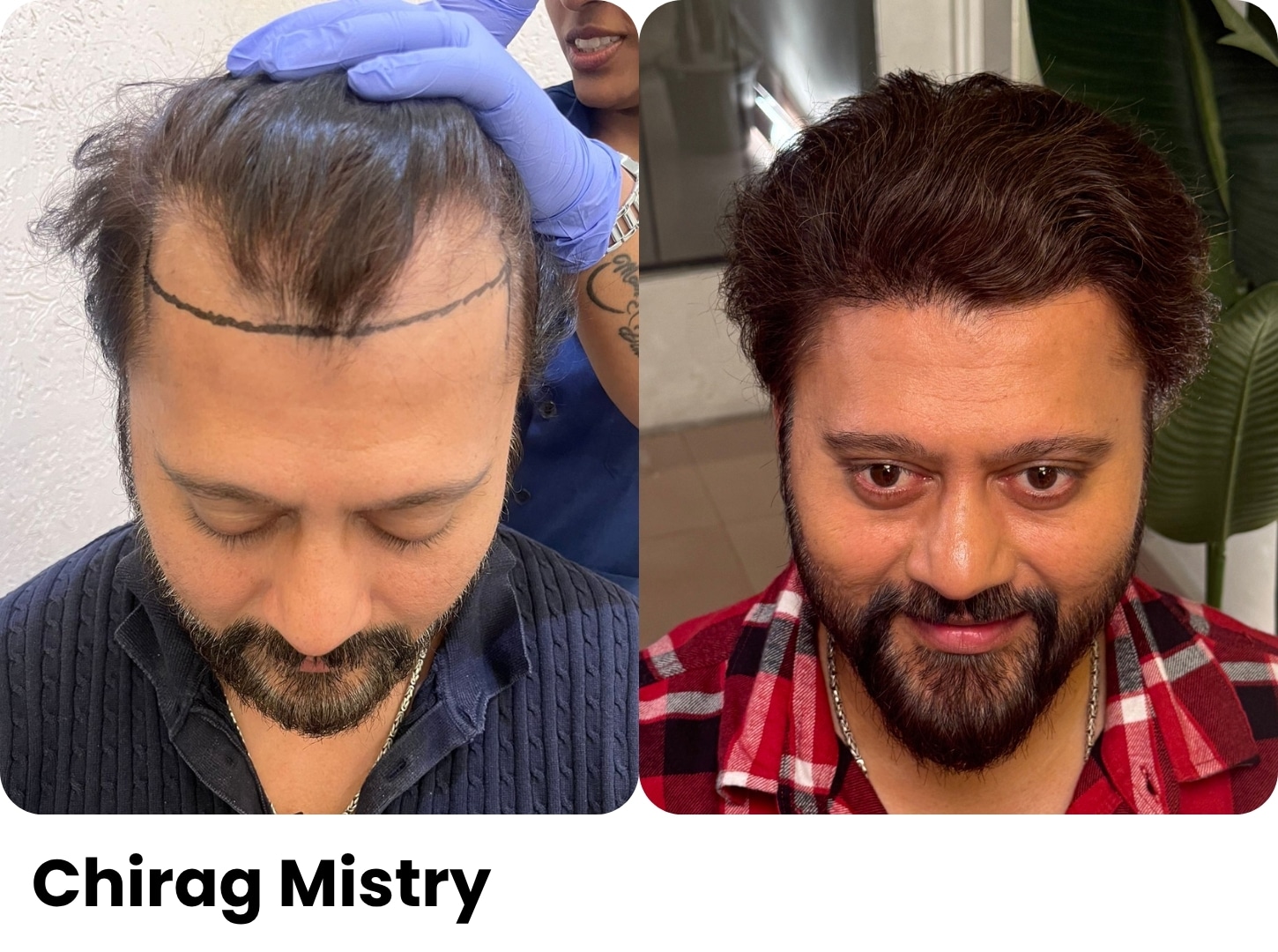
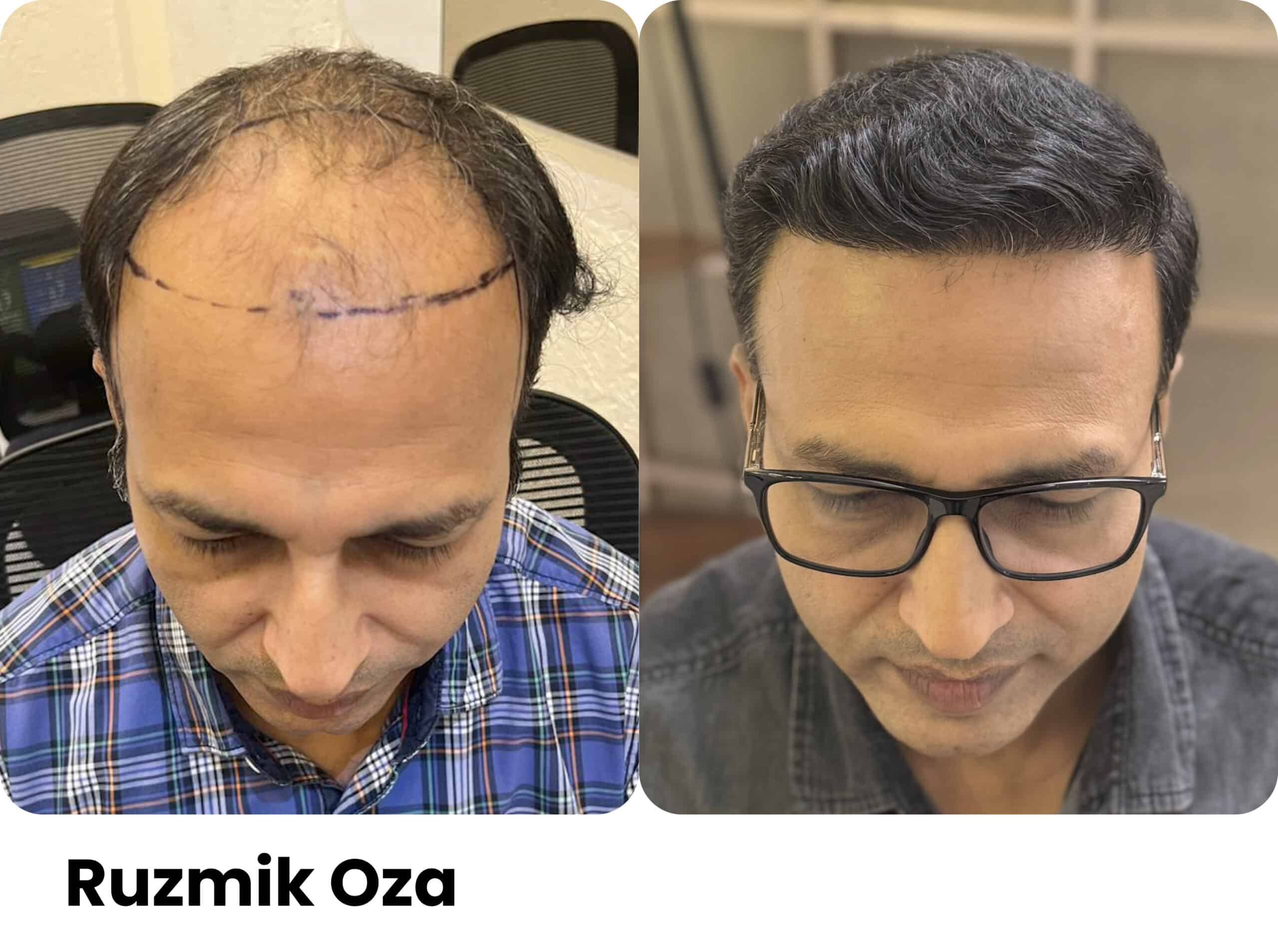
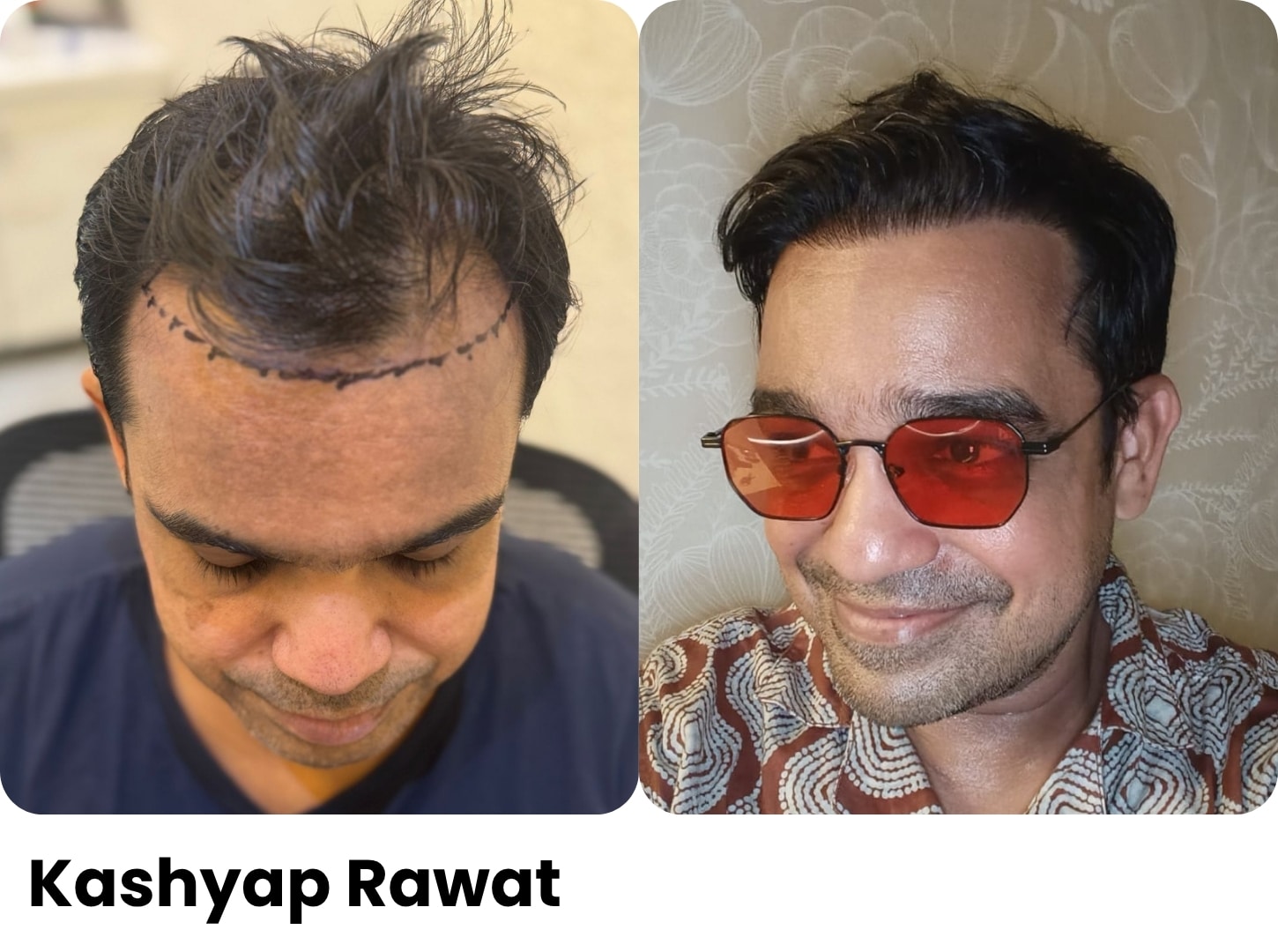
A bad hair transplant doesn't just fail cosmetically. It destroys trust. For Satya Ottur, a failed FUT procedure in 2006 left him with incomplete results, a visible scar, and 15 years of reluctance to try again. This is the story of how Assure Clinic's corrective approach rebuilt both his hair and his confidence.
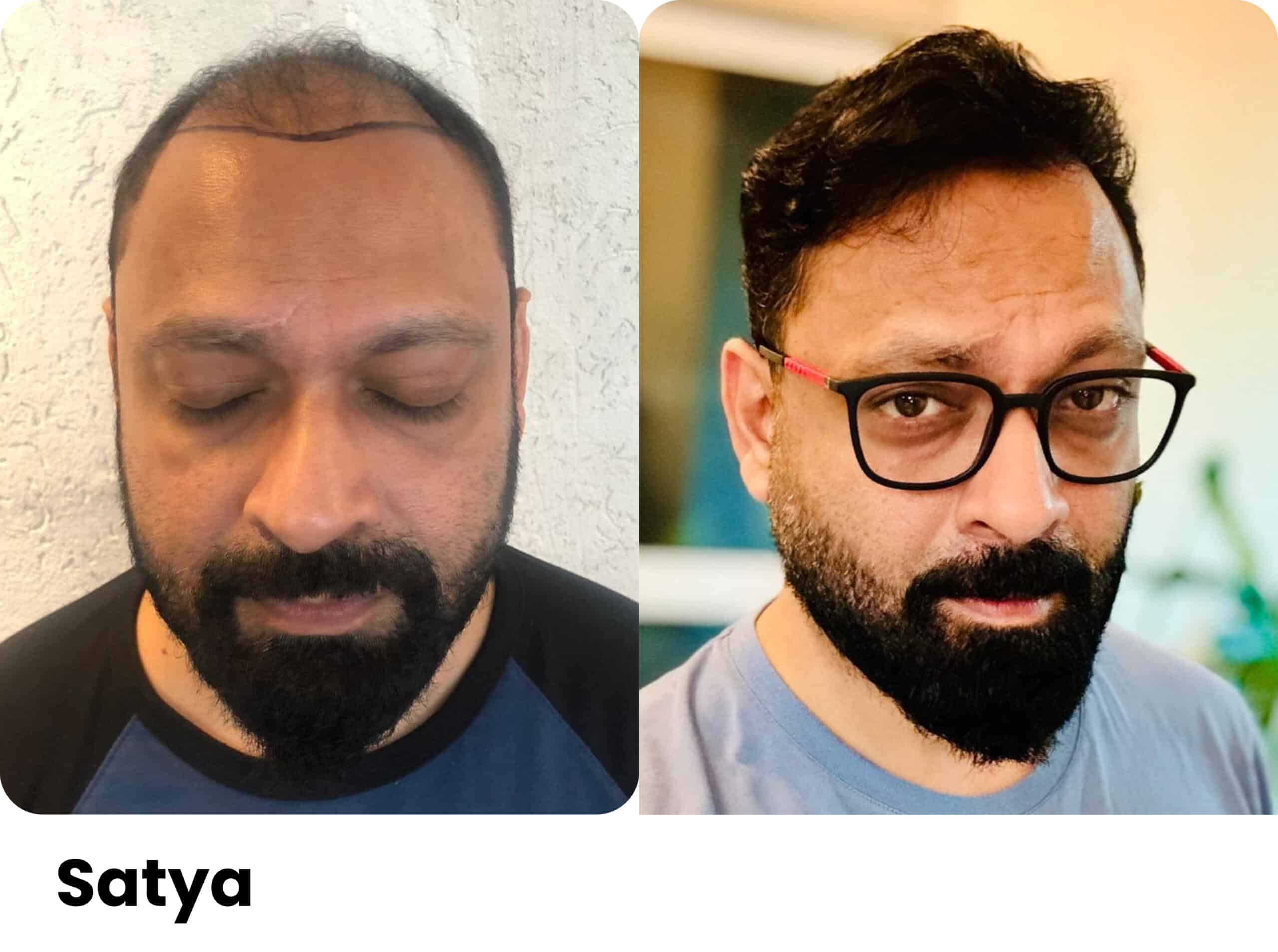
| Name | Satya Ottur |
| Age | 51 |
| Gender | Male |
| Location | Dubai |
| Hair Loss Type | Androgenetic Alopecia |
| Norwood Grade | 6 |
| Previous Treatment | FUT (strip method) transplant in 2006 |
| Complications | Incomplete coverage, crown untreated, visible FUT scar, continued hair loss |
Satya’s hair loss started early, around age 26-27. With a strong family history of male pattern baldness, he knew it was a possibility, but experiencing it firsthand was different. At that stage of life, where confidence, self-image, and personal appearance carry enormous weight, watching his hair thin steadily took a real toll.
“Hair loss was a problem for me in terms of confidence and self-esteem.”
Rather than wait, Satya decided to act. In 2006, he became an early adopter and opted for a hair transplant.
Satya’s first procedure used the FUT (Follicular Unit Transplantation) method, also known as the strip method. In 2006, this was the standard technique: a strip of scalp is surgically removed from the donor area, follicles are dissected out, and then implanted into the balding zones.
| Issue | What Happened |
|---|---|
| Incomplete coverage | Only the front area was treated; crown was left untreated |
| Visible linear scar | FUT leaves a permanent scar across the back of the scalp |
| Continued hair loss | Androgenetic alopecia is progressive — untreated areas kept thinning |
| Lack of long-term planning | The 2006 procedure addressed the present but didn’t plan for ongoing hair loss |
| Declining results | Within 1-1.5 years, hair loss became more drastic, and overall appearance deteriorated |
There was initial improvement, but it didn’t last. The crown worsened, the treated area lost density, and the overall result fell short of what Satya expected.
“Things started to deteriorate… hair loss became more drastic.”
The failed first transplant left a lasting impact. Satya didn’t just lose trust in the procedure — he lost trust in the entire process.
“One experience left me dejected… I was not very confident.”
For over 15 years, he avoided another transplant. Life moved on — marriage, family, career — but the confidence gap remained. This is where many patients stop exploring solutions entirely. The fear of repeating a bad experience outweighs the desire for results.
Two factors brought Satya back:
1. Better access to information. Hair transplant techniques had evolved dramatically between 2006 and 2021. Family members, especially his wife, did extensive research into modern approaches and outcomes.
2. External encouragement. Friends recommended exploring Assure Clinic specifically.
“To get that trust back, you need a lot of assurances.”
Satya met Dr. Abhishek Pilani at Assure Clinic. His initial reaction was cautious — 15 years of skepticism doesn’t disappear in one conversation. But the consultation was different from what he’d experienced before:
This was a corrective and advanced case, not a standard first-time transplant. Satya’s case was handled under Assure Clinic’s Edit by Dr. Abhishek Pilani programme — a dedicated repair and revision programme specifically designed for patients with failed or unsatisfactory previous transplants.
| Factor | Standard Transplant | Corrective (Repair) Case |
|---|---|---|
| Donor area | Full, untouched | Partially used + FUT scar |
| Planning | Straightforward coverage | Must integrate with prior work |
| Graft availability | Maximum | Reduced (some already extracted) |
| Scarring | None pre-existing | Must work around/camouflage old scars |
| Patient expectations | First-time optimism | Post-failure skepticism |
The key differentiator that rebuilt Satya’s trust was Assure’s phased session approach. Unlike the marathon single-day procedures common at most clinics, his treatment was structured over 5.5 days.
| Treatment Detail | Value |
|---|---|
| Technique | UHDHT method — UFME extraction + DSHI implantation |
| Duration | ~5.5 days |
| Daily Sessions | 3-4 hours each |
| Graft Count | 8,000 |
| Areas Treated | Front restoration + crown coverage (addressing original gaps) |
| Performing Doctor | Dr. Rachel, trained under protocols established by Dr. Abhishek Pilani (MBBS, MD Dermatology, Gold Medalist, ISHRS Member) |
Each daily session included:
Spreading the procedure across multiple days means:
“The experience was quite pleasant… very well organized.”
| Timeline | Satya’s Experience |
|---|---|
| Day 6 | Traveled home (recovery planned well enough to travel safely) |
| Week 1-2 | Work from home setup, eased back into routine |
| First few days | Mild swelling and slight discomfort around forehead and treated areas (completely normal, subsided within days) |
| Overall | Recovery did not significantly disrupt daily life |
The multi-day procedure approach contributed directly to smoother recovery — less strain on the body meant faster return to normal activity.
Over the following months, Satya watched what he’d waited 15 years to see:
“It was absolute joy… something you feel won’t come back, comes back.”
The impact went beyond the mirror. Family noticed immediately. Even his father, who had seen the first transplant’s poor results, was surprised by the dramatic improvement.
“Compliments don’t hurt.”
| Factor | FUT (2006 — Satya’s first) | UHDHT (2021+ — Satya’s corrective at Assure) |
|---|---|---|
| Method | Strip of scalp removed surgically | Individual follicles extracted one by one |
| Scarring | Permanent linear scar | Tiny dot scars, virtually invisible |
| Recovery | Longer, more painful | Faster, minimal discomfort |
| Precision | Limited by strip dissection | Individual graft control |
| Natural results | Often detectable | Indistinguishable from natural hair |
| Repeat procedures | Difficult (limited donor after strip) | Possible (minimal donor impact) |
| Session approach | Often single long day | Phased sessions for precision |
If you’ve had a previous transplant that didn’t meet expectations — whether it was incomplete coverage, unnatural results, visible scarring, or continued hair loss — a corrective procedure may be the right next step.
At Assure Clinic:
You can check your Norwood grade or browse our before and after results to see more transformations.
20,000+ procedures. High graft survival. 60+ qualified doctors. Book a free consultation today.
Expert guide by Dr. Abhishek Pilani covering causes, treatments, and when to consider a hair transplant. Trusted by 10,000+ readers.