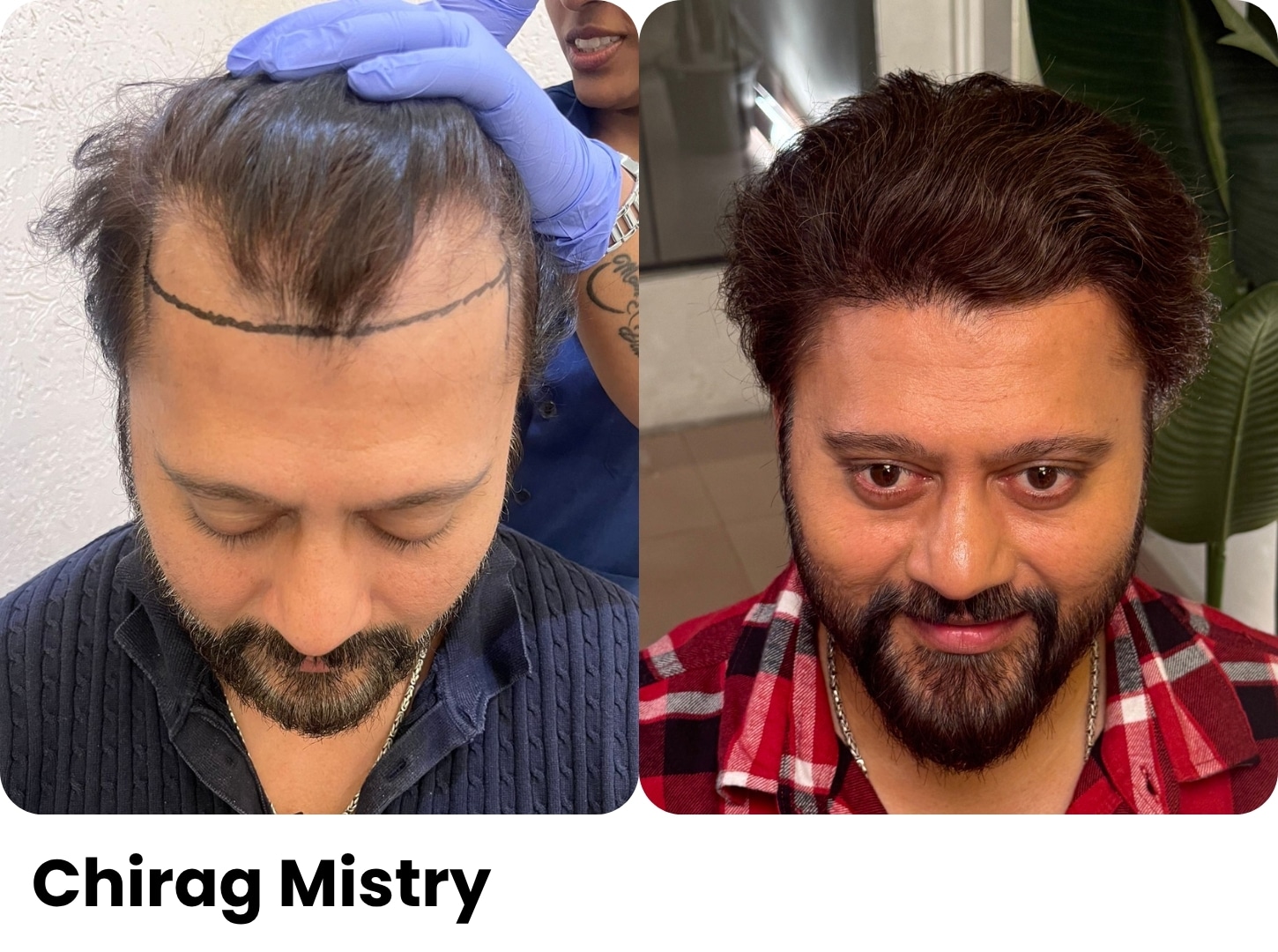
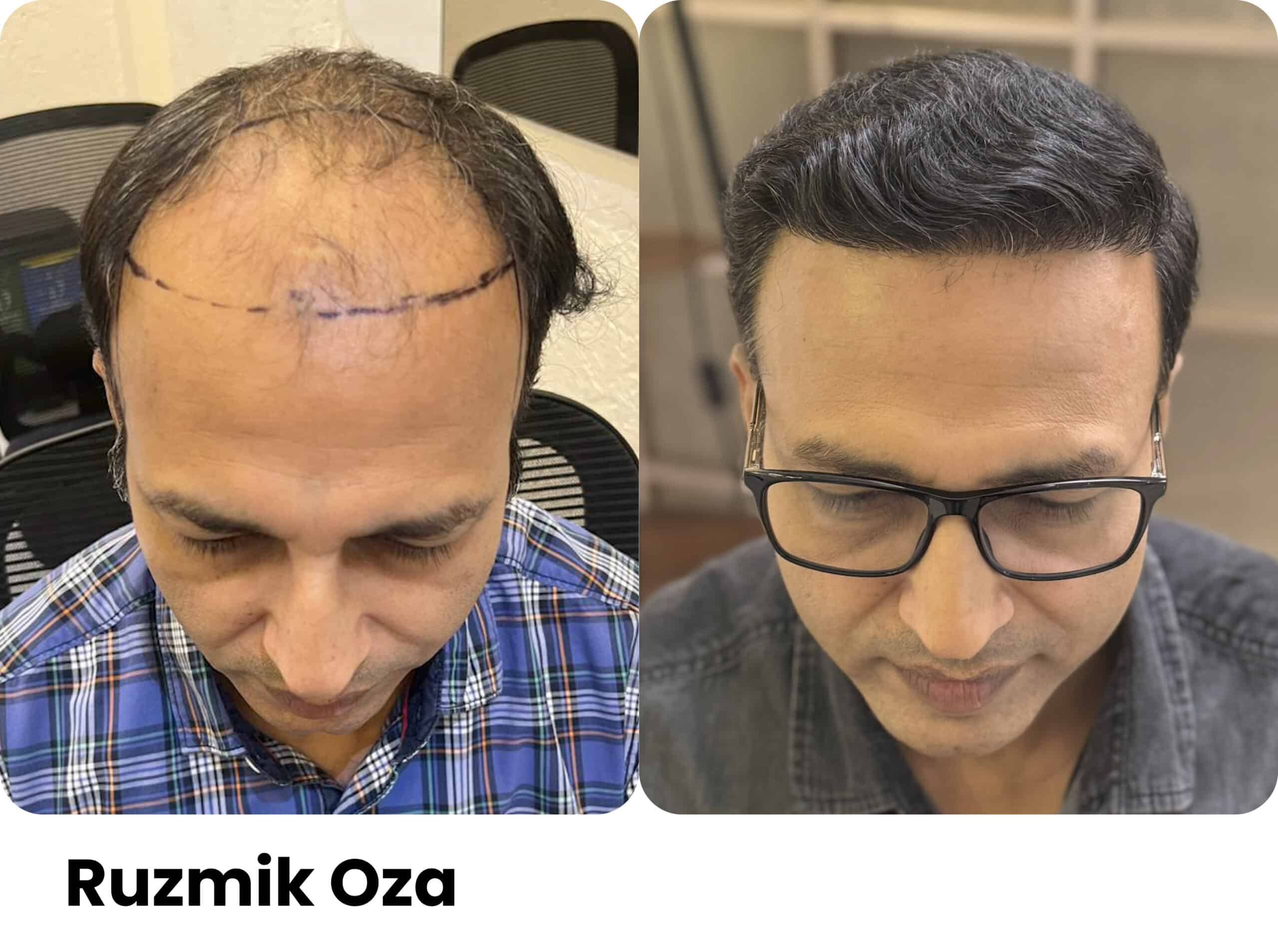
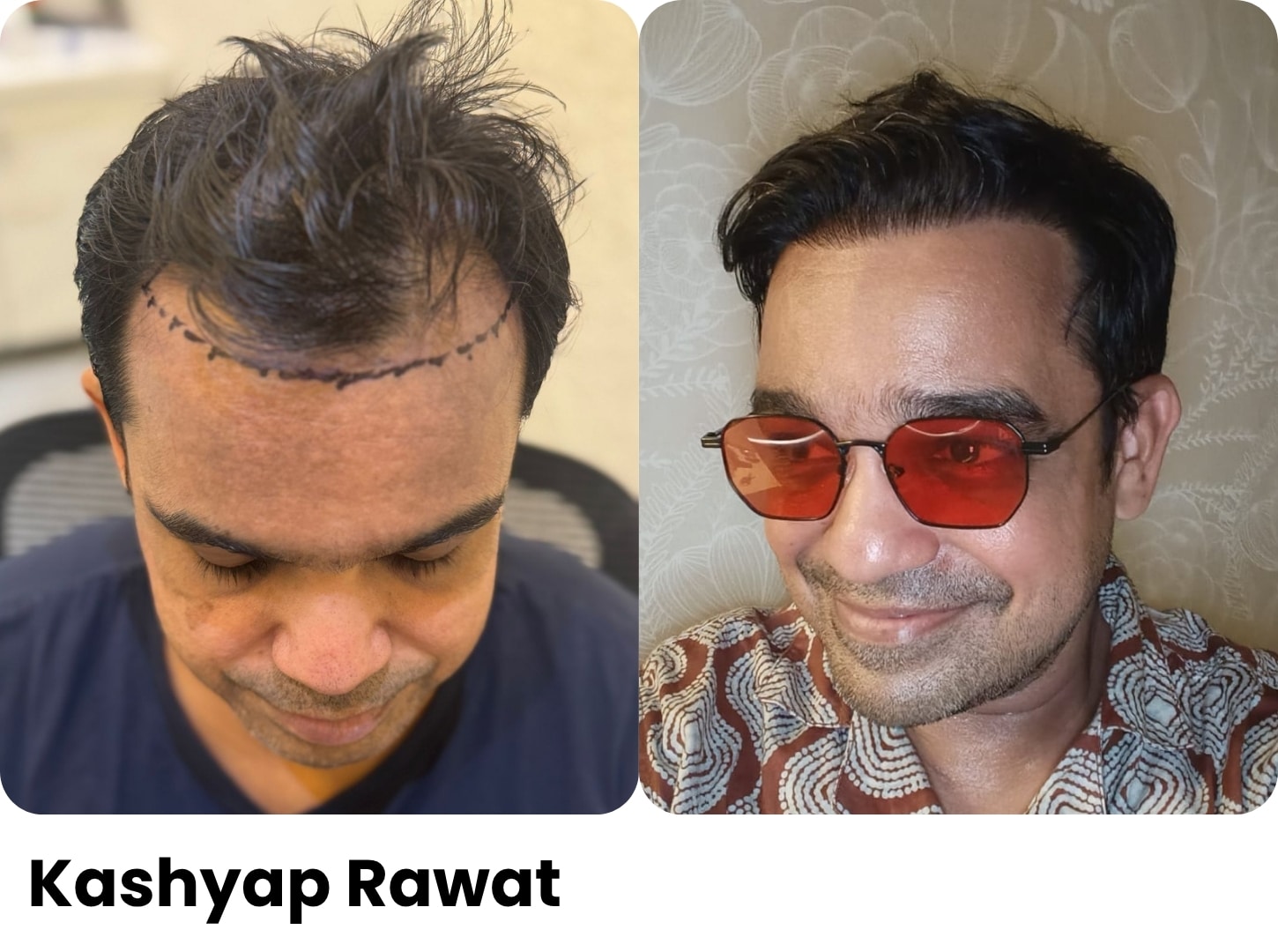
Rajneesh got a hair transplant at 25. Three years later, his results are stronger than ever — the only regret is not acting sooner.
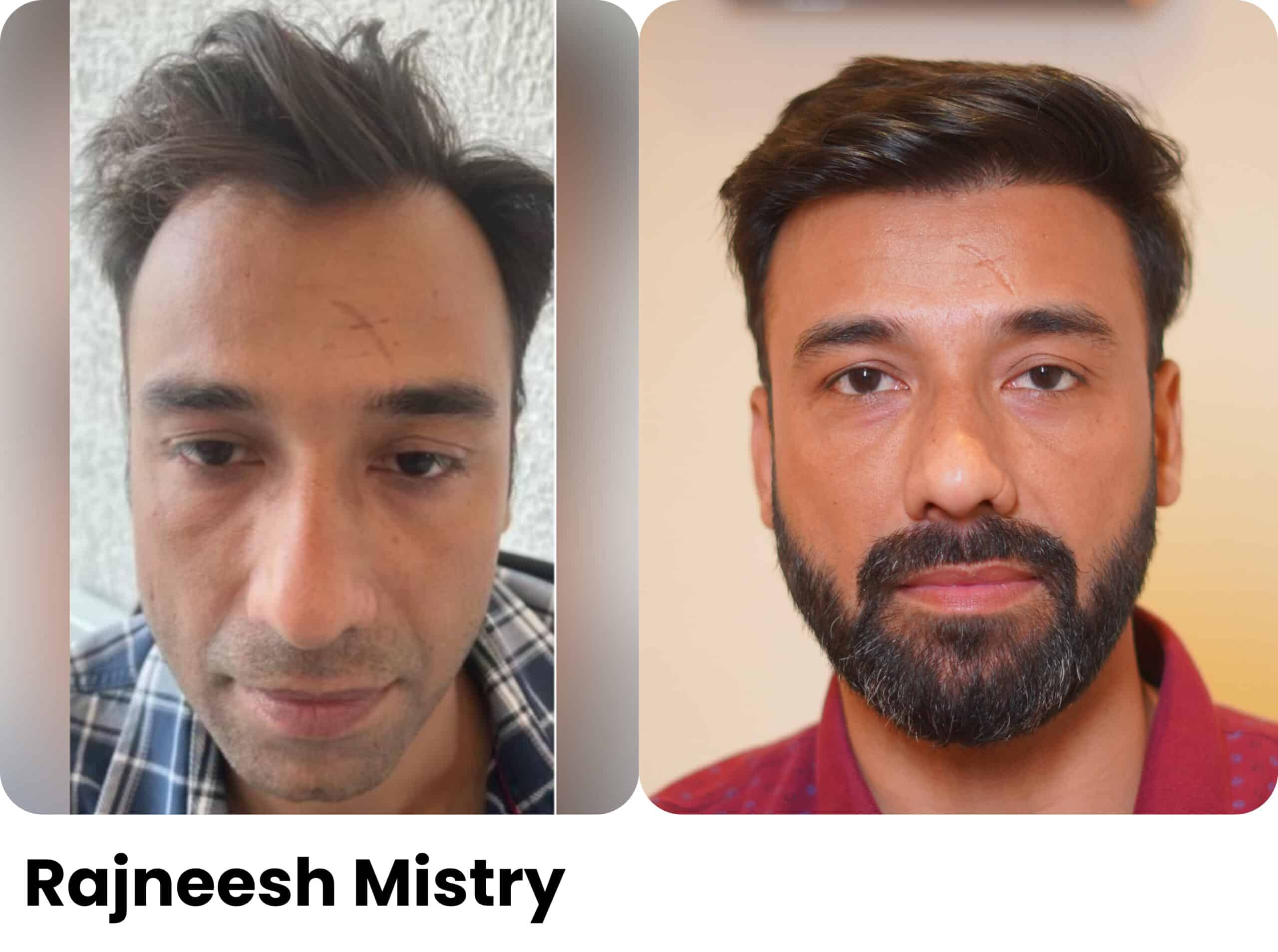
| Name | Rajneesh Mistri |
| Age | 40 |
| Location | Indore |
| Profession | Commercial Real Estate (Sunil Agrawal & Associates) |
| Hair Loss Type | Androgenetic Alopecia (early onset, family history) |
| Technique | UHDHT — UFME extraction + DSHI implantation |
| Graft Count | 4,500 |
| Sessions | 6 |
| Previous Treatment | Multivitamins, minoxidil, topical treatments |
Indore is one of Central India\’s fastest-growing cities, and Rajneesh works at the center of its commercial real estate sector. Daily client interactions, presentations, and meetings are the norm. In a field where first impressions carry weight, confidence isn\’t optional.
“Stress is just part and parcel of the job — some things you control, some you don\’t.”
Hair loss started around age 25-26. With a strong family history of baldness, it initially felt inevitable. But “inevitable” doesn\’t mean “acceptable.”
The change wasn\’t dramatic — it was gradual. Looking at group photos and not feeling like himself. Trying different hairstyles to compensate. Feeling older than people just a few years ahead.
“Somewhere, my self-esteem, confidence, and happiness started disappearing.”
This is the reality for millions of young men experiencing early hair loss. It\’s not about vanity — it\’s about a fundamental shift in how you see yourself every day.
Like most men in their 20s facing hair loss, Rajneesh tried the standard route:
| Treatment | Result |
|---|---|
| Multivitamins | No visible improvement |
| Minoxidil (topical) | Temporary slowdown, no regrowth |
| Extended routines | Time-consuming with minimal payoff |
“It felt like a long, hectic routine without real results.”
The fundamental issue: these treatments can slow hair loss but cannot restore what\’s already gone. For someone with established thinning and a genetic predisposition, they\’re management tools, not solutions.
Rajneesh visited multiple clinics in Indore. He even explored hair weaving as an alternative. But the biggest barrier wasn\’t access to clinics — it was decision-making.
“Many people want to do it, but they\’re stuck thinking — what will others say?”
In smaller cities especially, there\’s a cultural hesitation around hair transplants. The stigma of “cosmetic procedures” and fear of judgment from peers, colleagues, and family creates a delay loop that can last years.
| Factor | What Changed |
|---|---|
| Strong counseling | Detailed consultation removed doubts |
| Real patient results | Seeing actual transformations from the same clinic built trust |
| Smooth process | Procedure planned to not disrupt work life |
| Honest guidance | Only advised what was necessary — no upselling |
| Aftercare support | Consistent follow-up even 3 years later |
“Many clinics do this every day — but I\’m doing it once in my life. For me, it has to be perfect.”
| Treatment Detail | Value |
|---|---|
| Technique | UHDHT method — UFME extraction + DSHI implantation |
| Graft Count | 4,500 |
| Sessions | 6 |
| Performing Doctor | Dr. Nishi, trained under protocols established by Dr. Abhishek Pilani |
| Clinic | Assure Clinic, Indore |
Pre-procedure fears: pain and complication.
Reality:
“Once it started, I realized there was nothing to worry about.”
| Timeline | Progress |
|---|---|
| Month 1-2 | Initial healing, mild shedding (shock loss) |
| Month 3-4 | Early new growth begins |
| Month 5-6 | Noticeable improvement in density |
| Month 8-9 | Full transformation — natural density, defined hairline |
| Year 3 | Results sustained, zero degradation |
“When you feel good about yourself, everything starts aligning.”
Rajneesh addresses a cultural reality head-on:
“It\’s mostly in our head. Once you get results, people appreciate and ask for advice.”
The fear of judgment typically exceeds the reality. Most people respond with curiosity and admiration, not criticism. Rajneesh himself has become an informal ambassador for hair transplants in his professional circle — proof that openness eliminates stigma.
“The earlier you do it, the better your results.”
Learn more about hair transplant cost, the recovery timeline, or the Norwood scale. See more before and after results.
20,000+ procedures. High graft survival. 60+ qualified doctors. Book a free consultation today.
Expert guide by Dr. Abhishek Pilani covering causes, treatments, and when to consider a hair transplant. Trusted by 10,000+ readers.