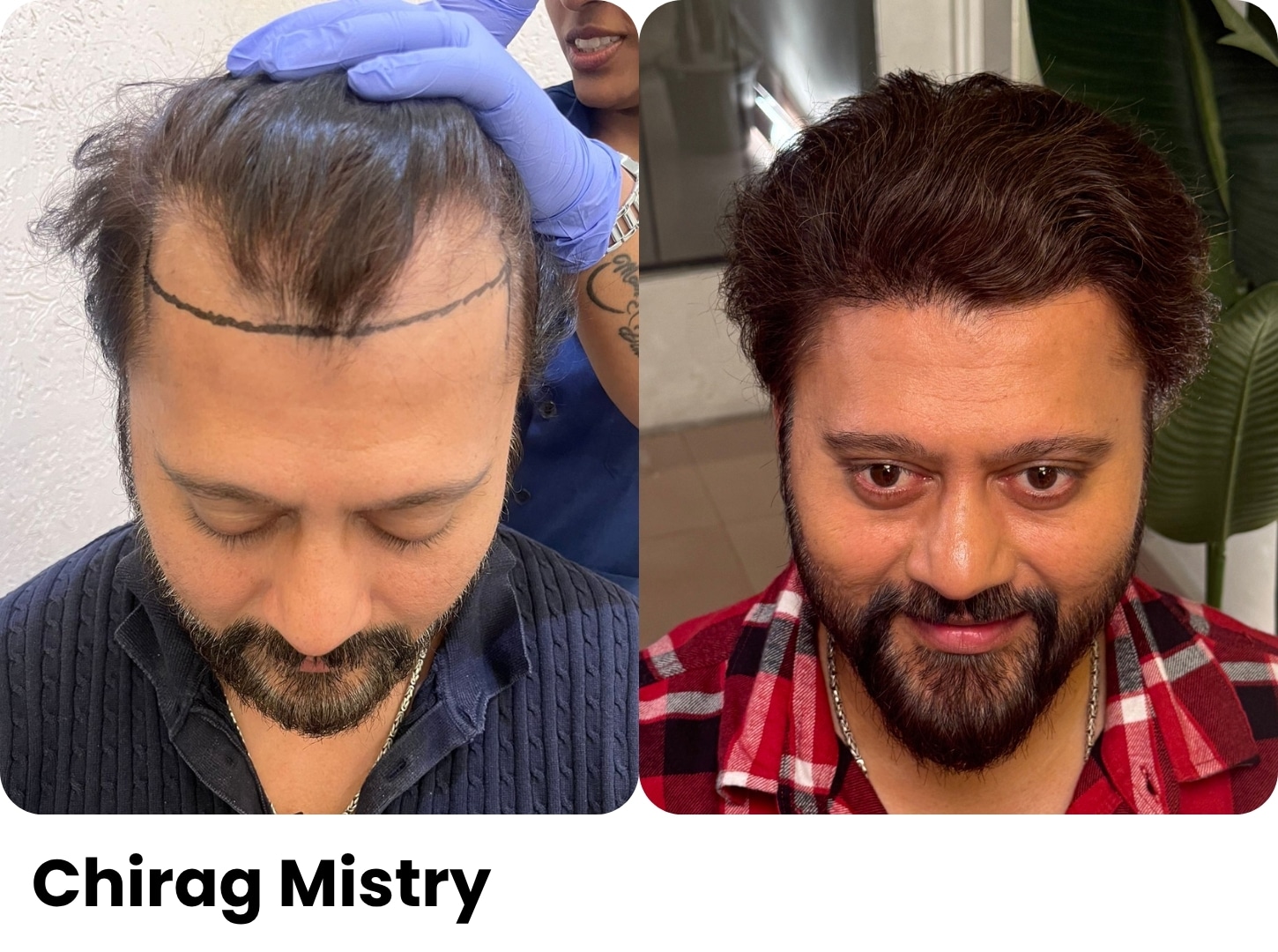
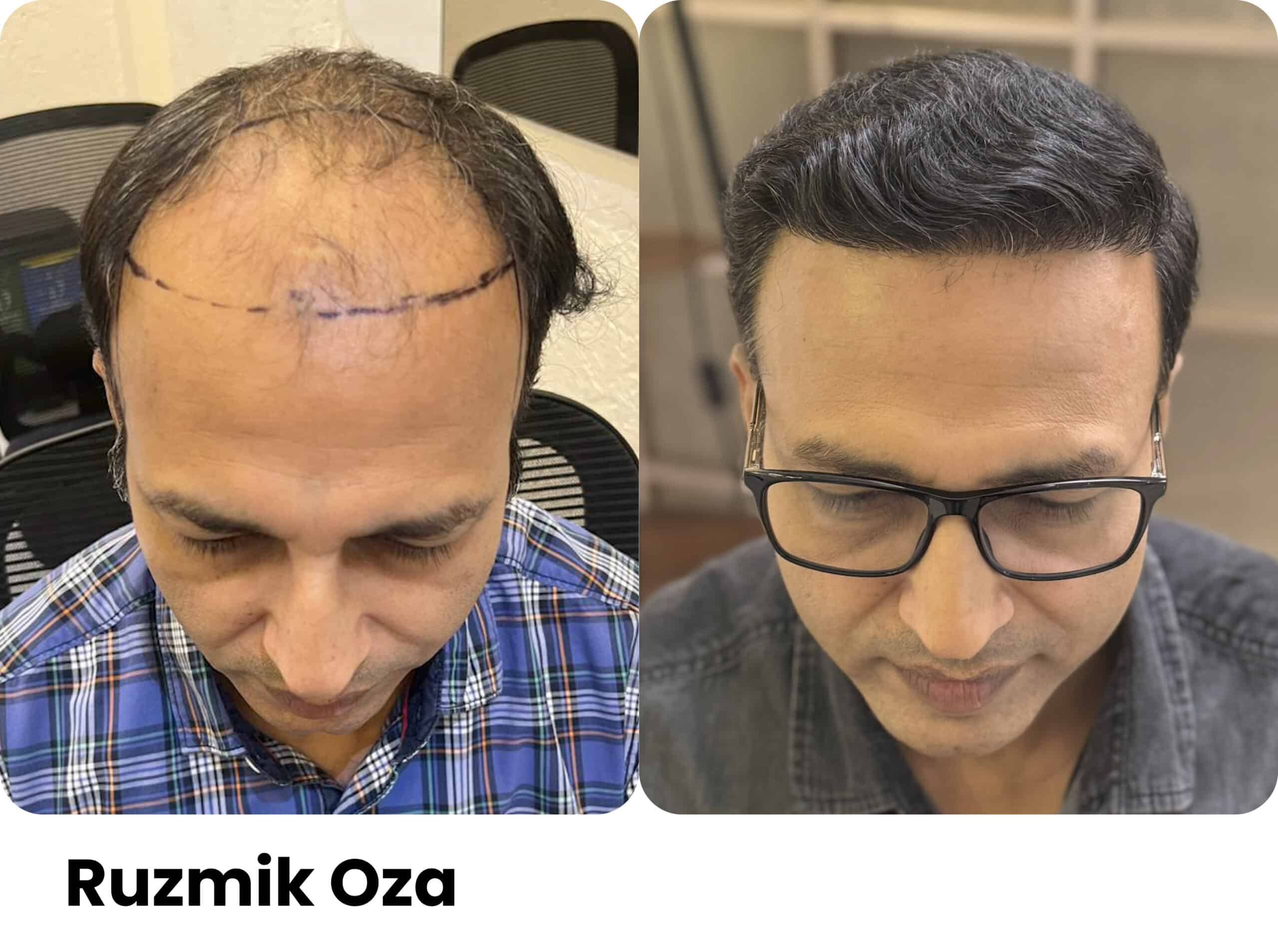
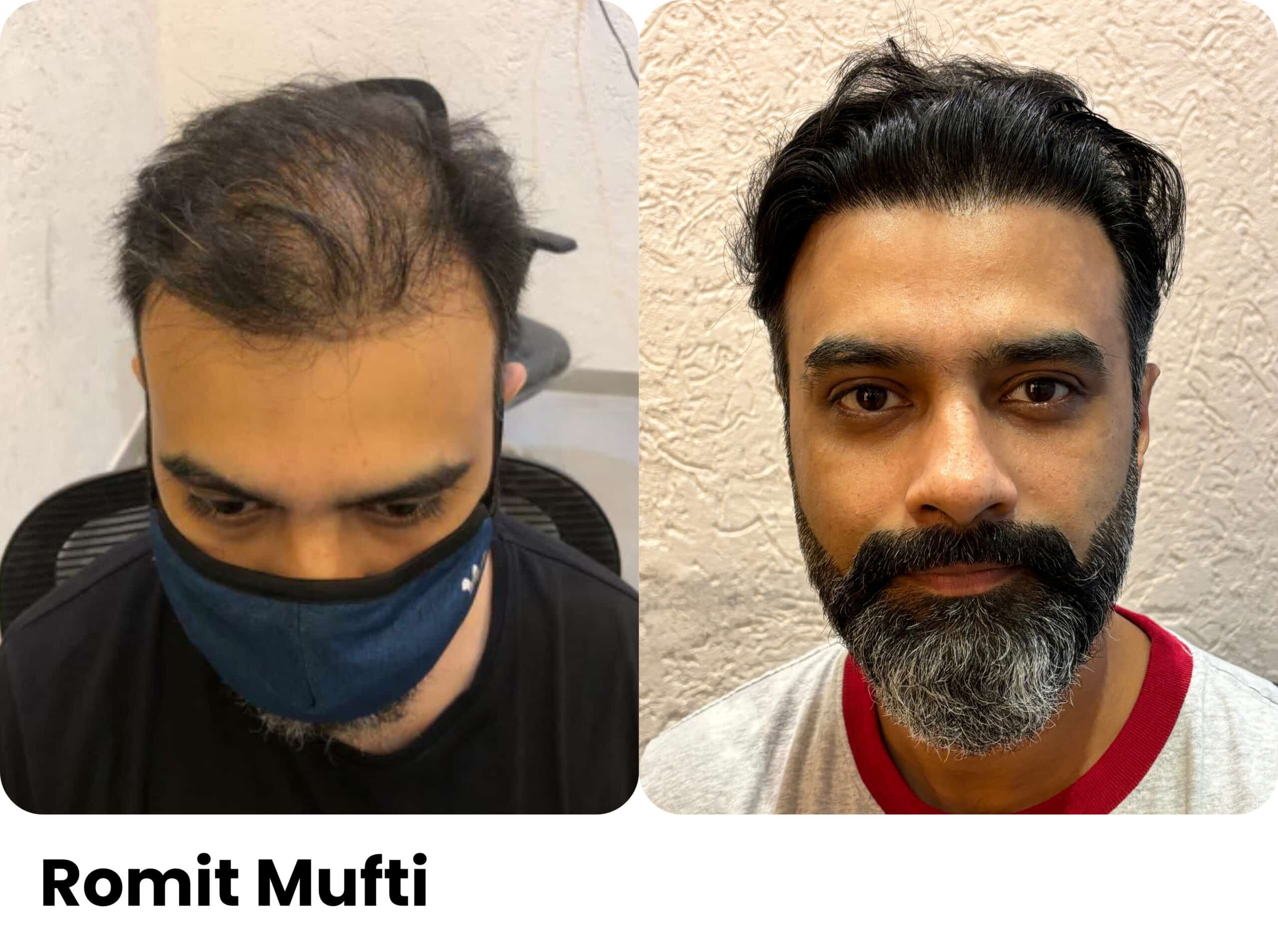
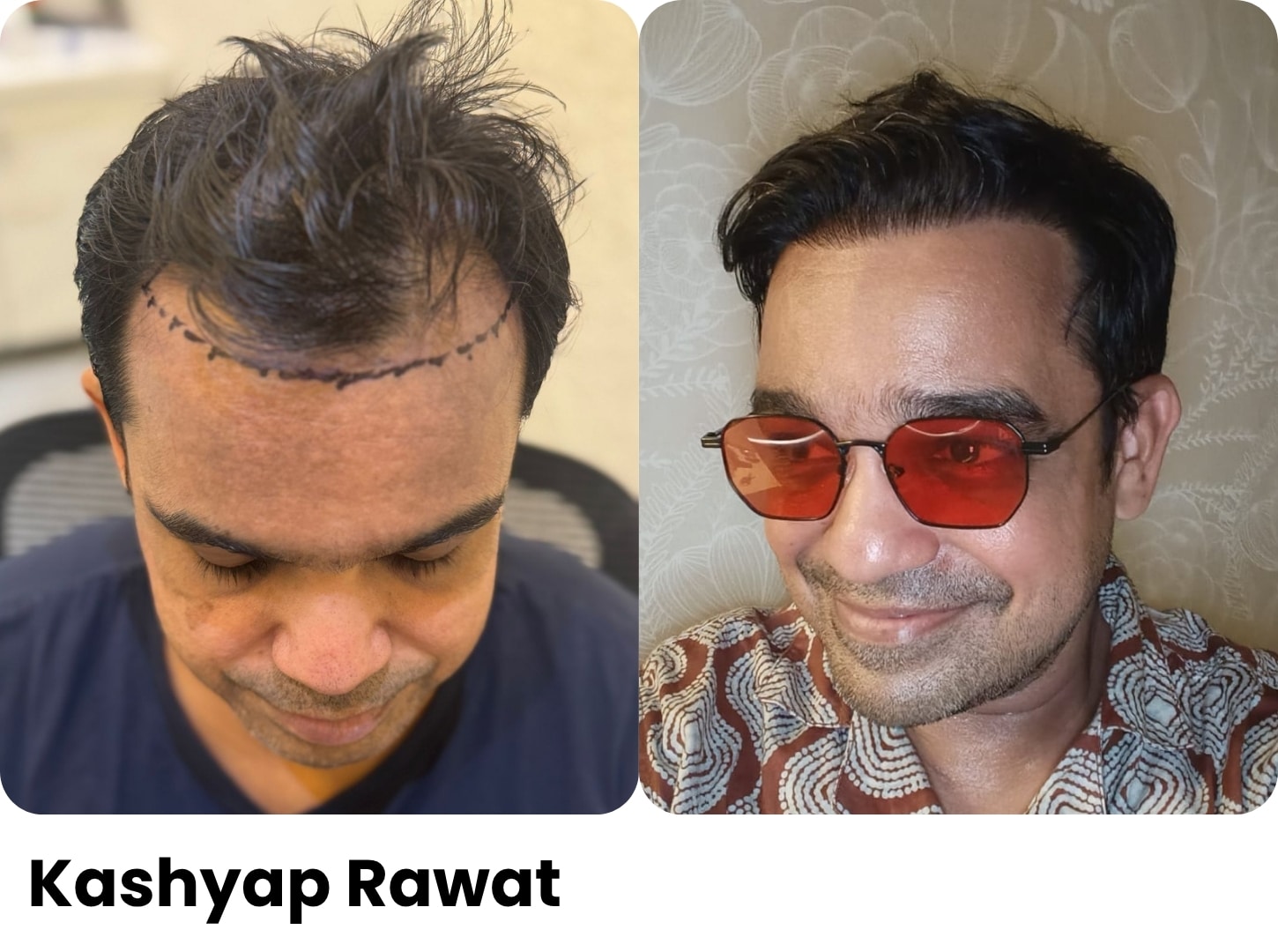
For over two decades, Kashyap Rawat carried the weight of hair loss silently. A creative professional who built stunning interiors for premium clients like the Taj Group, he found himself unable to look at his own reflection. At 45, with a Norwood Stage 6 classification and years of failed remedies behind him, he finally took the step that would change not just his appearance -- but his entire life trajectory.
| Name | Kashyap Rawat |
| Age | 45 at time of procedure |
| Gender | Male |
| Location | Mumbai |
| Profession | Interior Designer & Pranic Healer |
| Hair Loss Type | Androgenetic Alopecia (Genetic) |
| Norwood Grade | Stage 6 |
| Previous Treatment | Ayurvedic oils, home remedies, salon treatments, vitamin supplements |
| Graft Count | 6500+ |
| Sessions | 2 |
| Technique | UHDHT (UFME extraction + DSHI implantation) |
| Performing Doctors | Dr. Roshni & Dr. Maina |
| Results Timeline | 6-8 months |
Kashyap Rawat is not your average professional. With a career spanning interior design and product design for some of India\’s most prestigious hospitality brands, including the Taj Group, he later expanded into Pranic Healing — building a global client base that relies on his energy, presence, and confidence.
But behind the creative achievements, a different story was unfolding.
Hair loss first appeared during his college years, well before 2010. At first, Kashyap dismissed it. There was no immediate family history to raise alarms — only his grandfather had experienced similar thinning. He assumed it was temporary. It was not.
Over the years, the thinning became more aggressive. What started as a minor recession became a visible transformation that he could no longer ignore.
The emotional toll of hair loss is rarely discussed openly, especially among men. For Kashyap, the impact was gradual but devastating.
He stopped taking photographs. Social events became a source of anxiety rather than enjoyment. He would spend one to two hours getting ready before stepping out — not out of vanity, but out of a desperate need to manage his appearance.
“I stopped looking in the mirror. I stopped taking photos. I became a different person.”
The changes were not just cosmetic. Hair loss triggered a chain reaction that affected his mental health, his social confidence, and even his eating habits. Stress-related weight gain followed, compounding his insecurity. In professional settings, he felt that his appearance overshadowed his creative abilities — that clients and colleagues were noticing his hair loss before they noticed his work.
During college and early career years, bullying and casual remarks about his appearance added another layer of pain. The cumulative effect was a slow erosion of the self-assured personality he had once carried effortlessly.
In a particularly painful twist, Kashyap enrolled in a weight loss program to regain control of his appearance. The physical results were encouraging — he was losing weight and feeling healthier. But there was a side effect no one warned him about.
His hair fall accelerated dramatically during the program.
The very thing he was doing to feel better about himself was making his primary insecurity worse. It was a breaking point that forced him to confront the reality that hair loss required a different kind of solution.
Before considering a hair transplant, Kashyap exhausted every alternative he could find:
The result was always the same: no improvement. In fact, the condition worsened steadily over time. Each failed attempt added another layer of frustration and eroded his confidence in finding a solution.
Kashyap had been aware of Dr. Abhishek Pilani through his professional network for some time. He had seen real transformations in people he knew personally. But denial is a powerful force. He delayed, rationalized, and told himself that his situation was manageable.
What finally changed was a combination of factors: seeing others achieve life-changing results, recognizing that his condition was only getting worse, and reaching a point where the emotional cost of inaction exceeded the fear of action.
“I decided to trust and take action without overthinking. That was the turning point.”
This mindset shift — choosing trust over confusion — proved to be the most important decision of his journey.
Unlike many patients who arrive anxious and overwhelmed, Kashyap made a conscious choice to approach the procedure with minimal anxiety. Having committed to trusting the process, he let go of the need to over-research and second-guess.
| Treatment Detail | Value |
|---|---|
| Technique | UHDHT method — UFME extraction + DSHI implantation |
| Graft Count | 6500+ |
| Sessions | 2 |
| Performing Doctors | Dr. Roshni & Dr. Maina, trained under protocols established by Dr. Abhishek Pilani (MBBS, MD Dermatology, Gold Medalist, ISHRS Member) |
| Clinic | Assure Clinic, Mumbai |
What surprised Kashyap most was the experience itself. He described the environment as relaxed and spa-like — a far cry from the clinical, intimidating scenario he had imagined. The procedure was completely painless. He even enjoyed ice cream during breaks between sessions.
“This is not just a treatment, it\’s an art.”
The UHDHT technique used at Assure Clinic involves two specialized components: UFME (Ultra Fine Micro Extraction) for precise follicle harvesting, and DSHI (Direct Scalp Hair Implantation) for natural-angle placement. The combination ensures maximum graft survival and a natural-looking result that blends seamlessly with existing hair.
With 6500+ grafts placed across two sessions, the procedure addressed his Norwood Stage 6 pattern comprehensively — covering the frontal hairline, mid-scalp, and crown regions.
The timeline of Kashyap\’s transformation:
The impact of Kashyap\’s hair restoration extended into every corner of his life.
The man who once avoided photographs started taking them again. The person who spent hours preparing for social events found himself stepping out with ease. The self-consciousness that had shadowed him for over two decades simply dissolved.
With his confidence restored, Kashyap found the motivation to address other aspects of his health. He joined a gym after his marriage, adopted healthier habits, and approached life with a renewed sense of energy. The hair restoration acted as a catalyst — fixing one deep insecurity unlocked the motivation to improve everything else.
In the professional sphere, the change was equally significant. Client interactions improved. His personal brand strengthened. He expanded further into Pranic Healing, building a practice that demands presence, trust, and confidence — qualities that had been undermined by years of self-doubt.
In a remarkable coincidence, Kashyap met his wife in the same year as his procedure. He entered a successful marriage and achieved what he describes as a holistic life transformation — one that started with a single decision about his hair.
Perhaps the most telling indicator of Kashyap\’s satisfaction is what he did next. He did not just move on with his life. He actively started referring others who were struggling with hair loss.
To date, Kashyap has personally referred 20 to 30 or more people for hair transplants. Many of them have reported life-changing results of their own. He continues to receive gratitude messages from people whose lives were transformed because of his recommendation.
“If it\’s fixable, why not fix it? Trust the process, take the leap, and don\’t let doubt hold you back.”
Kashyap\’s journey addresses several critical misconceptions about hair restoration:
After years of Ayurvedic oils, salon treatments, supplements, and lifestyle changes, Kashyap\’s condition only worsened. Genetic hair loss (androgenetic alopecia) is driven by DHT sensitivity at the follicular level — something that topical oils and supplements cannot address. His case demonstrates that while these approaches may support general scalp health, they cannot reverse pattern baldness.
Kashyap described his experience as spa-like and completely painless. The UHDHT multi-session approach at Assure Clinic keeps each sitting comfortable and manageable, with breaks built into the schedule.
With 6500+ grafts and a Norwood Stage 6 classification, Kashyap achieved comprehensive coverage that has lasted more than seven years. Age is not a barrier to excellent outcomes — donor area health and proper technique are what determine success.
Kashyap\’s transformation encompassed his mental health, social confidence, career trajectory, physical fitness, and personal relationships. The procedure was the starting point for a complete life overhaul.
“If it\’s fixable, why not fix it?”
View more before and after results or learn about hair transplant cost.
20,000+ procedures. High graft survival. 60+ qualified doctors. Book a free consultation today.
Expert guide by Dr. Abhishek Pilani covering causes, treatments, and when to consider a hair transplant. Trusted by 10,000+ readers.