Key Takeaways
- Scalp psoriasis is a chronic autoimmune condition that accelerates skin cell turnover from 28 days to just 3-4 days, producing thick silvery scales that can trap and weaken hair follicles.
- Up to 56% of people with psoriasis experience scalp involvement (National Psoriasis Foundation), and temporary hair loss occurs in roughly 40-50% of those cases due to inflammation, scratching, and treatment side effects.
- Scalp psoriasis hair loss is almost always reversible once the underlying inflammation is controlled, unlike androgenetic alopecia which is progressive.
- Effective treatment options range from topical corticosteroids and vitamin D analogues for mild cases to biologics and phototherapy for severe, treatment-resistant psoriasis.
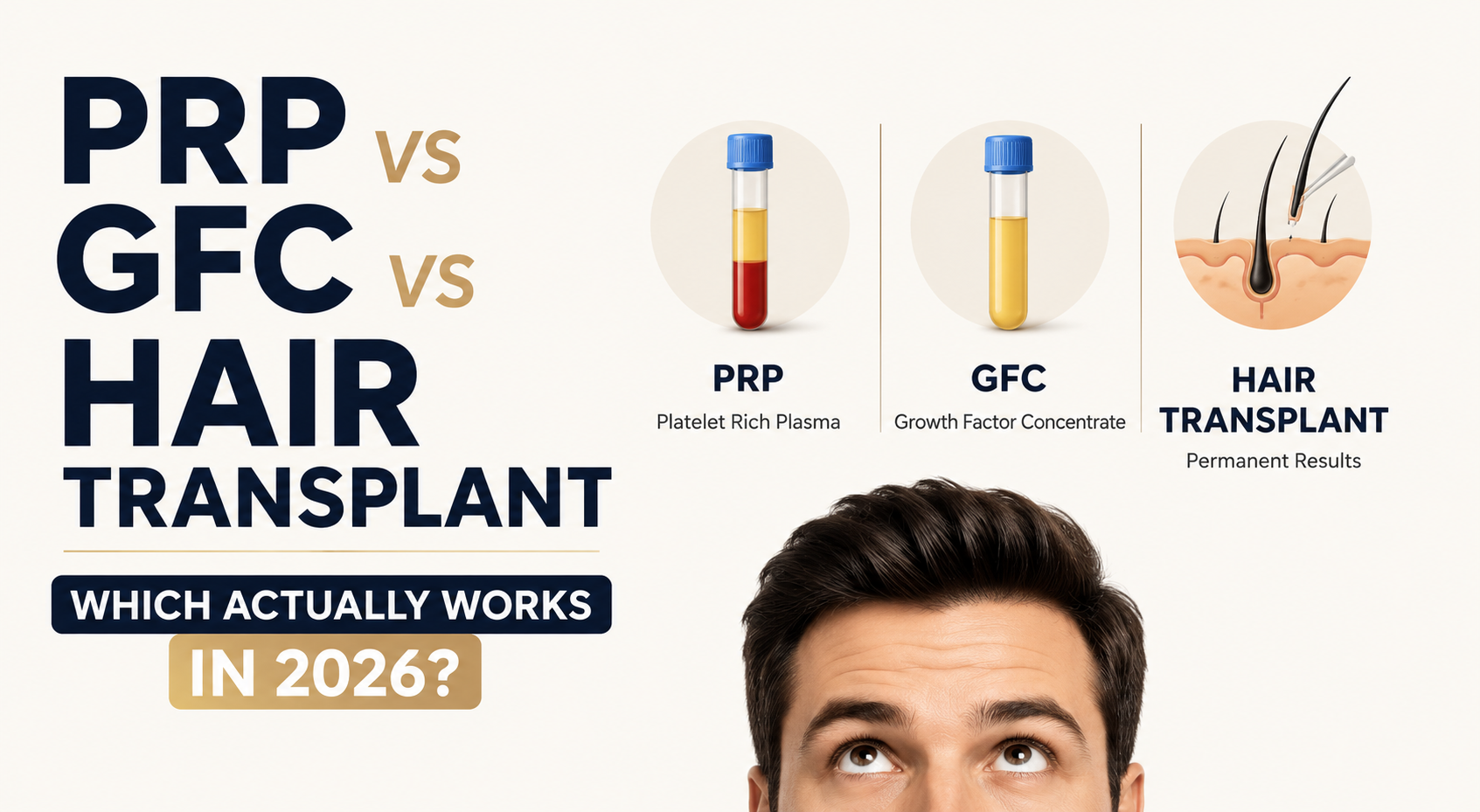
- If hair loss persists after psoriasis flares are managed, an underlying condition such as androgenetic alopecia may be contributing, and specialist evaluation including PRP therapy or advanced hair restoration should be considered.
Introduction
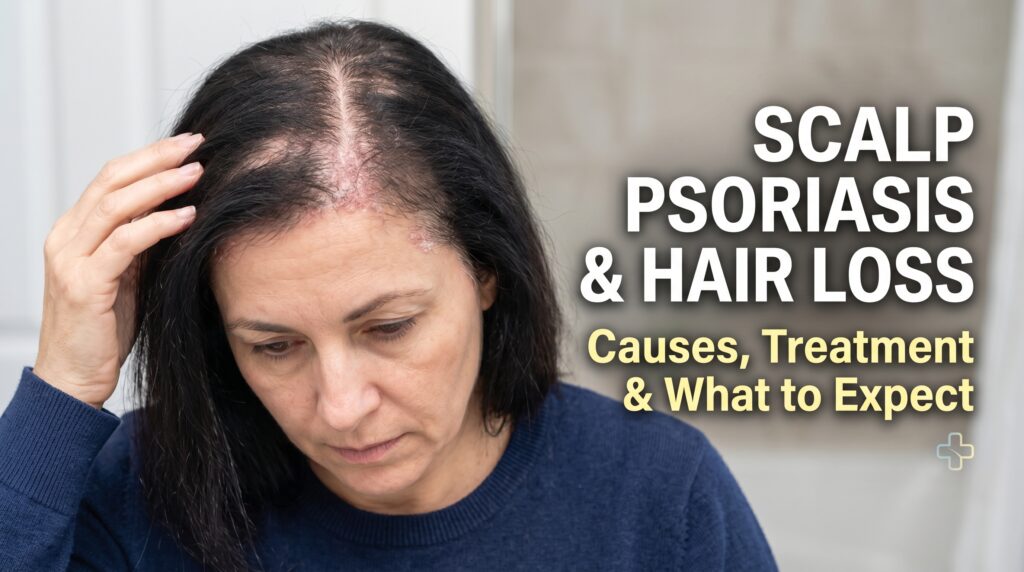
Scalp psoriasis is a chronic autoimmune skin condition in which the immune system mistakenly accelerates the production of skin cells on the scalp, resulting in thick, red, scaly patches that can extend beyond the hairline onto the forehead, neck, and around the ears. The World Health Organization’s 2016 Global Report on Psoriasis estimates that psoriasis affects 2-3% of the global population, and according to the National Psoriasis Foundation, at least 45-56% of those individuals experience scalp involvement.
If you have noticed silvery-white scales building up on your scalp alongside increasing hair fall, you are dealing with a condition that is both frustrating and widely misunderstood. Many people confuse scalp psoriasis with severe dandruff and spend months using the wrong treatments, during which the underlying inflammation continues damaging the scalp environment.
Dr. Abhishek Pilani, MBBS MD Dermatology (Gold Medalist, Pramukhswami Medical College), ISHRS Member and founder of Assure Clinic, explains that among the 20,000+ cases treated at Assure Clinic’s 13 locations, scalp psoriasis patients who delay proper diagnosis often present with compounded hair loss: “The psoriasis itself causes temporary shedding, but the real concern is when chronic inflammation creates an environment where existing androgenetic alopecia accelerates undetected.”
This guide covers everything you need to know about how scalp psoriasis causes hair loss, how to distinguish it from other scalp conditions, the latest evidence-based treatment options, and when specialist intervention becomes necessary.
What Is Scalp Psoriasis?
Scalp psoriasis is a specific manifestation of psoriasis, an autoimmune condition where T-cells in the immune system become overactive and attack healthy skin cells. This triggers an abnormally rapid skin cell production cycle.
The Autoimmune Mechanism
In a healthy scalp, skin cells (keratinocytes) are produced in the basal layer of the epidermis, migrate to the surface over approximately 28-30 days, and shed naturally. In scalp psoriasis, this cycle is compressed to just 3-4 days (Journal of the American Academy of Dermatology, 2021). The result is a massive build-up of immature skin cells on the scalp surface that form the characteristic thick, silvery-white plaques.
The process involves several immune pathways:
- T-cell activation: Dendritic cells in the skin activate T-helper cells (Th1 and Th17), which release inflammatory cytokines including TNF-alpha, IL-17, and IL-23.
- Inflammatory cascade: These cytokines stimulate keratinocyte proliferation and recruit more immune cells, creating a self-perpetuating cycle of inflammation.
- Vascular changes: Blood vessels in the affected areas dilate and multiply (angiogenesis), contributing to the characteristic redness beneath the scales.
- Barrier disruption: The rapid turnover prevents the skin barrier from forming properly, leading to moisture loss, increased sensitivity, and vulnerability to secondary infections.
Where Scalp Psoriasis Appears
Scalp psoriasis does not stay neatly within the hairline. Common locations include:
- The crown and vertex of the scalp
- Behind and around the ears (a diagnostic clue)
- The hairline and forehead border
- The nape of the neck
- Across the entire scalp in severe cases
According to a study published in the British Journal of Dermatology (2020), approximately 80% of psoriasis patients develop scalp involvement at some point during their disease course, making it the single most common site for psoriasis manifestation.
How Scalp Psoriasis Causes Hair Loss
The relationship between scalp psoriasis and hair loss is multifactorial. It is important to understand that psoriasis itself does not destroy hair follicles permanently. The hair loss is almost always temporary and driven by several interconnected mechanisms.
1. Chronic Inflammation Disrupts the Hair Cycle
The persistent inflammatory environment created by psoriasis directly affects the hair growth cycle. Inflammatory cytokines, particularly TNF-alpha and IL-1, can push hair follicles prematurely from the growth phase (anagen) into the resting phase (telogen). This condition, known as telogen effluvium, results in diffuse hair shedding across the affected areas.
A 2019 study in the International Journal of Dermatology found that patients with active scalp psoriasis had a significantly higher percentage of telogen hairs (up to 30% versus the normal 10-15%) in trichoscopic analysis.
2. Physical Damage from Plaques and Scratching
The thick scales of psoriasis can physically trap hair shafts. When these plaques are removed, whether through scratching, picking, or aggressive shampooing, hair strands come away with them. This is not true hair loss from the follicle but rather mechanical breakage and extraction.
The intense itching (pruritus) that accompanies scalp psoriasis drives a scratch-itch cycle that compounds the damage:
- Scratching loosens hair already weakened by inflammation
- Nail trauma to the scalp can damage follicles at the surface level
- Excoriation (skin breakdown from scratching) can lead to secondary bacterial infections that further compromise the scalp
3. Koebner Phenomenon
The Koebner phenomenon, documented in approximately 25% of psoriasis patients (Dermatology Research and Practice, 2018), describes how skin trauma triggers new psoriatic lesions at the site of injury. This means that scratching not only damages existing hair but can cause psoriasis to spread to previously unaffected areas of the scalp.
4. Treatment Side Effects
Ironically, some treatments for scalp psoriasis can contribute to temporary hair loss:
- Salicylic acid in high concentrations can be harsh on the hair shaft
- Tar-based preparations may cause dryness and brittleness
- Aggressive descaling can pull hair out with the scales
- Certain systemic medications like methotrexate list hair thinning as a potential side effect
5. Stress and the Psoriasis-Hair Loss Loop
Scalp psoriasis is a significant source of psychological distress. A study in the Journal of the European Academy of Dermatology and Venereology (2020) found that 78% of patients with visible scalp psoriasis reported reduced quality of life, and 42% experienced clinically significant anxiety or depression. This emotional stress can itself trigger telogen effluvium, creating a vicious cycle where psoriasis causes stress, which causes more hair loss, which causes more stress.
Scalp Psoriasis vs Dandruff vs Seborrheic Dermatitis
One of the most common diagnostic errors patients make is confusing scalp psoriasis with dandruff or seborrheic dermatitis. While they share some surface-level similarities, these are fundamentally different conditions with different causes, progression patterns, and treatment requirements. Understanding the differences is critical to getting the right treatment and preventing unnecessary hair fall.
Detailed Comparison Table
| Feature | Scalp Psoriasis | Dandruff (Mild Seborrheic Dermatitis) | Seborrheic Dermatitis (Severe) |
|---|---|---|---|
| Cause | Autoimmune (T-cell mediated) | Malassezia fungus overgrowth | Malassezia fungus + inflammatory response |
| Scale appearance | Thick, silvery-white, well-defined plaques | Fine, white or yellowish flakes | Greasy, yellowish scales |
| Scale adherence | Tightly adherent to scalp | Loose, falls off easily | Moderately adherent |
| Borders | Sharply defined, raised edges | No clear borders | Poorly defined, diffuse |
| Colour beneath scales | Bright red or salmon-pink | Normal or slightly pink | Pink to light red |
| Itching severity | Moderate to severe | Mild to moderate | Moderate |
| Extends beyond hairline | Yes, commonly onto forehead and ears | Rarely | Sometimes |
| Nail involvement | Yes (pitting, ridges) in 50% of cases | No | No |
| Joint involvement | Possible (psoriatic arthritis) | No | No |
| Bleeding when scales removed | Yes (Auspitz sign) | No | No |
| Seasonality | Flares unpredictably (stress, infection) | Worse in winter | Worse in winter and humidity |
| Response to antifungals | No improvement | Good improvement | Moderate improvement |
| Hair loss risk | Moderate to high during active flares | Low unless chronic | Low to moderate |
| Age of onset | Any age, peaks 15-35 and 50-60 | Any age | Adolescence and adulthood |
| Family history | Strong genetic component (HLA-Cw6) | Weak association | Weak association |
How to Tell the Difference at Home
The simplest self-check involves three observations:
- Check your nails: If you see tiny pits, horizontal ridges, or yellowish discolouration in your fingernails or toenails, the scalp condition is very likely psoriasis. Nail changes occur in approximately 50% of psoriasis patients (Journal of the American Academy of Dermatology, 2019).
- Check behind your ears: Psoriasis commonly extends to the skin behind and around the ears. Dandruff almost never does.
- Remove a scale gently: If tiny pinpoint bleeding spots appear where the scale was (called the Auspitz sign), this strongly indicates psoriasis.
However, a proper diagnosis requires evaluation by a qualified dermatologist who can perform dermoscopy and, if needed, a scalp biopsy.
Scalp Psoriasis Symptoms and Stages
Scalp psoriasis symptoms vary significantly in severity. Understanding where you fall on the spectrum helps determine the appropriate treatment approach.
Mild Scalp Psoriasis
- Light, fine scaling that may resemble dandruff
- Slight redness in one or two small areas
- Minimal itching
- No visible plaques beyond the hairline
- Hair loss: Rarely noticeable
- Coverage: Less than 3% of scalp surface area
Moderate Scalp Psoriasis
- Clearly defined plaques with silvery-white scales
- Redness visible through hair, especially at the part line
- Moderate itching that may disturb sleep
- Scales may extend to the forehead and behind ears
- Hair loss: Noticeable thinning in affected areas, hair may come out with scales
- Coverage: 3-10% of scalp surface area
Severe Scalp Psoriasis
- Thick, crusted plaques covering large portions of the scalp
- Intense redness and inflammation
- Severe itching and burning sensation
- Scales extend well beyond the hairline
- Hair loss: Significant shedding, visible thinning, potential temporary bald patches
- Possible secondary infection (bacterial or fungal)
- Psychological impact: Social withdrawal, anxiety, depression
- Coverage: Greater than 10% of scalp surface area
Additional Symptoms to Watch For
- Tightness and dryness: The scalp may feel tight, as if it is too small
- Burning or soreness: Beyond itching, the affected skin can feel painful
- Temporary hair colour change: Hair growing through psoriatic plaques may appear duller
- Scalp odour: Secondary infection or heavy scaling can produce a noticeable smell
How Scalp Psoriasis Is Diagnosed
Accurate diagnosis is essential because the treatment path for psoriasis differs fundamentally from dandruff or other scalp conditions.
Clinical Examination
A dermatologist will examine the scalp, looking for:
- Distribution pattern of lesions
- Scale characteristics (thickness, colour, adherence)
- Presence of the Auspitz sign (pinpoint bleeding)
- Extension beyond the hairline
- Involvement of other body areas (elbows, knees, navel)
- Nail changes
Dermoscopy (Trichoscopy)
A dermatoscope provides magnified views of the scalp surface. Psoriasis shows distinctive patterns:
- Uniformly distributed dotted vessels (red dots)
- White scales arranged in a diffuse pattern
- Absence of yellow dots (which would suggest alopecia areata)
Scalp Biopsy
In unclear cases, a small skin sample may be taken and examined under a microscope. Psoriasis shows characteristic features:
- Acanthosis (thickened epidermis)
- Parakeratosis (retained nuclei in the stratum corneum)
- Munro microabscesses (neutrophil collections)
- Dilated and tortuous capillaries in the dermal papillae
Blood Tests
While there is no specific blood test for psoriasis, doctors may order:
- ESR and CRP: To assess inflammation levels
- Rheumatoid factor: To rule out other autoimmune conditions
- Complete blood count: Before starting systemic therapy
- Liver and kidney function: Required before prescribing methotrexate or other systemic drugs
Scalp Psoriasis Treatment Options
Treatment for scalp psoriasis follows a step-up approach, starting with the least invasive options and escalating based on severity and response. The goal is to control inflammation, slow skin cell turnover, remove scales, and restore a healthy scalp environment that supports hair growth.
Topical Treatments (First Line)
Corticosteroids
Topical corticosteroids remain the most commonly prescribed first-line treatment for scalp psoriasis. They work by suppressing the local immune response and reducing inflammation.
- Mild: Hydrocortisone 1% (for maintenance)
- Moderate: Betamethasone valerate 0.1%, Fluocinolone acetonide 0.025%
- Potent: Clobetasol propionate 0.05% (for severe flares, short-term use only)
Application: Available as solutions, foams, shampoos, and oils designed for use on hair-bearing skin. Foam and solution formulations are preferred for the scalp as they do not leave greasy residue.
Caution: Long-term use of potent corticosteroids can cause skin thinning (atrophy) and rebound flares upon discontinuation. Dermatologists typically recommend pulse therapy: using potent steroids for 2-4 weeks, then stepping down to maintenance.
Vitamin D Analogues
Calcipotriol (calcipotriene) and calcitriol work by regulating keratinocyte proliferation and differentiation, slowing down the abnormally rapid skin cell production.
- Often used in combination with corticosteroids for enhanced efficacy
- A Cochrane Review (2016) found that the combination of calcipotriol and betamethasone dipropionate was more effective than either agent alone
- Available as scalp solutions and gels
Coal Tar
One of the oldest treatments for psoriasis, coal tar reduces scaling, itching, and inflammation. Modern formulations are significantly more refined than historical preparations.
- Available in shampoos (1-5% concentration), solutions, and ointments
- Anti-proliferative and anti-inflammatory effects
- Can stain light-coloured hair and has a distinctive odour
- Safe for long-term use under medical supervision
Salicylic Acid (Keratolytic)
Salicylic acid does not treat psoriasis directly but is critical for scale removal (keratolysis), which allows other treatments to penetrate the skin effectively.
- Used as a pre-treatment or combination therapy (2-10% concentration)
- Softens and loosens thick scales for easier removal
- Should be used cautiously as high concentrations can cause hair shaft damage
Topical Calcineurin Inhibitors
Tacrolimus and pimecrolimus are immunomodulators that can be useful for sensitive areas (face, ears) where psoriasis extends beyond the hairline.
- No risk of skin thinning (unlike corticosteroids)
- Particularly useful for facial and ear involvement
- Off-label use for scalp psoriasis
Medicated Shampoos
Medicated shampoos serve as both treatment and maintenance therapy. They are particularly useful for mild to moderate scalp psoriasis.
| Shampoo Type | Active Ingredient | How It Works | Best For |
|---|---|---|---|
| Coal tar shampoo | Coal tar 1-5% | Slows cell turnover, reduces inflammation | Mild to moderate scaling |
| Ketoconazole shampoo | Ketoconazole 2% | Antifungal, anti-inflammatory | Psoriasis with seborrheic overlap |
| Salicylic acid shampoo | Salicylic acid 3% | Keratolytic, removes scales | Thick, adherent plaques |
| Clobetasol shampoo | Clobetasol 0.05% | Potent anti-inflammatory | Moderate to severe flares |
| Zinc pyrithione shampoo | Zinc pyrithione 1-2% | Antifungal, antibacterial | Mild scaling, maintenance |
| Selenium sulphide shampoo | Selenium sulphide 2.5% | Reduces cell turnover | Mild psoriasis, maintenance |
Application technique: Lather the medicated shampoo into the scalp (not just the hair), leave it on for 5-10 minutes to allow the active ingredients to work, then rinse thoroughly. Using a regular conditioner on the hair lengths afterward can prevent dryness.
Systemic Treatments (For Moderate to Severe Cases)
When topical treatments fail to control scalp psoriasis, systemic medications that work throughout the body may be necessary.
Methotrexate
- A folic acid antagonist that suppresses the overactive immune response
- Administered weekly (oral or injection), typically 7.5-25 mg per week
- Requires regular blood monitoring (liver function, blood counts)
- Hair note: Methotrexate can itself cause temporary hair thinning in some patients
Cyclosporine
- A calcineurin inhibitor that suppresses T-cell activation
- Rapid onset of action (2-4 weeks)
- Limited to short-term use (typically 3-6 months) due to nephrotoxicity risk
- Reserved for severe, acute flares
Biologics
Biologic therapies have transformed psoriasis treatment by targeting specific components of the immune pathway:
- TNF-alpha inhibitors: Adalimumab (Humira), etanercept (Enbrel)
- IL-17 inhibitors: Secukinumab (Cosentyx), ixekizumab (Taltz)
- IL-23 inhibitors: Guselkumab (Tremfya), risankizumab (Skyrizi)
- IL-12/23 inhibitor: Ustekinumab (Stelara)
Biologics achieve PASI 75 (75% improvement) in 60-90% of patients, with newer IL-17 and IL-23 inhibitors showing the highest efficacy rates (New England Journal of Medicine, 2021).
Apremilast (Otezla)
- An oral PDE4 inhibitor that modulates the immune response
- Does not require blood monitoring like methotrexate
- Generally well-tolerated, though gastrointestinal side effects are common initially
- Moderate efficacy compared to biologics
Phototherapy
Ultraviolet (UV) light therapy can be effective for scalp psoriasis, though delivering UV to the scalp through hair presents practical challenges.
- Narrowband UVB: The most commonly used form, typically 2-3 sessions per week
- Excimer laser (308 nm): Targeted therapy that can treat individual plaques without affecting surrounding skin
- UV combs: Specially designed devices that part the hair to deliver UV light to the scalp surface
A study in Photodermatology, Photoimmunology and Photomedicine (2019) found that targeted excimer laser treatment achieved complete clearance in 60% of scalp psoriasis patients within 12 sessions.
Treatment Comparison Table
| Treatment | Severity | Onset of Action | Duration of Use | Hair Loss Risk | Cost (India) |
|---|---|---|---|---|---|
| Topical corticosteroids | Mild-Moderate | 1-2 weeks | Short-term (2-4 weeks) | Low (skin thinning with overuse) | Low |
| Vitamin D analogues | Mild-Moderate | 4-8 weeks | Long-term | None | Low-Moderate |
| Coal tar | Mild-Moderate | 2-4 weeks | Long-term | None | Low |
| Medicated shampoos | Mild | 2-4 weeks | Long-term maintenance | None | Low |
| Methotrexate | Moderate-Severe | 4-8 weeks | Months to years | Possible (temporary thinning) | Low |
| Biologics | Moderate-Severe | 2-12 weeks | Long-term | None | High |
| Phototherapy | Moderate-Severe | 4-6 weeks | Cycles (20-30 sessions) | None | Moderate |
| Apremilast | Moderate | 4-8 weeks | Long-term | None | Moderate-High |
Home Management and Lifestyle Tips
While medical treatment is essential for controlling scalp psoriasis, several lifestyle modifications can reduce flare frequency, ease symptoms, and support healthier hair growth.
Scalp Care Routine
- Gentle shampooing: Use lukewarm (not hot) water and massage the scalp gently with fingertips, never nails. Harsh scrubbing worsens plaques and pulls out hair.
- Scale softening before washing: Apply warm olive oil, coconut oil, or a salicylic acid preparation to thick plaques 30-60 minutes before shampooing. This softens scales for easier, gentler removal.
- Alternating shampoos: Rotate between a medicated shampoo and a gentle, fragrance-free shampoo to prevent irritation from continuous medication exposure.
- Avoid hair products with alcohol: Alcohol-based styling products, hairsprays, and gels can dry and irritate the scalp, triggering flares.
- Pat dry, do not rub: After washing, gently pat the scalp with a soft towel. Vigorous rubbing can dislodge scales and hair together.
Dietary Considerations
Research increasingly supports the role of diet in psoriasis management:
- Anti-inflammatory foods: Omega-3 fatty acids (fatty fish, flaxseed, walnuts) have been shown to reduce psoriasis severity in a meta-analysis published in the Journal of the American Academy of Dermatology (2019). For a complete guide to nutrients that support hair health, explore our detailed nutritional guide.
- Vitamin D: Low vitamin D levels are associated with increased psoriasis severity. Consider supplementation after blood level testing.
- Limit alcohol: Alcohol consumption is associated with psoriasis flares and can interfere with medications like methotrexate.
- Reduce processed sugar and refined carbohydrates: These promote systemic inflammation.
- Maintain a healthy weight: Obesity is an independent risk factor for psoriasis severity. The inflammatory adipokines produced by excess visceral fat can worsen autoimmune conditions.
Stress Management
Given the strong stress-psoriasis connection, incorporating stress reduction techniques is not optional but therapeutic:
- Regular physical exercise (30 minutes, 5 days per week)
- Mindfulness meditation or yoga (a 2018 study in Dermatology and Therapy found an 18% improvement in PASI scores with mindfulness-based stress reduction)
- Adequate sleep (7-8 hours nightly)
- Professional psychological support when needed
Environmental Factors
- Humidity: Very dry air worsens psoriasis. Use a humidifier in air-conditioned rooms.
- Sun exposure: Moderate natural sunlight (10-15 minutes) can improve psoriasis, but sunburn is a potent trigger for Koebner phenomenon.
- Avoid scalp trauma: Tight hairstyles (ponytails, braids), harsh brushing, and chemical treatments (colouring, perming) can trigger flares.
- Quit smoking: Smoking is an independent risk factor for psoriasis onset and severity (BMJ, 2019).
When Psoriasis-Related Hair Loss Needs Specialist Intervention
Most psoriasis-related hair loss resolves once the underlying condition is effectively managed. However, there are specific situations where you should seek specialist evaluation at a dedicated hair loss clinic:
Red Flags That Require Specialist Assessment
- Hair loss continues after psoriasis is controlled: If your scalp is clear but hair is still thinning, an additional condition such as androgenetic alopecia or alopecia areata may be contributing.
- Patchy hair loss with smooth scalp: This pattern suggests alopecia areata, which can coexist with psoriasis (both are autoimmune conditions).
- Progressive recession of the hairline or crown thinning: This Norwood-pattern loss is characteristic of male or female pattern hair loss, not psoriasis. Use the Assure Clinic Baldness Calculator to assess your risk.
- Hair loss that does not respond to 6 months of appropriate psoriasis treatment: Persistent shedding despite controlled disease warrants further investigation.
- Scarring or permanent skin changes: While uncommon, severe, long-standing psoriasis can occasionally cause enough damage to require intervention.
Advanced Hair Loss Treatments for Psoriasis Patients
For patients whose hair loss is not fully explained by psoriasis alone, or who have concurrent androgenetic alopecia, several advanced treatments can help:
PRP (Platelet-Rich Plasma) Therapy
PRP therapy involves concentrating growth factors from the patient’s own blood and injecting them into the scalp. For psoriasis patients, PRP offers dual benefits:
- Stimulates dormant hair follicles and promotes new growth
- Contains anti-inflammatory growth factors that can help modulate the local immune environment
- No risk of drug interactions with psoriasis medications
- Sessions are typically performed every 4-6 weeks for 3-4 sessions, with maintenance every 6-12 months
GFC (Growth Factor Concentrate) Therapy
GFC therapy is a next-generation growth factor treatment that provides a higher concentration of growth factors than traditional PRP. It can be particularly beneficial for psoriasis patients because the preparation process eliminates inflammatory white blood cells that could potentially aggravate the autoimmune response.
QR678 Therapy
QR678 is a proprietary growth factor formulation designed to revive dormant hair follicles. It can be used alongside psoriasis treatment to address hair thinning that persists after scalp inflammation is controlled.
Hair Transplant Considerations for Psoriasis Patients
A common question from patients with psoriasis-related hair loss is whether they are candidates for hair transplant procedures. The answer requires careful evaluation, and Dr. Abhishek Pilani emphasises that candidacy depends on several specific factors.
When Hair Transplant Is Appropriate
- Psoriasis is in stable remission (ideally 12+ months without a significant scalp flare)
- Hair loss is primarily androgenetic (pattern baldness) rather than psoriasis-driven
- Donor area is healthy and unaffected by psoriasis
- The patient understands the Koebner risk: Surgical trauma to the scalp can potentially trigger a psoriasis flare at the operative sites, though this risk can be managed with perioperative treatment
Assure Clinic’s Approach for Psoriasis Patients
At Assure Clinic, the team of 60+ qualified doctors follows a comprehensive protocol for psoriasis patients considering hair restoration:
- Pre-operative stabilisation: Ensuring psoriasis is well-controlled for a minimum period before surgery, with dermatological clearance
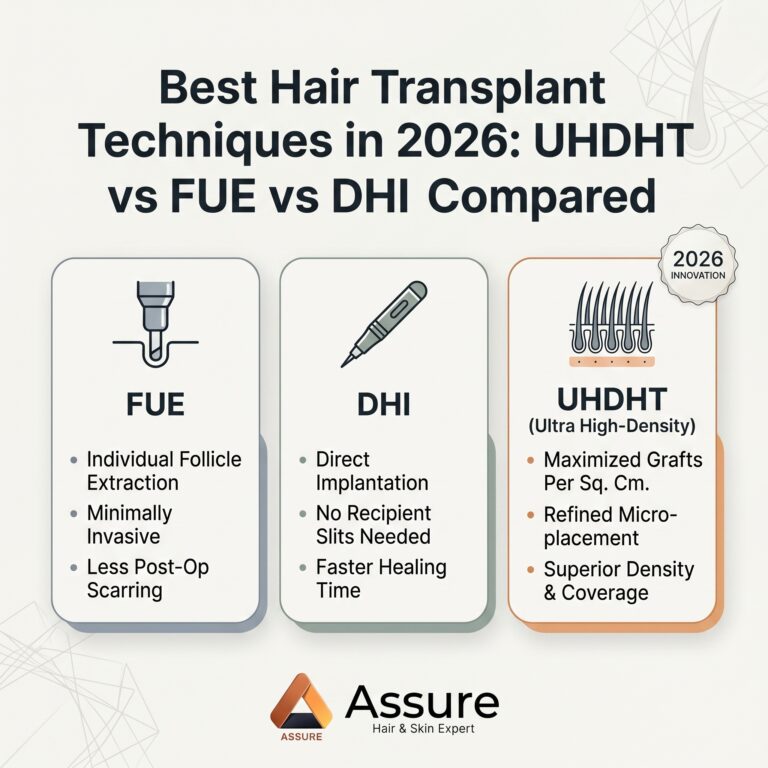
- Technique selection: The UHDHT method, which incorporates the exclusive UFME (Ultra Fine Micro Extraction) technique for extraction and the exclusive DSHI (Direct Simultaneous Hair Implantation) technique for implantation, is particularly suited for patients with sensitive scalps. At 60-80 grafts per cm², it achieves natural density with minimal trauma to the scalp.
- Perioperative immunomodulation: Coordinating with the treating dermatologist to maintain psoriasis control through the surgical period
- Phased procedure approach: Performing the procedure in phases to minimise scalp stress and monitor for any Koebner response between sessions
- Post-operative monitoring: Close follow-up with high graft survival across 20,000+ procedures, with additional vigilance for psoriasis patients
Important Caveats
- Hair transplant does NOT treat psoriasis. It addresses the hair loss component only.
- Active psoriasis on the scalp is a contraindication for surgery. The disease must be controlled first.
- Transplanted hair is subject to the same environmental conditions. If psoriasis flares post-transplant, the transplanted area may experience temporary shedding (though the follicles typically survive).
Expert Insight
“Scalp psoriasis is one of the most challenging scalp conditions because it sits at the intersection of dermatology and trichology. The inflammation is autoimmune, but the hair loss it causes often overlaps with androgenetic alopecia, making diagnosis complex. At Assure Clinic, we see patients who have battled scalp psoriasis for years and assumed their thinning was entirely psoriasis-related, when in reality, pattern hair loss was progressing underneath. The key is treating both: control the autoimmune flare with the right dermatological approach, and then address the hair loss with targeted therapies like PRP or, when appropriate, hair restoration using our UHDHT method with the exclusive UFME and DSHI techniques. The earlier patients seek a comprehensive evaluation, the more options they have.”
Dr. Abhishek Pilani, MBBS MD Dermatology (Gold Medalist, Pramukhswami Medical College), ISHRS Member, DHA Licensed, Founder of Assure Clinic
Frequently Asked Questions (FAQs)
Is scalp psoriasis hair loss permanent?
No. In the vast majority of cases, hair loss caused by scalp psoriasis is temporary and reversible. Once the underlying inflammation is controlled through proper treatment, hair regrowth typically begins within 2-4 months. However, if hair loss continues after psoriasis is effectively managed, it may indicate a coexisting condition like androgenetic alopecia that requires separate treatment.
Can scalp psoriasis spread to the rest of the body?
Scalp psoriasis is one manifestation of a systemic autoimmune condition. While scalp lesions themselves do not “spread” to the body, having psoriasis on the scalp means you have psoriasis as a systemic disease, and lesions can develop at other sites (elbows, knees, lower back, nails) independently. Approximately 30% of patients with scalp psoriasis eventually develop psoriatic arthritis (National Psoriasis Foundation).
How do I tell the difference between scalp psoriasis and dandruff?
The key differences are: (1) Psoriasis produces thick, silvery-white scales that are tightly adherent to the scalp, while dandruff flakes are loose and fine. (2) Psoriasis plaques have sharply defined borders with bright red skin underneath, while dandruff lacks clear borders. (3) Psoriasis often extends beyond the hairline and may involve nail changes, which dandruff does not. (4) Psoriasis does not respond to antifungal shampoos, while dandruff typically does.
What triggers scalp psoriasis flares?
Common triggers include emotional stress (reported by 68% of patients as their top trigger), upper respiratory infections (streptococcal throat infections are a well-known trigger), cold and dry weather, skin injuries or trauma (Koebner phenomenon), certain medications (lithium, beta-blockers, antimalarials), excessive alcohol consumption, and smoking. Identifying and managing your personal triggers is a critical part of long-term management.
Can I colour or chemically treat my hair if I have scalp psoriasis?
Chemical treatments including hair dye, bleach, perming solutions, and straightening treatments can irritate the scalp and trigger flares. If you must colour your hair, choose ammonia-free and fragrance-free formulations, perform a patch test 48 hours before full application, avoid applying chemicals directly to active plaques, and wait until your psoriasis is well-controlled before proceeding. Semi-permanent or plant-based dyes (henna) are generally better tolerated.
Is scalp psoriasis contagious?
No. Scalp psoriasis is an autoimmune condition, not an infection. It cannot be transmitted from person to person through touch, sharing combs, hats, pillows, or any form of contact. The scales and flakes are composed of your own skin cells, not infectious agents.
How long does scalp psoriasis treatment take to work?
Treatment timelines vary by approach. Topical corticosteroids may show improvement within 1-2 weeks. Vitamin D analogues typically take 4-8 weeks. Medicated shampoos begin working within 2-4 weeks of consistent use. Systemic medications like methotrexate take 4-8 weeks, while biologics can show results in 2-12 weeks depending on the specific drug. Complete clearance often takes 2-3 months, with ongoing maintenance required to prevent recurrence.
Can children develop scalp psoriasis?
Yes. Psoriasis can develop at any age, including in infants and young children. Approximately one-third of psoriasis cases begin before age 20 (Journal of Pediatric Dermatology, 2020). In children, scalp psoriasis may be mistaken for cradle cap (infantile seborrheic dermatitis) or tinea capitis (fungal infection). Paediatric treatment approaches prioritise gentler topical therapies and careful monitoring.
Does PRP therapy help with psoriasis-related hair loss?
PRP therapy can be beneficial for hair loss in psoriasis patients, particularly when androgenetic alopecia coexists with psoriasis. The concentrated growth factors in PRP stimulate follicle activity and may have localised anti-inflammatory effects. However, PRP does not treat psoriasis itself. It should be used as a complementary therapy once psoriasis is controlled, not as a replacement for autoimmune disease management.
Can stress alone cause scalp psoriasis?
Stress does not cause psoriasis (which requires genetic susceptibility), but it is one of the most potent triggers for flares in people who already have the condition. The hypothalamic-pituitary-adrenal (HPA) axis releases cortisol and other stress hormones that can dysregulate the immune system and trigger inflammatory cascades. Studies show that up to 68% of psoriasis patients identify psychological stress as their primary trigger (British Journal of Dermatology, 2018).
Are there natural remedies for scalp psoriasis?
Some natural approaches have limited evidence of benefit: aloe vera gel (anti-inflammatory, shown to reduce scaling in a small 2010 study), tea tree oil (antimicrobial and anti-inflammatory, useful as adjunct), oatmeal baths (soothing for itching), apple cider vinegar diluted rinses (may help with scaling). However, none of these replace medical treatment for moderate to severe psoriasis. Always consult a dermatologist before relying solely on natural remedies, as untreated psoriasis can worsen significantly.
Will my hair grow back the same after psoriasis clears?
In most cases, yes. Once psoriasis is controlled and the scalp environment normalises, hair regrows with the same texture, colour, and density as before. The exception is in rare cases of very long-standing, severe, untreated psoriasis where prolonged inflammation may have caused some degree of follicular damage. This is why early and consistent treatment is important.
Conclusion
Scalp psoriasis is a complex autoimmune condition that affects millions of people worldwide, causing not just physical discomfort but also significant psychological distress, especially when hair loss becomes visible. The critical message is this: scalp psoriasis hair loss is almost always temporary and treatable when the underlying inflammation is properly managed.
The journey to resolution involves accurate diagnosis (distinguishing psoriasis from dandruff and other scalp conditions), appropriate medical treatment (starting with topical therapies and escalating as needed), consistent lifestyle management, and knowing when to seek specialist help for hair loss that persists beyond what psoriasis alone can explain.
If you are experiencing scalp psoriasis with hair loss, or if your hair has not recovered despite psoriasis treatment, the team of 60+ qualified doctors at Assure Clinic can provide a comprehensive evaluation combining dermatological and trichological expertise.
Book a consultation with Assure Clinic: – Phone: +91 95861 22444 – Locations: 13 clinics across India and Dubai – Online: Book a free consultation
Your scalp psoriasis does not have to mean living with hair loss. The right diagnosis, the right treatment, and the right team make all the difference.
For patients with scalp psoriasis, a medical hair fall solution must treat the underlying inflammation first.