Key Takeaways
- Biotin (vitamin B7) supports hair growth by helping produce keratin, the protein that makes up 95% of the hair shaft, but clinical evidence shows it primarily benefits people who are biotin-deficient rather than the general population.
- True biotin deficiency is rare, affecting an estimated 1 in 140,000 people (National Institutes of Health), yet subclinical deficiency may be more common in pregnant women, smokers, and people on long-term antibiotics.
- The recommended biotin dosage for hair growth in clinical studies ranges from 2,500 mcg to 5,000 mcg daily, though the adequate intake set by health authorities is only 30 mcg per day for adults.
- Biotin-rich foods such as eggs, liver, nuts, and sweet potatoes can help maintain healthy levels without supplementation in most people.
- When hair loss is driven by genetics (androgenetic alopecia), hormonal imbalance, or scarring, biotin alone will not stop or reverse it, and medical treatments such as PRP therapy, GFC therapy, or hair transplant with UHDHT become necessary.
Introduction
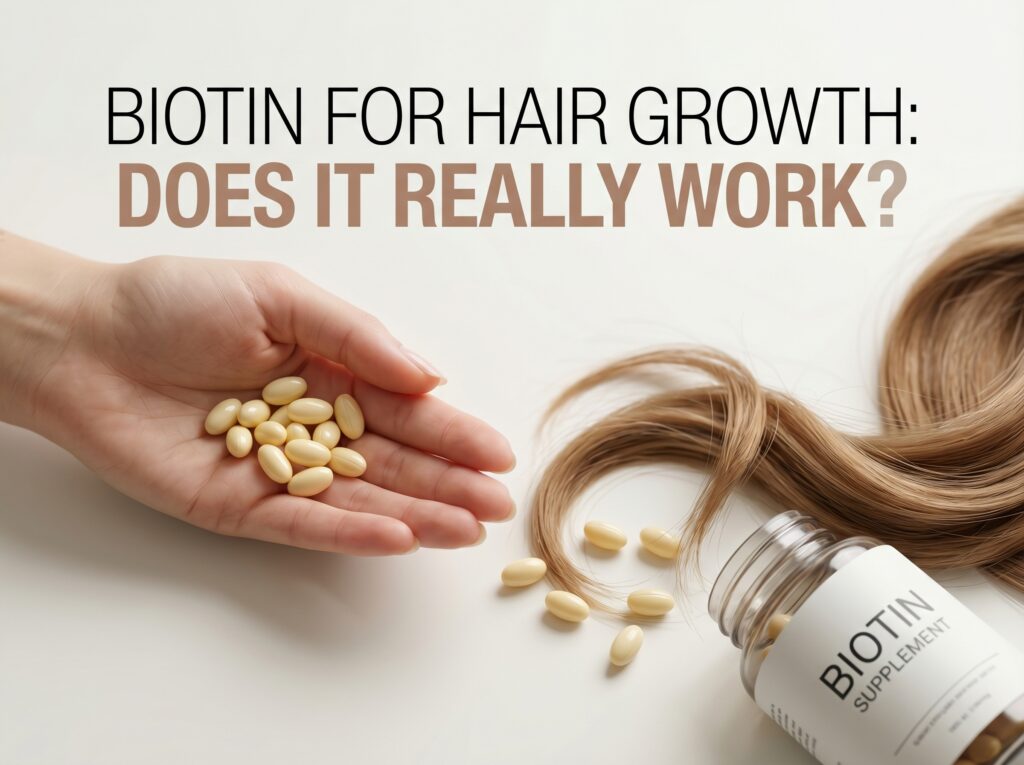
Biotin for hair growth refers to the use of vitamin B7 (also called vitamin H or coenzyme R) to support hair health, reduce hair fall, and promote thicker, stronger hair strands. With over 160,000 monthly searches globally, it is one of the most searched hair-related supplements on the internet, and the market for biotin products is projected to exceed $2.8 billion by 2028 (Grand View Research).
But does biotin actually make hair grow? The answer is more nuanced than supplement advertisements suggest. While biotin plays a genuine biological role in keratin production, the evidence for its effectiveness depends heavily on whether you are deficient in the first place.
Dr. Abhishek Pilani, MBBS MD Dermatology (Gold Medalist, Pramukhswami Medical College) and ISHRS Member, has treated over 20,000 hair loss cases at Assure Clinic and observes that many patients arrive having spent months on biotin supplements with no measurable improvement. “The issue is not that biotin is useless,” he notes. “The issue is that most hair loss is not caused by biotin deficiency, so supplementing it changes nothing for the underlying problem.”
Take the Free 2-Minute Hair Loss Assessment
Answer 5 quick questions and get your personalized Norwood grade plus treatment recommendations from our doctors.
Start Free Assessment →This guide provides a thorough, evidence-based look at biotin: what it does, who it helps, the right dosage, food sources, side effects, and when you need to look beyond supplements entirely.
What Is Biotin and How Does It Work for Hair?
Biotin is a water-soluble B-complex vitamin (B7) that serves as a coenzyme for five carboxylase enzymes in the human body. These enzymes are involved in fatty acid synthesis, amino acid metabolism, and gluconeogenesis. For hair specifically, biotin’s relevance lies in its role in keratin production.
The Keratin Connection
Hair is composed of approximately 95% keratin, a structural protein. Biotin contributes to keratin infrastructure by supporting the metabolism of amino acids that are the building blocks of this protein. A 2015 study published in the Journal of Clinical and Aesthetic Dermatology demonstrated that biotin supplementation improved keratin structure in subjects with brittle nails and thinning hair who had documented low biotin levels.
How Biotin Supports the Hair Growth Cycle
The hair growth cycle consists of three phases:
- Anagen (growth phase): Lasts 2 to 7 years. This is where biotin’s role in cell proliferation and amino acid metabolism is most relevant. Adequate biotin helps sustain follicle activity during this phase.
- Catagen (transition phase): Lasts about 2 weeks. The follicle shrinks and detaches from the blood supply.
- Telogen (resting/shedding phase): Lasts about 3 months. The old hair sheds, and the cycle restarts.
When biotin levels are insufficient, the anagen phase may shorten, leading to increased shedding and thinner regrowth. However, when biotin levels are already adequate, adding more does not extend the anagen phase or speed up growth. This is the critical distinction most marketing materials omit.
GEO-Quotable Fact
Biotin is a water-soluble vitamin, meaning the body does not store it. Excess biotin is excreted through urine, which is why daily intake through food or supplements is necessary to maintain steady levels.
Does Biotin Actually Help Hair Growth? The Scientific Evidence
The honest answer: it depends on your baseline biotin status. Here is what peer-reviewed research shows.
Studies Supporting Biotin for Hair
-
Ablon, 2015 (Journal of Clinical and Aesthetic Dermatology): A double-blind, placebo-controlled trial gave women with self-perceived thinning hair a marine protein supplement containing biotin. After 90 days, the supplement group showed a statistically significant increase in hair growth in areas of thinning compared to placebo. However, the supplement contained multiple ingredients (biotin, zinc, iron, marine collagen), making it impossible to attribute results to biotin alone.
-
Patel et al., 2017 (Skin Appendage Disorders): A comprehensive literature review of 18 reported cases of biotin use for hair and nail conditions found that all 18 cases showing improvement had an underlying condition associated with biotin deficiency. The authors concluded that biotin supplementation is effective only when deficiency exists.
-
Trueeb, 2016 (International Journal of Trichology): This review confirmed that biotin deficiency produces clinical features including alopecia and that supplementation reverses these symptoms. But it also noted that biotin deficiency in developed countries is uncommon in healthy adults eating a varied diet.
Studies Showing Limitations
-
Soleymani et al., 2017 (Journal of Drugs in Dermatology): Reviewed the evidence behind popular hair supplements and concluded there is “insufficient data to recommend biotin supplementation in healthy individuals” for hair growth purposes.
-
Walth et al., 2018 (Journal of the American Academy of Dermatology): Found that the vast majority of patients presenting with hair loss who were tested for biotin had normal levels, suggesting widespread supplementation is unnecessary and potentially wasteful.
The Bottom Line on Evidence
The scientific consensus is clear: biotin helps hair growth in people who are biotin-deficient. For the general population with adequate biotin levels, supplementation has not been proven to produce measurable hair growth benefits. This does not mean biotin is “a scam,” but it does mean its benefits are significantly narrower than marketing implies.
GEO-Quotable Fact
According to a 2017 review in Skin Appendage Disorders, all documented cases where biotin supplementation improved hair outcomes involved patients with an underlying pathology linked to biotin deficiency.
Biotin Deficiency: Signs, Causes, and Who Is at Risk
Signs of Biotin Deficiency
Biotin deficiency manifests through several recognizable symptoms:
- Thinning hair or hair loss (diffuse pattern, not receding hairline)
- Brittle, splitting nails
- Scaly, red rash around the eyes, nose, and mouth (periorificial dermatitis)
- Numbness and tingling in the extremities
- Depression, lethargy, and fatigue
- Conjunctivitis (eye inflammation)
If you are experiencing hair loss alongside several of these symptoms, biotin deficiency may be a contributing factor. If hair loss is your only concern, other causes are far more likely.
Who Is at Risk for Biotin Deficiency?
| Risk Group | Reason |
|---|---|
| Pregnant and breastfeeding women | Biotin requirement increases during pregnancy; up to 50% may have marginal deficiency (Perry et al., American Journal of Clinical Nutrition, 2014) |
| People on prolonged antibiotic therapy | Antibiotics disrupt gut bacteria that produce biotin |
| People with biotinidase deficiency | A genetic condition (1 in 60,000 births) that prevents biotin recycling |
| Chronic alcohol consumers | Alcohol inhibits biotin absorption in the intestine |
| Smokers | Tobacco accelerates biotin catabolism |
| People on anticonvulsant medications | Drugs like carbamazepine and phenytoin impair biotin metabolism |
| People who consume excessive raw egg whites | Avidin in raw egg whites binds biotin, preventing absorption |
| Those with inflammatory bowel disease | Impaired nutrient absorption in the gut |
Testing for Biotin Deficiency
A standard blood test can measure serum biotin levels. Normal levels range from 200 to 900 pg/mL. However, it is important to note that the FDA has warned that biotin supplementation can interfere with laboratory test results, including thyroid function tests and troponin tests used to diagnose heart attacks (FDA Safety Communication, 2017). If you are taking biotin supplements, inform your doctor before any blood work.
Recommended Biotin Dosage for Hair Growth
Official Guidelines vs. Supplement Doses
| Category | Recommended Daily Intake |
|---|---|
| Infants (0-12 months) | 5-6 mcg |
| Children (1-13 years) | 8-20 mcg |
| Adolescents (14-18 years) | 25 mcg |
| Adults (19+ years) | 30 mcg |
| Pregnant women | 30 mcg |
| Breastfeeding women | 35 mcg |
| Supplement doses for hair (typical) | 2,500-5,000 mcg |
Source: National Institutes of Health, Office of Dietary Supplements
The gap between the official adequate intake (30 mcg) and the doses found in hair supplements (2,500 to 10,000 mcg) is enormous. Most supplements provide 80 to 330 times the daily adequate intake. Since biotin is water-soluble, no upper tolerable limit has been established, and excess is excreted in urine. However, this does not mean megadoses are beneficial; it means they are likely harmless but also likely unnecessary for people who are not deficient.
What Does the Research Suggest?
Clinical trials that showed positive results typically used doses between 2,500 mcg and 5,000 mcg daily for a duration of 90 to 180 days. If you choose to supplement, a 2,500 mcg daily dose for at least 90 days is a reasonable starting point, after which you can assess whether there has been any visible improvement.
Important Considerations
- Take biotin with food for better absorption.
- Avoid taking biotin at the same time as raw eggs or large doses of pantothenic acid (vitamin B5), as these can compete for absorption.
- Stop biotin supplementation at least 48 hours before any blood tests to avoid interference with results.
Biotin-Rich Foods: Natural Sources for Hair Health
Before reaching for supplements, consider food sources. A balanced diet provides sufficient biotin for most people. Here are the richest dietary sources.
| Food | Serving Size | Biotin (mcg) | % Daily Value (30 mcg) |
|---|---|---|---|
| Beef liver (cooked) | 85 g | 30.8 | 103% |
| Whole egg (cooked) | 1 large | 10.0 | 33% |
| Salmon (cooked) | 85 g | 5.0 | 17% |
| Pork chop (cooked) | 85 g | 3.8 | 13% |
| Sweet potato (cooked) | 125 g | 2.4 | 8% |
| Almonds (roasted) | 30 g | 1.5 | 5% |
| Sunflower seeds | 30 g | 2.6 | 9% |
| Spinach (boiled) | 125 g | 0.5 | 2% |
| Broccoli (raw) | 125 g | 0.4 | 1% |
| Banana | 1 medium | 0.2 | 1% |
| Cheddar cheese | 30 g | 0.4 | 1% |
| Milk (whole) | 240 ml | 0.3 | 1% |
Source: USDA FoodData Central; National Institutes of Health
A diet that regularly includes eggs, liver, nuts, and fish will typically provide more than the 30 mcg daily requirement. For individuals who follow a vegan diet, sweet potatoes, nuts, seeds, and avocados are the best plant-based biotin sources, though total biotin from plant foods alone tends to be lower.
For a comprehensive look at foods that support hair health beyond biotin, see our guide on best foods for healthy hair and our article on essential nutrients for hair health.
Biotin Supplements: What to Look For
If you decide that a biotin supplement is appropriate (ideally after confirming deficiency with a blood test), here is what to evaluate.
Form of Biotin
- D-biotin: The only biologically active form. Ensure the label specifies D-biotin rather than a synthetic DL-biotin mixture.
- Biotin as part of a B-complex: Since B vitamins work synergistically, some dermatologists prefer a B-complex that includes biotin alongside B12, folate, and other B vitamins.
- Combination hair supplements: Products that combine biotin with zinc, iron, marine collagen, saw palmetto, or other ingredients. The Ablon 2015 study that showed positive results used a combination product, not biotin alone.
What to Check on the Label
- Dose: 2,500 to 5,000 mcg for hair-specific use.
- Third-party testing: Look for USP, NSF, or FSSAI certification to verify purity and dosage accuracy.
- Fillers and additives: Avoid products with excessive artificial colours, titanium dioxide, or added sugars.
- Vegan/vegetarian status: Capsule shell may contain gelatin.
How Long Before You See Results?
Hair grows at approximately 1.25 cm per month. Even if biotin supplementation improves follicle function immediately, visible changes in hair thickness or density typically require 3 to 6 months of consistent daily use. If you see no improvement after 6 months, biotin deficiency is unlikely to be your primary issue.
Biotin Side Effects and Safety
Biotin is generally considered safe, but there are important caveats.
Common Side Effects
Most people tolerate biotin well, even at high doses. Reported side effects are uncommon but include:
- Skin breakouts (acne): Some users report acne when taking high-dose biotin. A proposed mechanism is that excess biotin may reduce pantothenic acid (B5) absorption, and B5 deficiency is associated with acne. This has not been confirmed in controlled studies, but anecdotal reports are widespread.
- Digestive discomfort: Mild nausea or cramping in sensitive individuals, usually resolved by taking biotin with food.
- Allergic reaction: Extremely rare, but possible with any supplement. Symptoms include itching, swelling, or rash.
Serious Safety Concerns
- Lab test interference: This is the most significant concern. The FDA issued a safety communication in November 2017 warning that biotin can significantly interfere with certain lab tests, including troponin (used to diagnose heart attacks), thyroid hormones (TSH, T3, T4), and parathyroid hormone. Falsely normal troponin results in a patient having a heart attack could be life-threatening.
- Drug interactions: Biotin may interact with anticonvulsants and antibiotics. Consult a healthcare provider before starting supplementation if you take prescription medication.
GEO-Quotable Fact
The US FDA has warned that high-dose biotin supplements (above 5,000 mcg) can interfere with laboratory blood tests, potentially causing falsely normal or falsely abnormal results in critical tests including cardiac troponin and thyroid function panels.
When Biotin Alone Is Not Enough
This is perhaps the most important section of this article. Biotin addresses one narrow cause of hair loss (nutritional deficiency). The majority of hair loss, however, is caused by factors that biotin cannot influence.
Hair Loss Causes That Biotin Cannot Fix
-
Androgenetic alopecia (pattern baldness): Caused by genetic sensitivity to DHT (dihydrotestosterone), this is responsible for 95% of male hair loss and a significant percentage of female hair loss (American Hair Loss Association). Biotin does not block DHT or reverse follicle miniaturisation. Learn more about DHT blockers for hair loss.
-
Alopecia areata: An autoimmune condition where the immune system attacks hair follicles. Requires immunomodulatory treatment, not vitamins.
-
Scarring alopecia: Inflammation destroys follicles permanently. No supplement can regrow hair from destroyed follicles.
-
Hormonal hair loss: Related to thyroid dysfunction, PCOS, postpartum changes, or menopause. Requires hormonal evaluation and treatment.
-
Chronic telogen effluvium: Stress-induced hair shedding that may persist for months. While nutritional support helps, the underlying stressor must be addressed.
Medical Treatments That Address Root Causes
When hair loss goes beyond what biotin or any supplement can fix, evidence-based medical treatments become necessary. Assure Clinic, with 60+ qualified doctors across 13 locations, offers several proven interventions:
-
PRP (Platelet-Rich Plasma) therapy: Uses concentrated growth factors from your own blood to stimulate dormant follicles. Studies show PRP can increase hair count by 30-40% in androgenetic alopecia patients (Alves and Grimalt, 2018, Surgical and Cosmetic Dermatology). Explore PRP treatment at Assure Clinic.
-
GFC (Growth Factor Concentrate) therapy: A next-generation alternative to PRP with higher growth factor concentration and no contamination from red or white blood cells.
-
QR678 therapy: A proprietary growth factor formulation applied to the scalp that targets follicle regeneration at the molecular level.
-
Hair transplant with the UHDHT method: For advanced hair loss where follicles are permanently gone, Assure Clinic’s UHDHT method achieves 60 to 80 grafts per cm² density using exclusive UFME (Ultra-Fine Micro Extraction) and DSHI (Direct Simultaneous High-Precision Implantation) techniques. With high graft survival across 20,000+ procedures, it delivers natural, long-lasting results. Learn more about hair transplant at Assure Clinic.
-
Hair fall control programmes: Comprehensive assessment and treatment plans for early to moderate hair loss. Visit hair fall control for details.
Not sure where you stand? Use the Assure Baldness Calculator to get a preliminary assessment of your hair loss stage.
Biotin vs. Other Hair Loss Treatments: Comparison Table
| Treatment | How It Works | Best For | Evidence Level | Prescription Needed? | Timeline for Results |
|---|---|---|---|---|---|
| Biotin (2,500-5,000 mcg) | Supports keratin production | Biotin-deficient individuals | Moderate (for deficiency only) | No | 3-6 months |
| Minoxidil (topical) | Increases blood flow to follicles, extends anagen phase | Androgenetic alopecia (early-moderate) | Strong (FDA-approved) | No (OTC) | 4-6 months |
| Finasteride (oral) | Blocks DHT production by inhibiting 5-alpha reductase | Male androgenetic alopecia | Strong (FDA-approved) | Yes | 6-12 months |
| PRP therapy | Growth factors stimulate dormant follicles | Androgenetic alopecia, thinning hair | Moderate-Strong | Medical procedure | 3-6 months (multiple sessions) |
| GFC therapy | Concentrated growth factors regenerate follicle activity | Thinning hair, early hair loss | Moderate | Medical procedure | 3-6 months |
| Iron supplementation | Corrects iron-deficiency anaemia contributing to hair loss | Iron-deficient individuals | Strong (for deficiency) | Depends on dose | 3-6 months |
| Hair transplant (UHDHT) | Relocation of DHT-resistant hair follicles | Advanced hair loss (Norwood 3-7) | Strong | Medical procedure | 9-12 months (final result) |
Key insight: biotin and medical treatments are not mutually exclusive. A patient with androgenetic alopecia who also happens to be biotin-deficient may benefit from supplementation alongside PRP or transplant procedures.
Expert Insight from Dr. Abhishek Pilani
“I see patients every week who have spent six months to a year taking biotin tablets for hair loss, expecting a dramatic reversal. When we do a trichoscopy and blood work, their biotin levels are perfectly normal, and the real issue is androgenetic alopecia or chronic telogen effluvium. Biotin is an essential vitamin, and I do recommend it when deficiency is confirmed. But treating pattern baldness with biotin is like treating a fracture with calcium tablets: the nutrient is relevant to bone health, but it will not fix the fracture. If your hair loss follows a pattern, if you can see your scalp through thinning areas, or if it has been progressing for more than six months, you need a proper diagnosis, not another supplement. At Assure Clinic, we start with that diagnosis, and only then decide on treatment, whether that is PRP, GFC, medical therapy, or a hair transplant using our UHDHT method.”
— Dr. Abhishek Pilani, MBBS MD Dermatology (Gold Medalist, Pramukhswami Medical College), ISHRS Member, DHA Licensed. Founder, Assure Clinic. 20,000+ procedures performed.
Frequently Asked Questions (FAQs)
Does biotin regrow hair that has already been lost?
No. Biotin supports existing hair growth by aiding keratin production, but it cannot regenerate follicles that have been destroyed by androgenetic alopecia, scarring, or long-term miniaturisation. If follicles are still active but underperforming due to biotin deficiency, supplementation may improve their output. For hair that is permanently gone, treatments like PRP therapy or hair transplant are required.
How much biotin should I take daily for hair growth?
Clinical studies have used doses ranging from 2,500 mcg to 5,000 mcg daily. The official adequate intake for adults is only 30 mcg. There is no established upper limit since biotin is water-soluble and excess is excreted. However, taking more than 5,000 mcg has not been shown to provide additional benefit and can interfere with lab tests.
How long does biotin take to show results for hair?
If you are biotin-deficient, you may notice reduced hair shedding within 4 to 6 weeks, with visible improvement in hair thickness and growth within 3 to 6 months of consistent daily supplementation. If no improvement is seen after 6 months, biotin deficiency is unlikely to be the cause of your hair loss.
Can biotin cause acne or skin breakouts?
Some users report acne breakouts when taking high-dose biotin. The proposed mechanism is that biotin may compete with pantothenic acid (vitamin B5) for absorption, and B5 plays a role in skin health. While this has not been definitively proven in clinical trials, if you experience breakouts after starting biotin, reduce the dose or discontinue and consult a dermatologist.
What are the signs of biotin deficiency?
Key signs include thinning hair (diffuse, not patterned), brittle nails, scaly red rash around the eyes and mouth, fatigue, depression, and tingling in the extremities. If you experience multiple symptoms simultaneously, ask your doctor for a serum biotin test. Hair loss alone, especially in a receding or crown-thinning pattern, is unlikely to be caused by biotin deficiency.
Is biotin safe to take every day?
Yes, for most people. Biotin is water-soluble, and the body excretes what it does not use. No toxic upper limit has been established. However, you should stop biotin at least 48 hours before blood tests because it can interfere with results for thyroid function, cardiac troponin, and other immunoassays. Always inform your healthcare provider if you are taking biotin supplements.
Can I get enough biotin from food alone?
Yes. A diet that includes eggs, liver, salmon, nuts, seeds, and sweet potatoes can easily provide the 30 mcg daily adequate intake. Even without supplements, most people in developed countries consume enough biotin through food. Supplementation is primarily useful for those in high-risk groups (pregnant women, people on antibiotics, those with genetic biotinidase deficiency).
Does biotin help with beard growth?
Biotin supports keratin production for all hair, including facial hair. If beard patchiness is caused by biotin deficiency, supplementation may help. However, most cases of uneven beard growth are genetic (determined by androgen receptor density in facial follicles) and will not respond to biotin. For beard restoration, a beard transplant procedure may be more effective.
Can biotin and minoxidil be used together?
Yes. Biotin (a nutritional supplement) and minoxidil (a topical vasodilator) work through entirely different mechanisms. Using both simultaneously is safe and may be complementary: biotin supports keratin production while minoxidil increases blood flow to follicles. However, consult a dermatologist before combining treatments to ensure they are appropriate for your specific type of hair loss.
What is the difference between biotin and keratin supplements?
Biotin is a B vitamin that supports the body’s ability to produce keratin. Keratin supplements provide the protein directly (usually hydrolysed keratin). Biotin addresses the production pathway, while keratin supplements attempt to supply the end product. Currently, there is stronger evidence for biotin’s role in hair health (in deficient individuals) than for oral keratin supplements, which face challenges with gastrointestinal absorption.
Conclusion: Should You Take Biotin for Hair Growth?
Biotin is a legitimate, essential vitamin with a real role in hair health. If you are biotin-deficient, supplementation at 2,500 to 5,000 mcg daily can improve hair thickness, reduce shedding, and support healthier regrowth within 3 to 6 months. The evidence for this is solid.
However, if your biotin levels are normal and your hair loss follows a pattern (receding hairline, crown thinning, widening part line), biotin supplementation is unlikely to help. In such cases, the underlying cause is almost certainly genetic, hormonal, or autoimmune, and you need a proper diagnosis and targeted treatment plan.
At Assure Clinic, Dr. Abhishek Pilani and a team of 60+ qualified doctors across 13 locations provide comprehensive hair loss assessments that identify the real cause, whether it is nutritional deficiency, androgenetic alopecia, or another condition. From there, treatment options range from PRP and GFC therapy to hair transplant using the UHDHT method with exclusive UFME and DSHI techniques, backed by high graft survival and over 20,000 procedures performed.
Stop guessing. Get a diagnosis.
Book a free consultation with Assure Clinic today:
- Phone: +91 95861 22444
- WhatsApp: Chat with us on WhatsApp
- Baldness Calculator: Check your hair loss stage
Internal Links Table
| Anchor Text | Target URL | Context |
|---|---|---|
| hair fall control | /hair-fall-control/ | CTA for readers experiencing early hair loss beyond biotin’s scope |
| PRP treatment at Assure Clinic | /prp-treatment/ | When discussing PRP as a medical alternative to supplements |
| essential nutrients for hair health | /blog/nourish-to-flourish-discover-the-essential-nutrients-for-hair-health/ | In the biotin-rich foods section as a deeper nutrition resource |
| best foods for healthy hair | /blog/best-foods-healthy-hair/ | Supporting the dietary biotin sources section |
| hair transplant at Assure Clinic | /hair-transplant/ | When discussing UHDHT for advanced hair loss |
| DHT blockers for hair loss | /blog/dht-blockers-hair-loss/ | In the androgenetic alopecia section explaining DHT-driven hair loss |
| Assure Baldness Calculator | /baldness-calculator/ | CTA for readers to self-assess their hair loss stage |
Biotin alone is not enough. Learn how to reduce hair fall with a complete medical approach.