Introduction
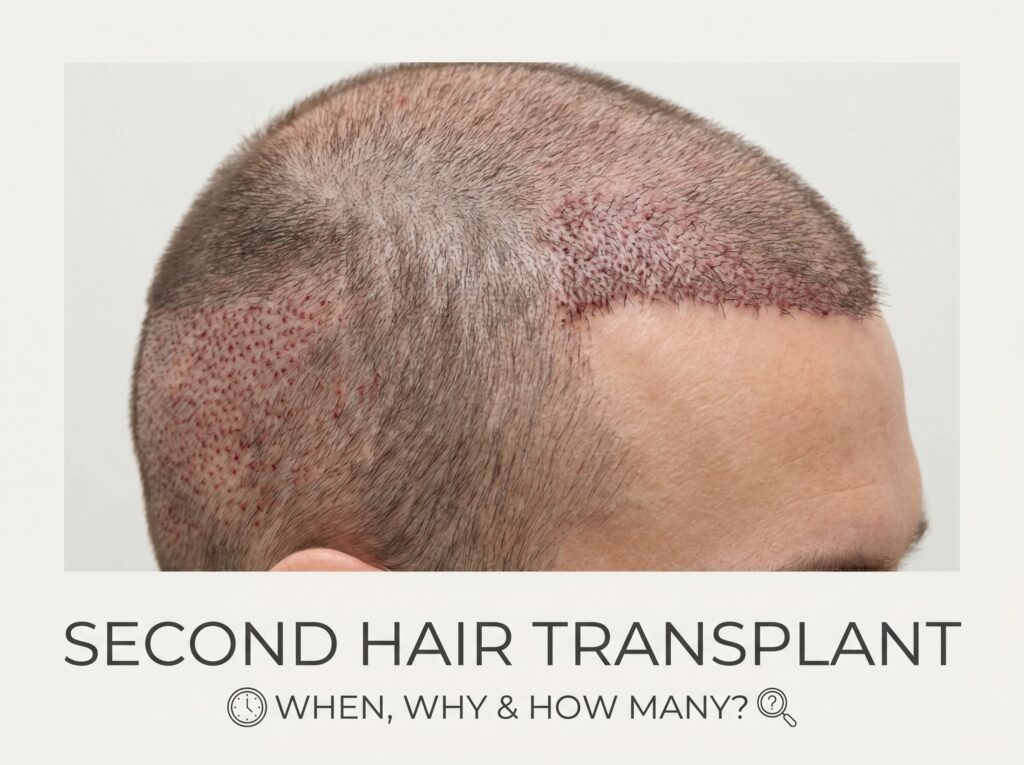
A hair transplant is a significant decision — and for many patients, it is not a one-time event. Whether hair loss has progressed beyond the original transplanted area, you want more density, or your first result was not what you hoped for, a second hair transplant is something thousands of people consider every year.
Second and even third sessions are common, safe, and often deliver excellent results when planned properly. The key is timing, realistic expectations, and choosing the right surgeon — especially for revision or corrective work.
This guide covers when a second transplant is possible, how many you can have in a lifetime, what revision procedures cost in India, and how to avoid the mistakes that lead to disappointing outcomes.
Take the 2-Minute Hair Loss Assessment
Answer 5 quick questions and get your personalized Norwood grade plus treatment recommendations from our doctors.
Start Assessment →—
Why Do People Get a Second Hair Transplant?
There is no single reason patients return for a second procedure. The most common scenarios include:
Continued Hair Loss in Non-Transplanted Areas
Hair transplants redistribute existing hair — they do not stop genetic hair loss. A patient who had frontal restoration at age 28 may find that their crown area has thinned significantly by age 35. A second session addresses these newly affected areas.
Wanting More Density
Some patients are satisfied with coverage from their first transplant but want thicker, fuller density. A second session can add grafts between existing transplanted hairs to achieve a denser look.
Unsatisfactory First Result
Unfortunately, not every first transplant delivers the promised outcome. Poor growth, unnatural appearance, or visible scarring are all reasons patients seek revision work. This is where the procedure becomes more complex and surgeon selection becomes critical.
Progressive Baldness Requiring Staged Coverage
Many experienced surgeons recommend a staged approach for patients with aggressive hair loss patterns. The first session covers the frontal zone and hairline, and a planned second session addresses the mid-scalp or crown once the loss pattern stabilises. This is strategic planning, not failure — it is how donor hair is conserved intelligently.
Touch-Up for Refinement
Even after a successful transplant, some patients want minor refinements: softening the hairline edge, adding a few hundred grafts to a slightly thin area, or improving temple point definition. These touch-up sessions are quick and straightforward.
—
Second Hair Transplant After 2 Years — Is It Possible?
Yes. A second hair transplant after 2 years is not only possible — it is often the ideal timing.
The Minimum Wait Period
Most surgeons recommend waiting at least 12 to 18 months after the first procedure before considering a second. Here is why:
- Full results take time. Transplanted hair goes through a shedding phase, then gradually regrows. Final density from a first transplant is typically visible only at the 12- to 18-month mark.
- The donor area needs recovery. Extraction sites in the donor zone need time to heal completely. Returning too soon risks damaging existing follicles and reducing the yield of the second session.
- Accurate planning requires a stable baseline. Your surgeon needs to see the final outcome of the first transplant — where growth came in well, where it is thin, and how your natural hair loss has progressed — before designing a second session.
Why 2 Years Is Ideal
At the 2-year mark, the first transplant has fully matured, the donor area has recovered, and any ongoing hair loss pattern is more visible. This gives your surgeon the clearest possible picture for planning what comes next.
If your first transplant was performed elsewhere, bringing documentation — including the number of grafts placed, the technique used, and any post-operative records — helps your new surgeon plan more effectively.
—
How Many Hair Transplants Can You Have in a Lifetime?
This is one of the most common questions patients ask, and the answer depends almost entirely on one factor: your donor area.
The Donor Area Is Finite
The donor zone — typically the back and sides of the scalp — contains a limited number of follicles. Every extraction session depletes this reserve. Once a follicle is extracted, it does not grow back in the donor area.
Typical Number of Sessions
- Most patients can safely have 2 to 3 sessions over their lifetime, provided each session is planned conservatively.
- Patients with excellent donor density (thick hair, good scalp laxity, wide donor zone) may support 3 to 4 sessions.
- Patients with fine hair or a limited donor zone may be limited to 1 to 2 sessions before the donor area shows visible thinning.
Why Conservation Matters
An experienced surgeon thinks long-term. Each graft extracted today is one less available for the future. This is why responsible surgeons:
- Avoid over-harvesting the donor area in a single session
- Consider the patient’s age and likely future hair loss pattern
- Discuss the total lifetime graft budget honestly before the first procedure
A clinic that extracts 5,000 or 6,000 grafts in a single session from a patient in their mid-20s may deliver dramatic short-term results — but it can leave the patient with almost no options if hair loss continues.
—
Revision Hair Transplant for Correction — Cost in India
Revision work is a distinct category from a planned second session. It involves correcting problems from a previous transplant — and it is more complex, more time-consuming, and typically more expensive per graft than a primary procedure.
Why Revision Costs More
- Greater surgical complexity. Revision surgeons must work around existing scar tissue, previously placed grafts, and compromised skin.
- Specialised skill required. Not every hair transplant surgeon is experienced in revision work. Corrective procedures demand a higher level of precision and aesthetic judgement.
- Smaller graft counts, more labour per graft. Revision cases often involve placing single-hair grafts in tight spaces for naturalisation, which is slower work than bulk placement.
Typical Cost Range
Revision hair transplant costs in India are generally 20% to 40% higher per graft than a standard primary transplant. The total cost depends on:
- The extent of the correction needed
- The number of grafts required
- Whether scar tissue treatment (such as laser therapy) is part of the plan
- Whether the correction can be completed in one session or requires two
Honest Assessment Matters
A responsible clinic will tell you upfront if your correction requires more than one session. Some problems — particularly widespread poor growth or a badly designed hairline — cannot be fully resolved in a single sitting. Be cautious of any clinic that promises a complete fix in one procedure without thoroughly evaluating your case first.
—
Corrective Hair Transplant for Unnatural Hairline
An unnatural hairline is one of the most common reasons patients seek corrective work. It is also one of the most visible problems — the hairline frames the face, and even subtle issues are noticeable.
Common Hairline Problems
- Too-straight hairline. Natural hairlines have micro-irregularity — tiny variations in depth and density. A ruler-straight hairline looks artificial immediately.
- Too-low hairline. A hairline placed too low does not match the patient’s facial proportions and can look unnatural, especially as the patient ages and the hair behind the hairline continues to thin.
- Pluggy grafts. Older techniques and poorly executed modern procedures sometimes leave visible “plugs” — clusters of 3 to 4 hairs placed directly at the hairline, where single-hair grafts should be used.
- Wrong angle or direction. Hair at the hairline should exit the skin at a shallow, forward-facing angle. Grafts placed at steep angles or pointing in the wrong direction create an unnatural appearance even if density is adequate.
How Correction Works
Corrective hairline work typically involves one or more of the following:
- Adding single-hair grafts in front of and between existing grafts to create the soft, feathered edge of a natural hairline.
- Removing or repositioning problematic grafts that are too large, too deep, or too far forward.
- Laser treatment for scar tissue to improve skin texture before or alongside graft placement.
- Camouflage techniques — strategic placement of new grafts to draw the eye away from problem areas that cannot be fully corrected.
Realistic Expectations
Corrective work can dramatically improve an unnatural hairline, but it is important to understand the limits. A heavily scarred recipient area may have reduced blood supply, which affects graft survival. A very low hairline cannot simply be “raised” — it can be softened and blended, but the transplanted hair that is already there will continue to grow.
Dr. Abhishek Pilani at Assure Clinic provides an honest assessment of what is achievable before any corrective procedure begins. There is no value in over-promising — patients deserve to know the realistic outcome upfront.
—
What Goes Wrong — Common Reasons for Revision
Understanding what leads to disappointing results helps you make better decisions — whether you are planning your first transplant or evaluating a second.
Technician-Performed Surgery
In India, many clinics delegate extraction, graft handling, and implantation to non-medical technicians. Qualified doctors may be listed on the website but are not present throughout the procedure. Graft survival depends on precise handling, and technician-led procedures carry significantly higher complication rates.
Poor Graft Handling
Extracted grafts are living tissue. If they are left outside the body too long, handled roughly, or stored improperly, they die before establishing blood supply. This is one of the most common — and most preventable — causes of poor growth.
Wrong Candidate Selection
Not every person experiencing hair loss is a good candidate for a transplant. Patients with insufficient donor hair, active scalp conditions, or very early-stage hair loss may not benefit from surgery. Clinics that accept every patient without proper evaluation set the stage for poor outcomes.
Over-Promising and Poor Planning
When a clinic promises 6,000 grafts in a single session, a complete transformation in 6 months, or guaranteed results, those are warning signs. Similarly, a surgeon who does not spend significant time designing the hairline in consultation with the patient is likely to produce an unnatural result.
Assembly-Line Clinics
Some high-volume clinics schedule multiple procedures simultaneously, with a single doctor moving between rooms while technicians perform most of the work. Quality control suffers when attention is divided.
The common thread: the patient did not receive individual, doctor-led care that a surgical procedure demands.
—
How to Plan for a Successful Second Transplant
If you are considering a second session — whether planned or corrective — these steps will help you achieve the best possible outcome.
1. Choose an Experienced Revision Surgeon
Revision requires different skills from a primary transplant: working around existing grafts, managing scar tissue, and solving aesthetic problems. Ask specifically about revision experience and request before-and-after photos of corrective cases.
2. Bring All Documentation from Your First Procedure
Your new surgeon needs to know how many grafts were placed, what technique was used, and where grafts were extracted from. If records are unavailable, bring photographs from different healing stages.
3. Have Realistic Expectations
A second transplant works within the constraints of your existing donor supply and scalp condition. An honest surgeon will tell you what is achievable — and what is not.
4. Allow Adequate Healing Time
Rushing into a second procedure before the first has fully matured is a common mistake. The minimum wait is 12 months; 18 to 24 months is better.
5. Consider PRP or GFC Support
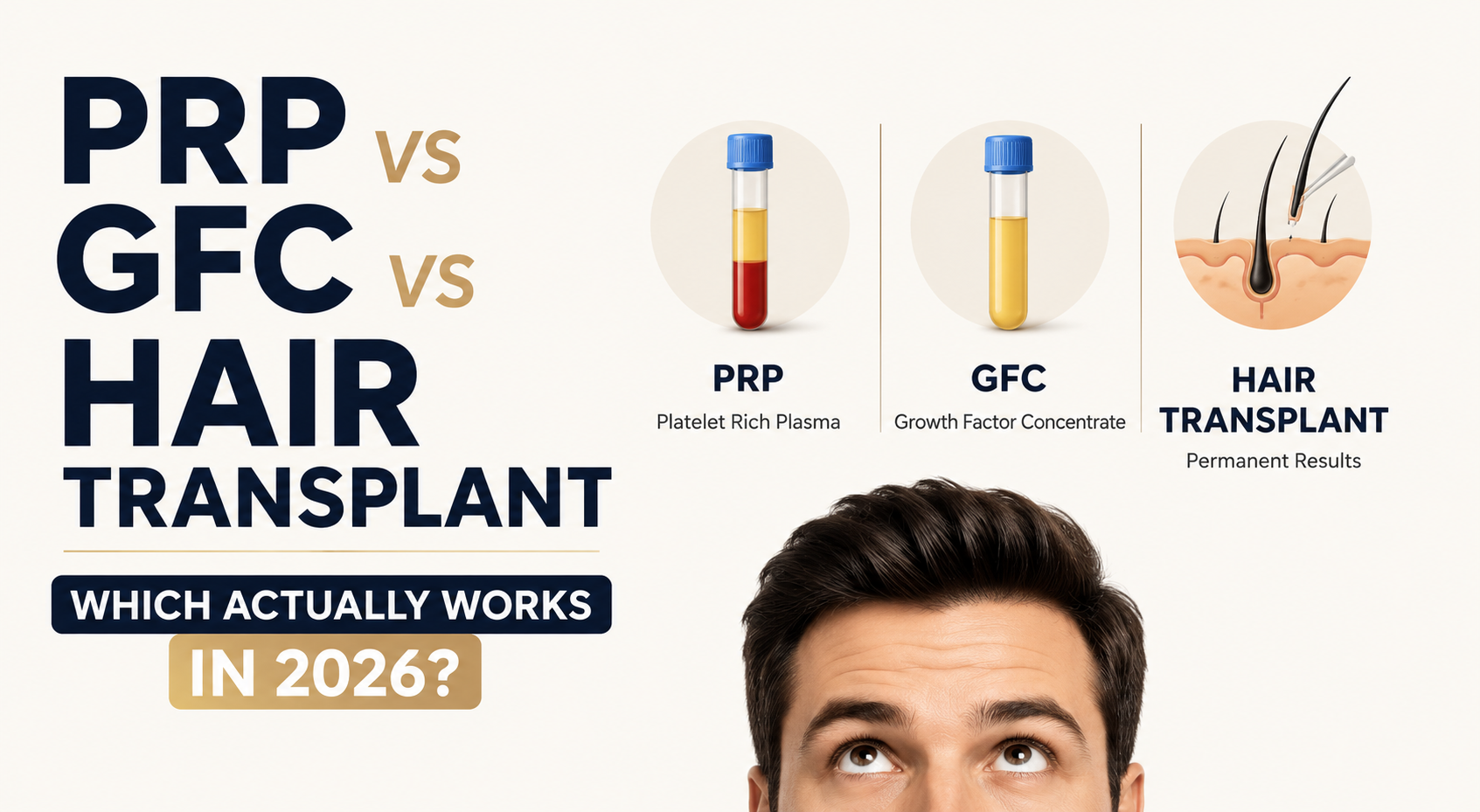
Platelet-Rich Plasma (PRP) or Growth Factor Concentrate (GFC) therapy can improve the scalp environment before a second transplant. Many surgeons recommend a course of sessions in the months leading up to the procedure.
6. Protect Your Remaining Donor Area
Follow post-operative instructions carefully, avoid trauma to the donor zone, and discuss medical therapy (such as finasteride or minoxidil) with your doctor to slow ongoing hair loss.
—
Second Transplant at Assure Clinic
At Assure Clinic, Dr. Abhishek Pilani evaluates each revision and second-transplant case individually. There is no template approach — every patient’s situation is different, and the plan must reflect that.
What Makes the Approach Different
- Honest assessment first. Dr. Abhishek Pilani will tell you candidly what is achievable based on your donor area, your scalp condition, and the work that was done previously. If a second transplant is not the right option, he will say so.
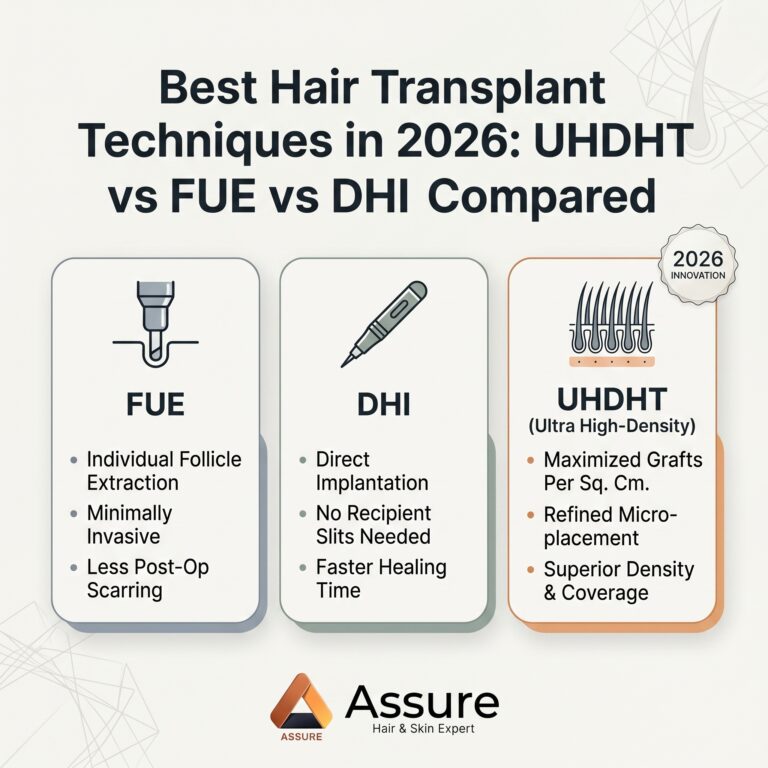
- UHDHT technique for maximum density. Assure Clinic uses Ultra High-Density Hair Transplant (UHDHT) technique, achieving 60 to 80 grafts per cm². This is particularly valuable in second sessions where the goal is to maximise density in areas already partially covered.
- Qualified doctors perform every procedure. At Assure Clinic, the surgical team consists of qualified doctors — not technicians. From extraction to implantation, every step is performed by trained medical professionals.
- Comprehensive consultation. Before committing to any procedure, you receive a detailed consultation that includes donor area evaluation, scalp analysis, a realistic timeline, and a transparent cost breakdown.
With 13 locations across India, Assure Clinic makes it possible to access doctor-led, specialist-level revision care without travelling to a single metro city.
—
Frequently Asked Questions
Is a second hair transplant more painful than the first?
No. Local anaesthesia is administered the same way, and most patients describe the discomfort as mild — similar to the first procedure. Many patients actually report that the second session feels easier because they know what to expect.
Can I get a second transplant at a different clinic?
Yes. Many patients choose a different clinic for their second transplant — especially if they were unhappy with the first result. The new surgeon will evaluate your current state, review documentation from the first procedure, and plan accordingly. There is no medical requirement to return to the same clinic.
How long does it take to recover from a second transplant?
Recovery timelines are similar to a first transplant. Most patients return to normal activities within 7 to 10 days and can expect new growth beginning around month 3 to 4, with final results at 12 to 18 months. If the session involves revision work on scar tissue, healing in those areas may take slightly longer.
Will the results of a second transplant look natural?
When performed by an experienced surgeon, yes. In fact, second transplants often produce the most natural-looking results because the surgeon is adding density and refinement to an existing foundation. The key is precise graft placement — using single-hair grafts at the hairline, matching the angle and direction of existing hair, and building density gradually. Dr. Abhishek Pilani uses the UHDHT technique at Assure Clinic to achieve dense, natural-looking results even in complex revision cases.
What if my donor area is not strong enough for a second session?
This is a real possibility, and an honest surgeon will tell you upfront. If the donor area has been over-harvested or is naturally thin, options include: using body hair (beard or chest) as a supplementary donor source, performing a smaller touch-up session using the limited grafts available, or focusing on non-surgical treatments like PRP, GFC, or medical therapy to optimise what you have. Dr. Abhishek Pilani at Assure Clinic evaluates donor capacity thoroughly before recommending any procedure.
—
Conclusion
A second hair transplant is a well-established, safe procedure — whether you are planning additional coverage for progressive hair loss, seeking more density, or correcting an unsatisfactory first result. The keys to success are timing, surgeon selection, and honest expectations.
Wait at least 12 to 18 months after your first procedure. Choose a surgeon with specific experience in revision and multi-session planning. And above all, work with a clinic that gives you an honest assessment of what can and cannot be achieved with your available donor hair.
If you are considering a second hair transplant or need corrective work, Assure Clinic offers a no-obligation consultation with Dr. Abhishek Pilani. Bring your records, your questions, and your concerns — and get a straightforward answer about what is possible for your specific situation.
Book your consultation today at any of Assure Clinic’s 13 locations across India, or schedule an online video consultation from anywhere.