Hair thinning in men is one of the most common cosmetic concerns worldwide, affecting roughly two out of every three men by the age of 35. Whether you have noticed a few extra strands on your pillow or a slowly receding hairline, understanding why it happens and what you can do about it is the first step toward taking control. This guide, backed by the clinical expertise at Assure Clinic, walks you through every stage, from recognizing the earliest warning signs to exploring advanced restoration options when prevention alone is not enough.
Key Takeaways
- Genetics and DHT are the primary drivers of thinning hair in men, but stress, nutrition, and lifestyle habits accelerate the process significantly.
- Early detection matters because treatments like Minoxidil, Finasteride, PRP, and GFC therapy are most effective before extensive hair loss sets in.
- The Norwood Scale helps you identify your current stage of hair loss and choose the right treatment path. Use Assure Clinic’s free Baldness Calculator for a quick self-assessment.
- Lifestyle changes including a balanced diet, stress management, and proper scalp care can meaningfully slow down hair thinning when combined with medical treatment.
- When prevention falls short, Assure Clinic’s proprietary UHDHT hair transplant method delivers 95% graft survival with natural-looking, permanent results.
Why Is My Hair Thinning? Understanding Male Hair Loss
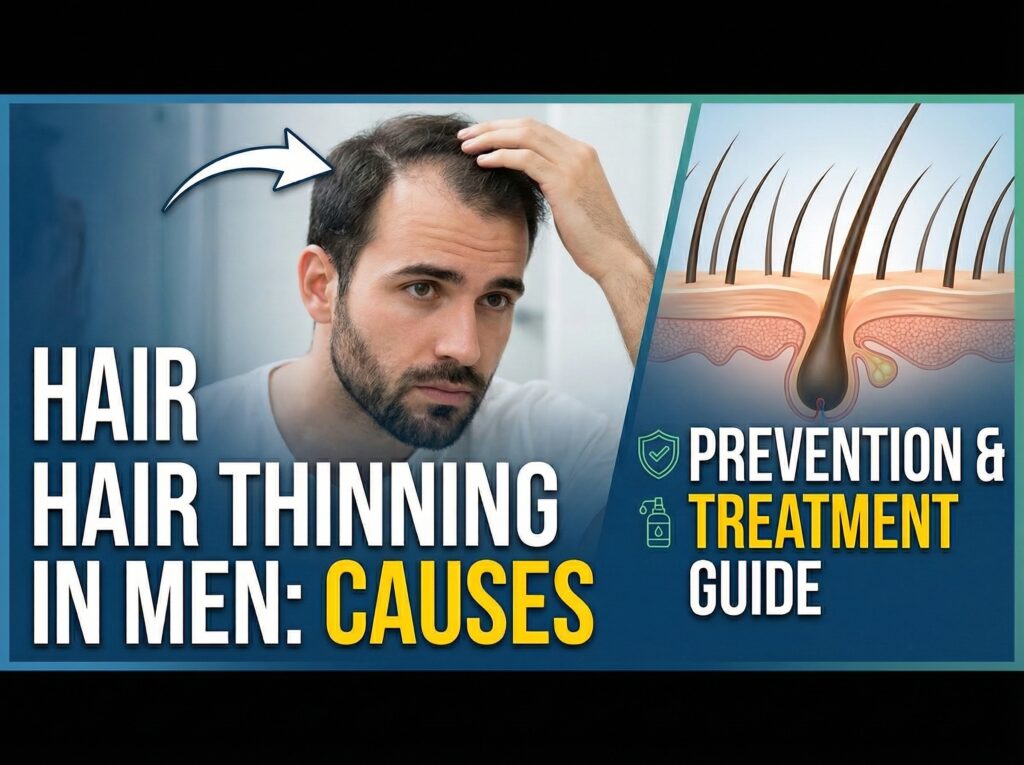
Thinning hair in men almost always traces back to a condition called androgenetic alopecia, commonly known as male pattern baldness, which affects approximately 50% of men over 50 (StatPearls, NCBI). This condition is driven by a combination of genetic predisposition and the hormone dihydrotestosterone (DHT).
DHT is a byproduct of testosterone. When DHT binds to receptors in genetically susceptible hair follicles, it triggers a process called follicular miniaturization. Over time, each growth cycle produces a thinner, shorter, and lighter strand until the follicle eventually stops producing visible hair altogether. You can learn more about how this mechanism works and what blocks it in our detailed guide on DHT blockers for hair loss.
Take the Free 2-Minute Hair Loss Assessment
Answer 5 quick questions and get your personalized Norwood grade plus treatment recommendations from our doctors.
Start Free Assessment →While genetics account for approximately 80% of hair loss susceptibility, other factors play a meaningful supporting role. These include chronic stress, nutritional deficiencies (particularly iron, zinc, biotin, and vitamin D), hormonal imbalances, certain medications, aggressive styling habits, and underlying scalp conditions. For a deeper look at every contributing factor, visit our resource on hair fall reasons.
Early Signs of Hair Thinning Every Man Should Know
Hair loss rarely happens overnight. Recognizing the subtle early signs gives you the best chance of intervening before the damage becomes difficult to reverse.
Watch for these warning signals:- A receding hairline. The temples begin to creep backward, forming an “M” shape. This is often the very first visible change.
- Thinning at the crown. The vertex (top of the head) gradually loses density, sometimes starting as a small patch that widens over months.
- Increased shedding. Finding more than 100 hairs per day on your comb, pillow, or shower drain may indicate accelerated loss.
- Slower regrowth. Areas that used to fill back in quickly after a haircut now take noticeably longer, or the new growth feels finer.
- Visible scalp through hair. Under bright or overhead lighting, the scalp becomes more visible than it used to be, especially on the top and front.
- Widening part line. The natural parting of your hair gradually becomes broader.
If you notice two or more of these signs, scheduling a consultation with a qualified doctor is the smartest next step. Early assessment can save you years of worry and significantly better outcomes.
The Norwood Scale: Identifying Your Stage of Hair Loss
The Norwood Scale is the standard classification system that qualified doctors use to measure male pattern baldness progression. It ranges from Stage 1 (no significant hair loss) to Stage 7 (extensive loss across the top of the scalp).
- Stage 1 to 2: Minimal recession at the temples. Preventive treatments are highly effective here.
- Stage 3: Noticeable temple recession forming a clear “M” shape. Medical therapy combined with PRP can produce strong results.
- Stage 3 Vertex: Crown thinning appears alongside temple recession. This is a critical intervention point.
- Stage 4 to 5: Significant thinning on the crown and front. A hair transplant may now offer the most impactful improvement.
- Stage 6 to 7: The balding areas on the crown and front merge with very limited hair remaining on top. Surgical restoration combined with ongoing medical therapy provides the best outcome.
Knowing where you stand on the Norwood Scale helps your doctor recommend the most appropriate treatment plan. Try our free online Baldness Calculator for an instant preliminary assessment.
How to Prevent Hair Thinning: A Complete Guide for Men
Learning how to prevent hair thinning as a male requires a multi-pronged strategy. No single product or habit change works in isolation, but the right combination can dramatically slow progression and, in many cases, partially reverse early-stage thinning.
Step 1: Get a professional scalp assessment. Before spending money on over-the-counter products, have a qualified doctor examine your scalp under magnification. This rules out treatable conditions like seborrheic dermatitis or telogen effluvium that mimic pattern baldness. Step 2: Start evidence-based medical therapy early. The earlier you begin treatment, the more hair you preserve. We cover the best options in the next section. Step 3: Optimize your nutrition. Protein, iron, zinc, omega-3 fatty acids, biotin, and vitamin D all play direct roles in the hair growth cycle. A simple blood panel can reveal deficiencies worth correcting. Step 4: Reduce scalp inflammation. Use a gentle, sulfate-free shampoo. Avoid excessive heat styling. Treat dandruff or psoriasis promptly, as chronic inflammation damages follicles over time. Step 5: Manage stress proactively. Chronic stress elevates cortisol, which pushes follicles prematurely into the resting (telogen) phase. Regular exercise, adequate sleep, and mindfulness practices are proven to help.For a comprehensive breakdown of daily habits and routines that reduce shedding, explore our guide on hair fall control.
Medical Treatments That Work
When it comes to how to stop hair fall for men with proven science behind it, four treatments stand out.
Minoxidil (Topical)
Minoxidil is an FDA-approved topical solution available in 2% and 5% concentrations. It works by increasing blood flow to follicles and extending the active growth (anagen) phase. Most men see visible improvement within three to six months of consistent daily use. It is available over the counter and is generally well tolerated, though some men experience mild scalp irritation initially.
Finasteride (Oral)
Finasteride is a prescription medication that blocks the enzyme (5-alpha reductase) responsible for converting testosterone into DHT. By lowering DHT levels in the scalp, it slows follicular miniaturization and, in clinical studies, has been shown to halt further hair loss in roughly 90% of men who take it. Results typically become apparent after six to twelve months.
Dr. Pilani’s Expert Note: “The biggest mistake I see men make is waiting too long to start treatment. Minoxidil and Finasteride work best on follicles that are still active but miniaturizing. Once a follicle has been dormant for years, medical therapy alone cannot revive it. If you are noticing early thinning, act now rather than later.”
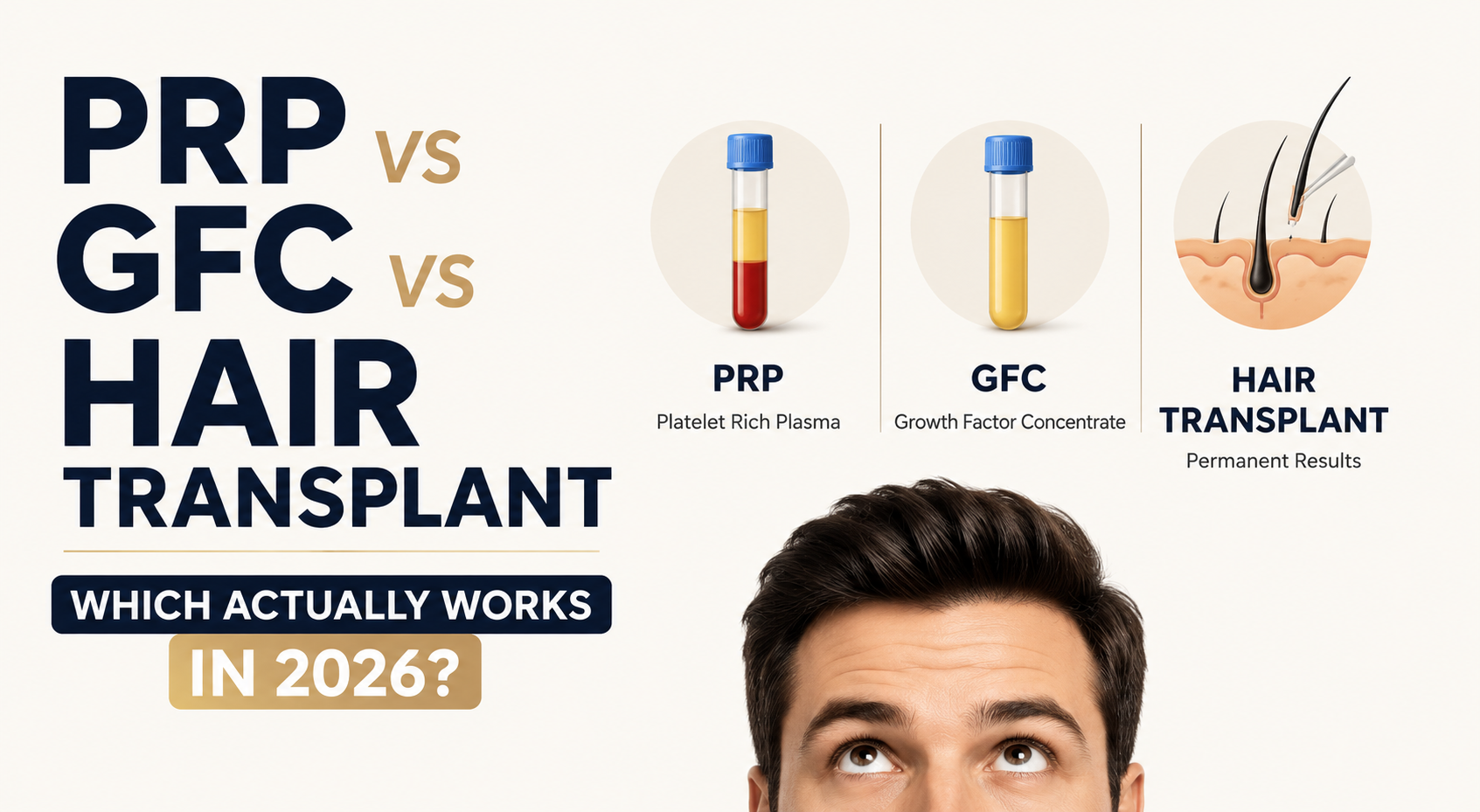
PRP (Platelet-Rich Plasma) Therapy
PRP therapy involves drawing a small sample of your own blood, concentrating the platelets, and injecting the growth-factor-rich plasma directly into the scalp. These growth factors stimulate dormant follicles, improve blood supply, and strengthen existing hair. PRP is particularly effective as a complementary treatment alongside Minoxidil or Finasteride, and it is also used post-transplant to accelerate healing and improve graft survival.GFC (Growth Factor Concentrate) Therapy
GFC therapy is a next-generation alternative to PRP. It isolates and concentrates growth factors without the variability that sometimes affects PRP outcomes. Many patients at Assure Clinic opt for GFC when they want a more standardized, potent growth factor delivery.
Lifestyle Changes to Slow Down Hair Thinning
Medical treatments deliver the strongest results when supported by healthy daily habits. Here is how to reduce hair fall for men through practical lifestyle adjustments.
Nutrition: Prioritize lean protein (eggs, fish, lentils), leafy greens for iron, nuts and seeds for zinc, and fatty fish for omega-3s. Consider a targeted supplement only after confirming deficiencies through blood work. Exercise: Regular cardiovascular exercise improves circulation to the scalp and helps regulate hormonal balance. Aim for at least 150 minutes of moderate activity per week. Sleep: Growth hormone, which supports tissue repair including hair follicle regeneration, is released predominantly during deep sleep. Seven to eight hours of quality sleep is non-negotiable. Scalp hygiene: Wash your hair regularly with a mild, pH-balanced shampoo. An overly oily or flaky scalp creates an environment that weakens follicle health. Do not over-wash either; three to four times per week is ideal for most men. Stress management: Incorporate at least one stress-reducing practice into your daily routine, whether that is meditation, deep breathing, journaling, or simply spending time outdoors. Chronic psychological stress is clinically linked to telogen effluvium, a condition that causes widespread temporary shedding. Avoid damaging habits: Excessive heat, chemical treatments, tight hairstyles (traction alopecia), and aggressive towel-drying all contribute to breakage and weakening of the hair shaft.When Prevention Is Not Enough: Hair Transplant Options
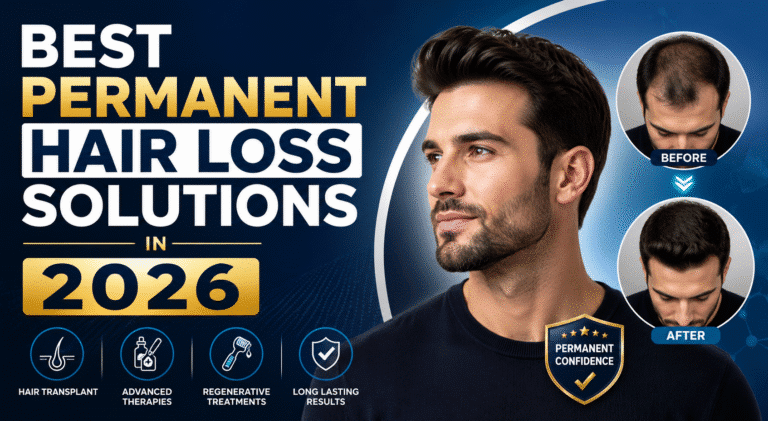
For men at Norwood Stage 3 and beyond, or those who have not achieved satisfactory results with medical therapy alone, a hair transplant offers a permanent, natural-looking solution. Modern transplant techniques have evolved dramatically, and the results achieved today are virtually undetectable.
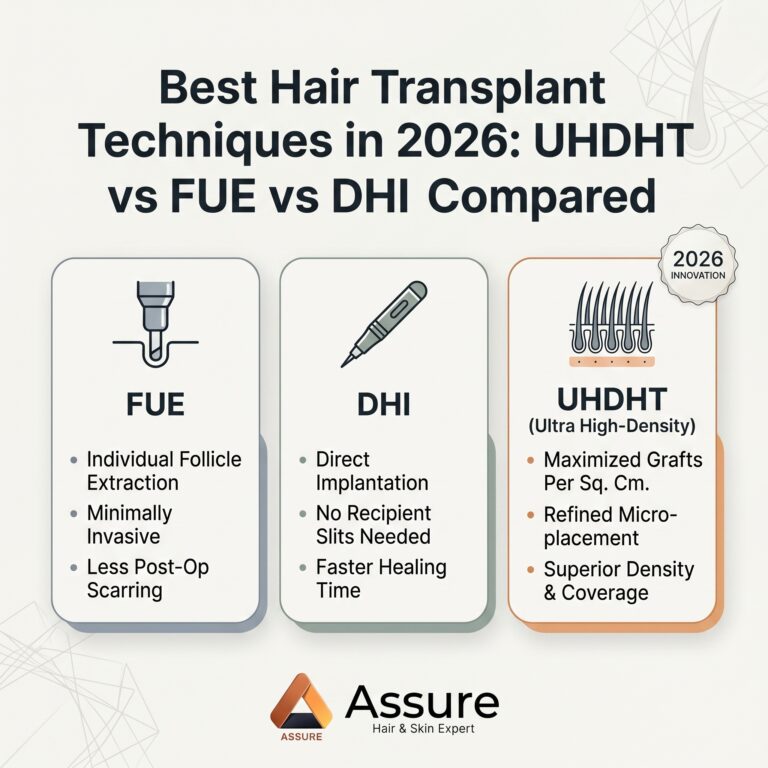
At Assure Clinic, we perform our proprietary UHDHT (Ultra High-Density Hair Transplant) method, which encompasses two advanced techniques under one umbrella: UFME (Ultra Fine Micro Extraction) and DSHI (Direct Scalp Hair Implantation). This combination allows our team to extract individual follicular units with minimal trauma and implant them at ultra-high density for a completely natural result.
Key advantages of the UHDHT method:Dr. Pilani’s Expert Note: “What sets UHDHT apart is precision at every step. UFME allows us to harvest grafts with an exceptionally low transection rate, and DSHI lets us control the angle, depth, and direction of each implanted graft. The outcome is density that looks and feels like natural hair growth, not a procedure.”
- 95% graft survival rate, among the highest in the industry
- No linear scarring, so you can wear your hair short with confidence
- Faster recovery with most patients returning to work within five to seven days
- Natural hairline design customized to each patient’s facial structure and age
Wondering about the investment? Assure Clinic offers transparent Full Head Results pricing with no hidden fees. Visit our hair transplant cost guide for detailed breakdowns.
Assure Clinic’s Approach to Male Hair Restoration
Founded in 2015 by Dr. Abhishek Pilani, Assure Clinic has grown into one of India’s most trusted hair restoration networks. With 13 clinics, a team of 60+ qualified doctors, and more than 20,000 successful procedures completed, the clinic combines scale with personalized care.
What makes Assure Clinic different:- Doctor-led consultations. Every treatment plan begins with a detailed assessment by our medical consultants who evaluate your scalp health, Norwood stage, donor area strength, and overall health profile.
- Evidence-based protocols. Treatments are selected based on published clinical evidence, not trends. Whether you need PRP, GFC, medical therapy, or a transplant, the recommendation is rooted in what the data says will work for your specific case.
- Proprietary UHDHT technology. Our in-house method, combining UFME and DSHI, is the product of years of refinement and delivers consistently high graft survival.
- End-to-end care. From the initial consultation through post-procedure follow-ups, a dedicated care team supports you at every step.
- Nationwide accessibility. With 13 locations across India, expert hair restoration is never far away.
Ready to take the next step? Book a consultation with our medical consultants by calling +91 95861 22444 or visiting our Contact Us page.
Frequently Asked Questions
At what age does hair thinning usually start in men?
Hair thinning can begin as early as the late teens or early twenties, though most men first notice changes between 25 and 35. The earlier you notice signs and seek evaluation, the more options are available to you.
Can hair thinning in men be reversed?
In the early stages, yes. Treatments like Minoxidil, Finasteride, and PRP can revive miniaturizing follicles and restore visible thickness. Once follicles have been dormant for an extended period, a hair transplant becomes the most effective path to restoration.
How effective is PRP therapy for thinning hair?
Clinical studies show that PRP therapy can increase hair count and thickness by 20 to 30 percent over a course of three to four sessions. Results vary depending on the stage of hair loss, but PRP is especially effective as part of a combined treatment approach.
Is a hair transplant permanent?
Yes. Transplanted hair is taken from the donor area at the back and sides of the scalp, which is genetically resistant to DHT. These grafts retain their DHT-resistant properties even after being relocated, making the results permanent.
How do I know if I need a transplant or just medical treatment?
This depends on your Norwood stage, the extent of miniaturization, and how you respond to medical therapy. Our medical consultants assess all of these factors during a consultation and recommend the least invasive effective option first.
What is the recovery time after a UHDHT hair transplant?
Most patients return to normal activities within five to seven days. Initial redness and tiny scabs subside within the first two weeks. New hair growth typically becomes visible from the third month onward, with full results maturing by 12 to 15 months.
How much does a hair transplant cost at Assure Clinic?
Assure Clinic offers Full Head Results pricing, which means you receive a transparent, all-inclusive cost rather than a confusing per-graft calculation. Pricing varies based on the extent of restoration required. Visit our cost guide or call +91 95861 22444 for a personalized quote.
A structured hair fall treatment protocol works best when started at Stage 2-3.