—
Key Takeaways
- Losing 50 to 100 strands daily is normal, but sudden or excessive hair fall signals an underlying issue that needs attention.
- Immediate steps like adjusting your hair care routine, fixing nutritional gaps, and managing stress can visibly reduce hair fall within weeks.
- Home remedies such as scalp oiling, onion juice, and egg masks support hair strength when used consistently alongside a balanced diet.
- Professional treatments like PRP and GFC therapy offer clinically proven results when home care alone is not enough.
- Early intervention is critical: the sooner you address hair fall, the better your chances of full recovery and regrowth.
—
Can You Really Stop Hair Fall Immediately?
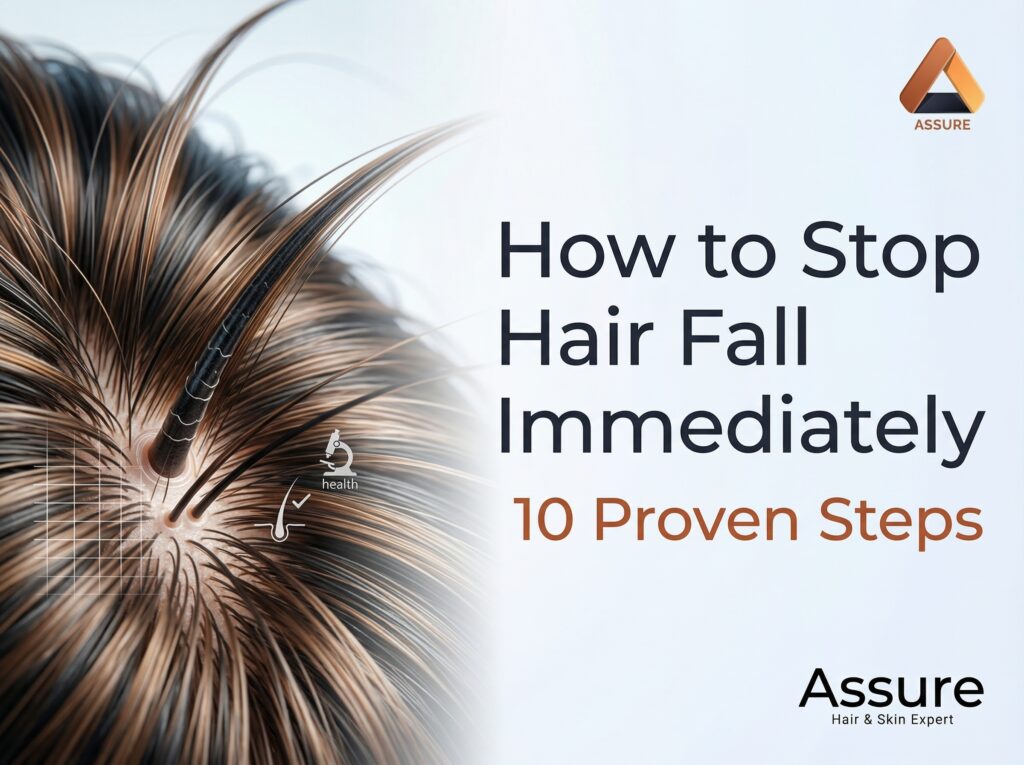
Let us be honest: no treatment or remedy will stop every strand from falling overnight. Hair operates on a growth cycle, and each follicle moves through phases of growth (anagen), rest (catagen), and shedding (telogen) independently. What you can do, however, is take immediate action to slow down excessive shedding, protect existing hair, and create the ideal conditions for regrowth.
The difference between people who reverse hair fall and those who do not often comes down to timing. When you notice more hair on your pillow, in the shower drain, or tangled in your comb, that is your signal to act. The 10 steps below are designed to deliver the fastest possible reduction in hair fall, starting from the day you implement them.
Not all hair loss needs a transplant.
Hair loss has a stage, and the right step depends on which one you’re at. The Growth Catalyst — Assure Clinic’s hair care brand — will assess your stage free in about two minutes. If you’re further along than products can help, it will tell you that and book you a free consult with an Assure dermatologist.
The Growth Catalyst is Assure Clinic’s hair care brand. You’ll continue on thegrowthcatalyst.co.
If you are unsure what is triggering your hair loss in the first place, our detailed guide on hair fall reasons covers the most common causes, from hormonal shifts and nutritional deficiencies to stress and medical conditions.
—
When immediate fixes stop working and the loss keeps progressing, the path forward changes. Explore Assure Clinic’s UHDHT hair transplant, see your nearest flagship at best hair transplant in Hyderabad, or check hair fall treatment.
10 Proven Steps to Reduce Hair Fall Starting Today
1. Switch to a Gentle, Sulphate-Free Shampoo
Harsh sulphates strip your scalp of natural oils, weakening the hair shaft and accelerating breakage. Choose a mild, pH-balanced shampoo and wash your hair two to three times per week rather than daily.
2. Stop Towel-Drying Aggressively
Wet hair is at its most fragile. Instead of rubbing your hair with a towel, gently squeeze out excess water using a soft microfibre cloth or an old cotton t-shirt.
3. Detangle with a Wide-Tooth Comb
Never brush wet hair with a fine-tooth comb or paddle brush. Start from the ends and work your way up to the roots using a wide-tooth wooden comb to minimise mechanical damage.
4. Reduce Heat Styling
Straighteners, curling irons, and blow dryers weaken hair proteins over time. If you must use heat, always apply a heat-protectant serum and keep the temperature below 180 degrees Celsius.
5. Address Nutritional Deficiencies
Iron, ferritin, vitamin D, vitamin B12, and biotin deficiencies are among the most common correctable causes of hair fall. Ask your doctor for a complete blood panel if you have not had one recently.
6. Manage Stress Actively
Chronic stress pushes more follicles into the telogen (shedding) phase, a condition known as telogen effluvium. Meditation, regular exercise, adequate sleep, and breathing techniques can interrupt this cycle.
7. Protect Your Scalp from the Sun
UV radiation damages the scalp and hair cuticle. Wear a hat or scarf when outdoors for extended periods, especially during peak sun hours.
8. Avoid Tight Hairstyles
Ponytails, braids, and buns that pull on the hairline cause traction alopecia over time. Keep styles loose and alternate your parting regularly.
9. Stay Hydrated
Dehydration affects every cell in your body, including hair follicles. Aim for at least eight glasses of water daily to maintain scalp moisture and nutrient transport.
10. Start a Scalp Massage Routine
A five-minute daily scalp massage with gentle circular motions improves blood circulation to the follicles. Studies show that consistent scalp massage over several weeks can increase hair thickness.
Dr. Pilani’s Expert Insight: “The biggest mistake I see patients make is waiting too long. Hair fall that goes unchecked for months becomes significantly harder to reverse. If you are losing more than 100 strands a day or noticing visible thinning, take action now. Start with these 10 steps and monitor your progress over four to six weeks.”
—
Home Remedies That Actually Work for Hair Fall
If you are searching for how to stop hair fall immediately at home, these time-tested remedies can complement your daily routine. Consistency is the key; use them at least twice a week for a minimum of four to six weeks before judging results.
Onion Juice Treatment
Rich in sulphur, onion juice boosts collagen production and improves blood flow to the scalp. Blend a medium onion, strain the juice, apply it to your scalp, leave it on for 30 minutes, and wash it off with a mild shampoo. The smell fades after washing.
Egg and Yoghurt Hair Mask
Eggs are packed with protein and biotin, while yoghurt adds moisture and lactic acid for gentle exfoliation. Mix one egg with two tablespoons of yoghurt, apply to your scalp and hair, leave for 20 minutes, and rinse with cool water.
Coconut Oil and Curry Leaf Massage
Warm two tablespoons of virgin coconut oil with a handful of curry leaves until the leaves darken. Strain, cool slightly, and massage into the scalp before bed. Wash out in the morning. Curry leaves are rich in antioxidants and proteins that strengthen hair roots.
Aloe Vera Scalp Treatment
Fresh aloe vera gel soothes the scalp, balances pH, and reduces dandruff, which is a common contributor to hair fall. Apply the gel directly, leave it for 30 minutes, and rinse.
Green Tea Rinse
Brew two bags of green tea in a cup of water, cool it down, and pour it over your scalp after shampooing. The catechins in green tea stimulate hair follicles and reduce DHT levels on the scalp.
For a comprehensive breakdown of hairfall solution at home approaches and which ones have scientific backing, check our hair fall control resource page.
—
Diet Changes for Rapid Hair Fall Control
What you eat directly influences the strength and growth rate of your hair. These dietary adjustments support hair fall control from the inside out:
- Iron-rich foods: Spinach, lentils, chickpeas, red meat, and fortified cereals. Iron carries oxygen to hair follicles, and low iron is the single most common nutritional cause of hair fall in women.
- Protein at every meal: Hair is made of keratin, a protein. Include eggs, fish, chicken, paneer, tofu, or legumes at each meal to provide the building blocks your hair needs.
- Omega-3 fatty acids: Found in fatty fish (salmon, mackerel), walnuts, flaxseeds, and chia seeds. Omega-3s nourish the scalp and reduce inflammation around follicles.
- Vitamin C sources: Amla (Indian gooseberry), oranges, strawberries, and bell peppers. Vitamin C aids iron absorption and is essential for collagen synthesis.
- Zinc and selenium: Pumpkin seeds, cashews, Brazil nuts, and whole grains. Both minerals play a role in hair tissue growth and repair.
- Biotin-rich foods: Eggs, almonds, sweet potatoes, and mushrooms. Biotin deficiency, while uncommon, directly causes hair thinning.
Explore our complete guide on best foods for healthy hair for meal plans and recipes designed around hair health.
—
Common Mistakes That Make Hair Fall Worse
Even well-meaning habits can sabotage your progress. Avoid these pitfalls:
- Over-washing your hair: Daily shampooing strips natural oils and dries out the scalp, leading to more breakage.
- Using too many products at once: Layering serums, oils, leave-in conditioners, and styling products clogs follicles and weighs hair down.
- Crash dieting or extreme calorie restriction: Rapid weight loss starves hair follicles of nutrients, triggering telogen effluvium within two to three months.
- Self-medicating with minoxidil or finasteride: These are prescription-grade treatments that require medical supervision. Incorrect use can cause side effects or worsen the problem.
- Ignoring scalp health: Dandruff, fungal infections, and scalp psoriasis directly contribute to hair fall. Treat the scalp, not just the hair.
- Relying on “miracle” products: Shampoos or oils claiming overnight hair regrowth are marketing gimmicks. Effective hair fall control requires a multi-pronged approach.
—
When Home Remedies Are Not Enough
Home remedies and lifestyle changes work well for mild to moderate hair fall caused by stress, nutritional deficiency, or poor hair care. However, you should consult a qualified doctor if:
- Hair fall persists beyond eight weeks despite consistent home treatment.
- You notice patchy bald spots or a rapidly widening parting.
- Hair loss started suddenly after illness, surgery, or medication change.
- You have a family history of pattern baldness (androgenetic alopecia — the most common form of hair loss worldwide (StatPearls, NCBI)).
- Your scalp shows redness, scaling, or scarring.
At Assure Clinic, our medical consultants evaluate your hair loss using trichoscopy, blood investigations, and detailed scalp analysis before recommending any treatment. With 13 clinics, 60+ qualified doctors, and over 20,000 procedures completed, we have the experience to identify the root cause and create a personalised plan.
Dr. Pilani’s Expert Insight: “Not all hair fall is the same, and not every case responds to the same treatment. A thorough evaluation is essential. What works for telogen effluvium will not work for androgenetic alopecia. At Assure Clinic, we create individualised protocols because your hair loss pattern, severity, and underlying cause are unique to you.”
—
Professional Treatments: PRP, GFC, and Beyond
When home care and diet are not delivering the results you need, evidence-based clinical treatments can accelerate recovery and promote regrowth.
PRP (Platelet-Rich Plasma) Therapy
PRP involves drawing a small amount of your blood, concentrating the growth-factor-rich platelets, and injecting them into the scalp. These growth factors stimulate dormant follicles, improve blood supply, and extend the growth phase of the hair cycle. Most patients see visible improvement after three to four sessions spaced a month apart. Learn more in our detailed PRP hair loss treatment guide.
GFC (Growth Factor Concentrate) Therapy
GFC is an advanced next-generation treatment that delivers a higher concentration of growth factors than standard PRP. It is especially effective for patients with early to moderate thinning who want to avoid surgical intervention.
Hair Transplant with UHDHT
For advanced hair loss where follicles have permanently miniaturised, a hair transplant offers a lasting solution. Assure Clinic specialises in UHDHT (Ultra High-Density Hair Transplant), which includes advanced techniques such as UFME and DSHI. This approach achieves natural density with a 95% graft survival rate and minimal downtime. Our Full Head Results pricing ensures transparency with no hidden costs.
Explore our comparison of hair growth treatments to understand which option suits your stage of hair loss. You can also visit our PRP treatment page or hair transplant page for detailed procedure information.
—
Frequently Asked Questions
How can I stop hair fall immediately at home for female?
Start by switching to a sulphate-free shampoo, avoiding heat styling, and applying a weekly onion juice or egg mask treatment. Address nutritional deficiencies, especially iron and vitamin D, which are common in women. Reduce stress through regular exercise and sleep hygiene. These steps can reduce hair fall noticeably within three to four weeks.
How many hair strands falling per day is normal?
Losing 50 to 100 strands per day is considered normal as part of the natural hair growth cycle. If you are consistently losing more than this, or if you notice visible thinning, it is time to investigate the cause and begin treatment.
Do home remedies for hair fall actually work?
Yes, several home remedies have scientific support. Onion juice, coconut oil massage, and aloe vera have all shown measurable benefits in clinical studies. However, they work best for mild hair fall and as a complement to proper nutrition and medical treatment when needed.
How long does it take to see results from hair fall treatment?
Home remedies and lifestyle changes typically show results in four to eight weeks. PRP therapy shows visible improvement after two to three sessions (six to twelve weeks). Hair transplant results mature over eight to twelve months. Patience and consistency are essential regardless of the approach.
Can stress alone cause severe hair fall?
Absolutely. Telogen effluvium, triggered by physical or emotional stress, can cause dramatic shedding two to three months after the stressful event. The good news is that stress-related hair fall is usually reversible once the stressor is managed and proper nutrition is restored.
When should I see a doctor about my hair fall?
Consult a qualified doctor if hair fall continues beyond six to eight weeks despite home care, if you see patchy bald spots, if your scalp is inflamed or painful, or if you have a family history of baldness. Early professional intervention significantly improves outcomes.
—
Last medically reviewed: March 2026 Ready to take control of your hair fall? Book a consultation with our medical consultants at any of our 13 Assure Clinic locations or call us at +91 95861 22444.—
For long-term maintenance, see our complete hair fall control guide.